

In a bold move aimed at enhancing transaction speed and overall network responsiveness, a core Ethereum developer has proposed cutting the network’s block time in half—from 12 seconds to just six. The proposal, formally known as Ethereum Improvement Proposal (EIP) 7782, was spotlighted during a June 21 discussion led by core developer Barnabé Monnot.
A Vision for a Faster Ethereum
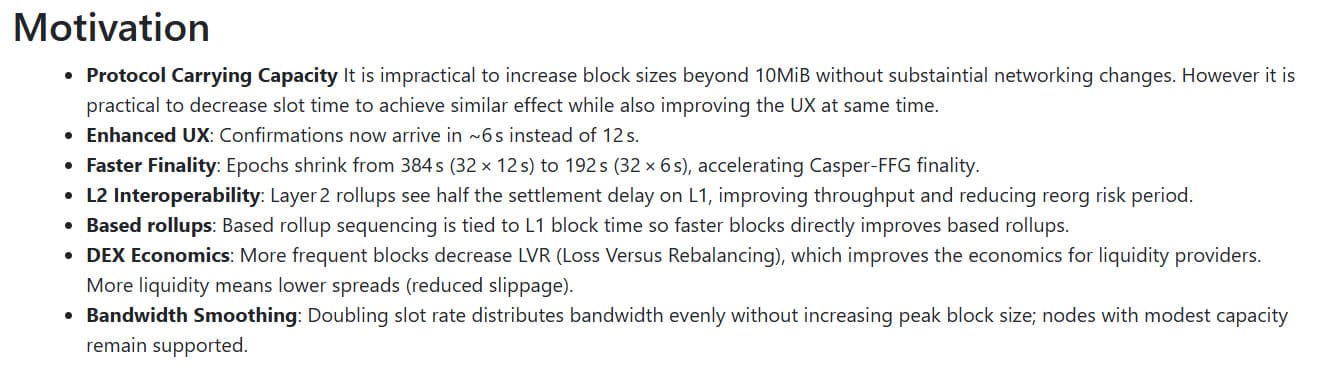
EIP-7782 outlines a plan to shorten Ethereum’s slot time—the interval at which new blocks are created—by optimizing the timing of several blockchain operations. If implemented, the update could double the frequency of block creation, improving both transaction confirmation speed and user experience.
“Shorter slot times make the confirmation service better, and so have the potential to raise the service price beyond where it is today,” Monnot explained.
In Ethereum’s context, the "service price" refers to the economic value the network provides by acting as a secure settlement and confirmation layer.
Originally proposed in October 2024, the initiative is being considered for Ethereum’s upcoming Glamsterdam upgrade, scheduled for late 2026. By that time, Monnot anticipates significant network scaling—potentially handling blocks with triple the current gas limit and up to eight times the current data capacity.
Why Speed Matters
Faster slot times could bring a host of benefits, particularly for Ethereum users and developers. According to staking protocol Everstake, halving the slot time would allow new blocks to be proposed twice as often, leading to quicker transaction inclusion and more up-to-date onchain data.
 barnabe
This upgrade would significantly improve experiences across wallets, decentralized applications (DApps), and layer-2 networks, with wallets reflecting real-time balances and transaction confirmations. It would also make it more difficult to censor transactions due to the higher frequency of block producers.
For decentralized finance (DeFi), the advantages are just as compelling. Faster block production would lead to quicker price updates on decentralized exchanges and could reduce arbitrage opportunities, thereby lowering potential losses for traders. As a result, trading fees might decline, liquidity could increase, and the broader Ethereum ecosystem would benefit from stronger network effects.
“Faster slots lead to more liquidity, which means lower trading fees for users and increased network effects for Ethereum,” Monnot said.
Weighing the Trade-Offs
Despite its promise, the proposal comes with notable challenges. Validators with slower internet connections or less optimized hardware may struggle to keep pace with the shortened timeframes. Increased slot frequency could also lead to higher bandwidth usage and greater risks of congestion during periods of high demand.
The changes would also necessitate comprehensive testing to ensure stability, especially to avoid disruptions to smart contracts and consensus mechanisms.
EIP-7782 specifically suggests tightening three subslot timings: block proposal time would be reduced from four to three seconds, attestation time would drop from four to 1.5 seconds, and aggregation time would also fall to 1.5 seconds—collectively trimming six seconds from each block cycle.
“Following this run with a 2x reduction of the slot time would be an amazing option for Ethereum, which should be seriously considered for Glamsterdam,” Monnot concluded.
Ethereum will always seek to provide the best service at the cheapest sustainable price.
— barnabe.eth (@barnabemonnot) June 21, 2025
Shorter slot times make the confirmation service better, and so have the potential to raise the service price beyond where it is today, absent any supply increase. But supply increases are… https://t.co/6cOAPTRnps
Looking Ahead
As Ethereum continues its journey toward scalability and efficiency, EIP-7782 represents a forward-looking approach to optimizing network performance without compromising its core functionality. While the road to implementation includes substantial testing and consensus among stakeholders, the potential gains in speed and usability could mark a significant step forward for the blockchain’s future.



