

Ethereum’s Layer 2 networks—once heralded as the future of scalable blockchain infrastructure—are experiencing a surprising shift. In recent months, ETH reserves on major L2s have fallen by roughly 25%, according to new data. Platforms like Optimism, Arbitrum, and Base are seeing a steady outflow of Ethereum, raising important questions about user sentiment, liquidity, and the role of L2s moving forward.
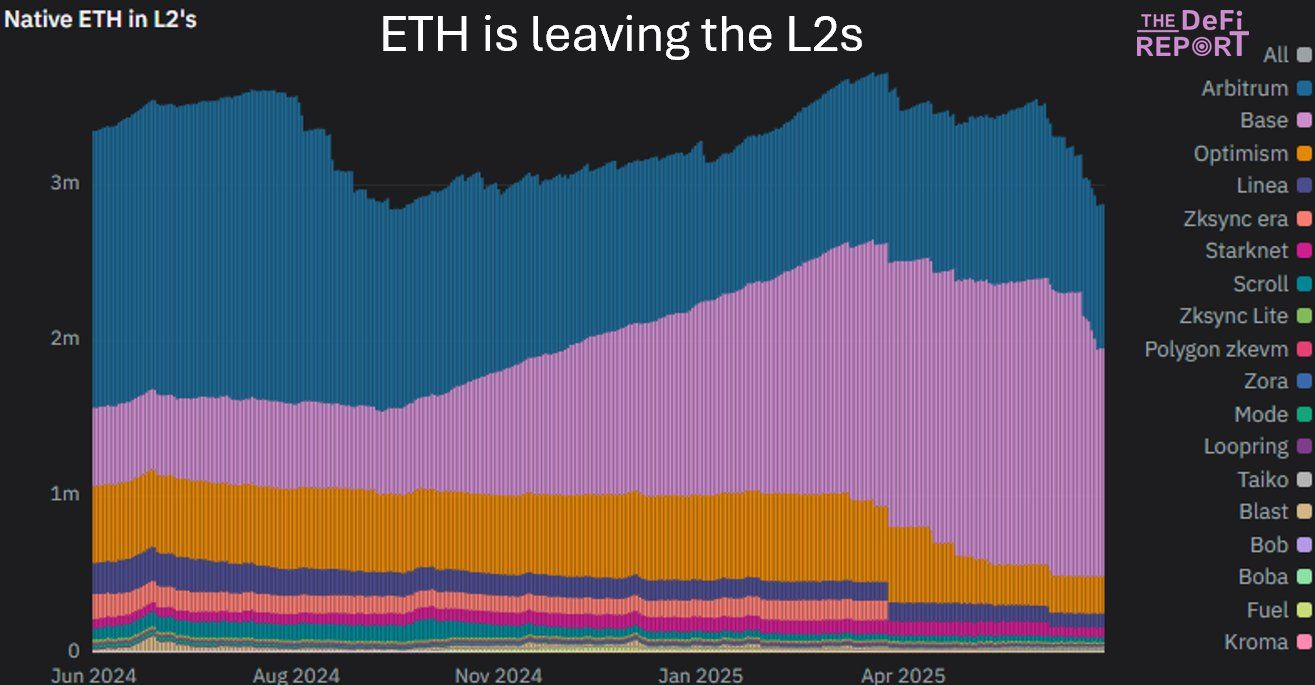
Ethereum Drains from Layer 2s: What the Numbers Say
The drop in ETH balances is significant:
- Optimism has lost 54% of its ETH reserves since March.
- Arbitrum is down 17% over the same period.
- Base, Coinbase’s L2, has declined by 14%.
This trend, clearly outlined by The DeFi Report, reflects a broader reassessment by investors. As L2-native tokens like OP (Optimism) and ARB (Arbitrum) have plunged—down 38% and 21% respectively—many are opting to move ETH back to the Ethereum mainnet, which is seen as more secure and stable.
Why Users Are Pulling ETH from L2 Networks
Several overlapping factors are driving this exodus:
- Token Price Declines: Weak performance of L2 governance tokens has made them less attractive, especially to risk-averse holders.
- Shift to Long-Term Holding: A growing number of wallets are choosing to stake ETH or simply hold it, rather than using it on L2s.
- Accumulation Wallet Behavior: Addresses with no history of selling (so-called Accumulation Addresses) now hold 22.8 million ETH, signaling a clear pivot to long-term strategies.
- Staking Surge: Over 500,000 ETH were staked in early June alone, pushing the total locked ETH to 35 million, an all-time high.
Ethereum Hits ATH in Staking: Over 35 Million ETH Locked
— CryptoQuant.com (@cryptoquant_com) June 17, 2025
“Alongside this, Accumulation Addresses (holders with no history of selling) have also reached an all-time high, now holding 22.8 million ETH.” – By @onchainschool
Read more ⤵️https://t.co/WYoX9qpODZ pic.twitter.com/6MAlK0sCfJ
According to a CryptoQuant analyst, this marks “a rising confidence and a continued drop in liquid supply.”
Implications for Ethereum’s Ecosystem
In 2024, Ethereum Layer 2s were hailed as powerful engines for scalability—drawing users, driving down costs, and lightening the load on Ethereum’s mainnet. But 2025 has brought a reversal. As more ETH flows back to the mainnet, it’s gaining strength in activity and credibility, especially after the Pectra upgrade, which boosted performance and cut fees.
That success may now serve as a double-edged sword for L2s. Unless Optimism, Base, and Arbitrum act fast, they risk fading into the background.
Can L2s Recover Their Momentum?
To regain investor trust and re-energize user growth, L2 networks need to:
- Improve Liquidity Infrastructure: Reducing dependency on volatile tokens and introducing deeper pools could help stabilize flows.
- Enhance Incentive Transparency: More predictable, on-chain reward structures may reduce speculative noise and attract real usage.
- Work Closely with Centralized Exchanges: Aligning with major platforms could support capital inflows and offer seamless bridging options.
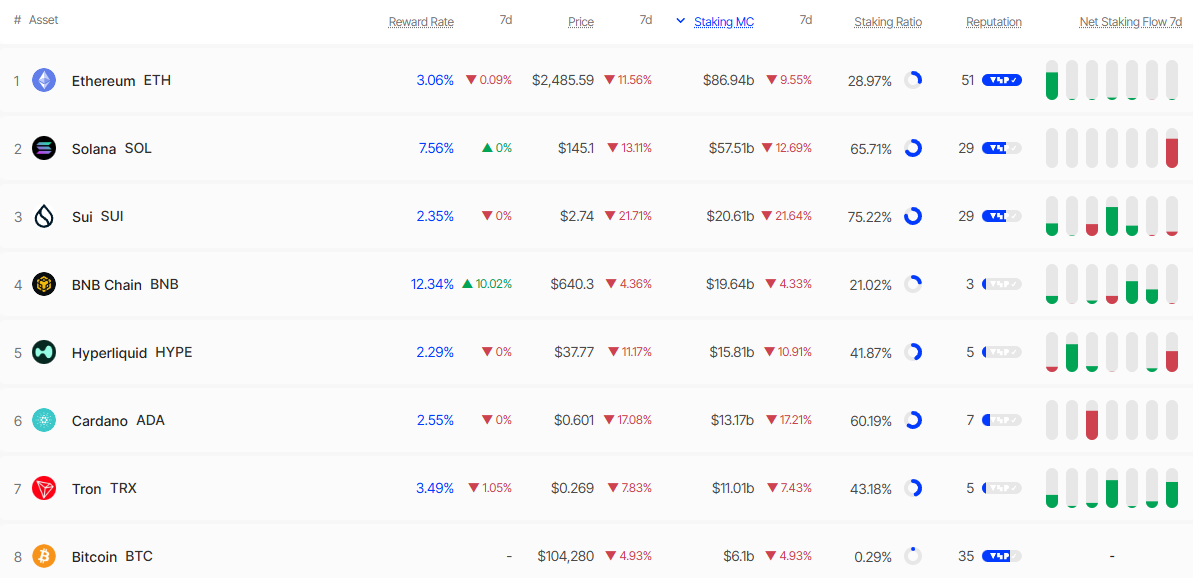
At the same time, Ethereum’s staked ETH now represents nearly 29% of its total supply, underscoring its deepening role as a long-term store of value.



