
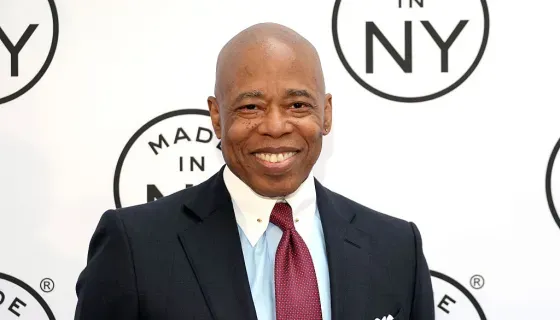
Former New York City Mayor Eric Adams has rejected allegations that his recently launched memecoin, known as NYC Token, was involved in a so-called “rug pull” that left investors with significant losses. The claims emerged after blockchain analysts flagged large liquidity movements shortly after the token’s debut, prompting debate across the crypto community.
In a statement posted Tuesday on Adams’ X account, spokesperson Todd Shapiro said reports suggesting Adams withdrew money from the token were “false and unsupported by any evidence.” According to the statement, Adams did not move investor funds, did not profit from the token’s launch, and no funds were removed from the NYC Token by him or on his behalf.
Statement from Todd Shapiro, spokesperson for former NYC Mayor Eric Adams: pic.twitter.com/kza4UGvApJ
— Eric Adams (@ericadamsfornyc) January 14, 2026
Shapiro described the token’s sharp price swings as a common feature of early-stage crypto projects.
“Like many newly launched digital assets, the NYC Token experienced market volatility,” he said, pushing back against claims of intentional misconduct.
Statement: pic.twitter.com/krRJEV4tjp
— NYC Token (@buynyctoken) January 13, 2026
The response followed an earlier post from the NYC Token project itself, which acknowledged that liquidity adjustments were made during the launch period. The team said that strong initial demand required partners to “rebalance” liquidity, adding that funds were used for time-weighted average price strategies and later reintroduced into the liquidity pool.
Despite those explanations, several analysts raised concerns about the token’s onchain activity. Crypto commentator Rune Crypto was among the first to warn that roughly $3.4 million in liquidity appeared to have been withdrawn soon after launch, calling the situation a potential rug pull. Blockchain analytics platform Bubblemaps also highlighted unusual patterns, noting that a wallet linked to the token deployer removed about $2.5 million in USDC near the market peak and later returned approximately $1.5 million after the token’s price had fallen more than 60%.
Eric Adams has now drained over $3,400,000 from the liquidity pool of his memecoin: it's now a rug-pull
— Rune (@RuneCrypto_) January 12, 2026
funny enough, his networth was only $2,000,000 pic.twitter.com/bcNMDbnmrE
Bubblemaps later assessed the impact on traders. Of around 4,300 participants, an estimated 60% reportedly lost money during the token’s first few hours. Most losses were under $1,000, though roughly 200 traders lost between $1,000 and $10,000. A smaller number suffered losses in the tens of thousands, and at least 15 traders lost more than $100,000.
The $NYC aftermath
— Bubblemaps (@bubblemaps) January 14, 2026
4,300 total traders, 60% lost money:
• 2,300 lost <$1k
• 200 lost $1k - $10k
• 40 lost $10k - $100k
• 15 lost $100k+ pic.twitter.com/HjYGj5bSBG
Questions around transparency have added to the scrutiny. Adams’ statement emphasized that NYC Token was designed to support nonprofit initiatives and community education, not to serve as a speculative investment. Still, critics point to the token’s structure and limited disclosures as sources of uncertainty.
According to the project’s website, NYC Token is built on the Solana blockchain with a total supply of 1 billion tokens. It states that 70% of the supply is allocated to a “NYC Token Reserve” and excluded from the planned circulating supply. However, while the project has referenced unnamed partners involved in liquidity management, it has not yet published a detailed list of those entities.
As debate continues, the situation highlights broader challenges facing public-facing crypto projects, particularly those linked to high-profile figures. For now, Adams maintains that neither he nor his team engaged in any wrongdoing, while analysts and traders continue to examine the token’s early activity.



