

The DeFi United recovery fund has surpassed $300 million after new contributions totaling 30,000 ETH from Consensys and Ethereum co-founder Joseph Lubin. The coordinated effort aims to stabilize DeFi markets following a major exploit that left protocols with significant bad debt.
The initiative was formed in response to the Kelp DAO incident, where an attacker minted unbacked rsETH through a compromised LayerZero bridge and used it as collateral on Aave to borrow real assets. The exploit created a shortfall that contributors are now attempting to cover. Recent pledges also include support from Circle Ventures, which is purchasing Aave (AAVE) tokens to reinforce market stability.
Circle Ventures is purchasing $AAVE tokens because strong DeFi infrastructure does not build itself. Aave is helping to shape the future of onchain finance, and we’re backing that ecosystem and the entire community built around it.
— Circle (@circle) April 27, 2026
DeFi United
Can Collective Capital Restore Confidence In DeFi Protocols?
The recovery push reflects broader efforts to protect ecosystem integrity during periods of stress. Data shows total value locked (TVL) across DeFi protocols has fallen to დაახლოებით $82 billion, down more than 25% from $110 billion at the start of the year. Such declines highlight how exploits can accelerate capital outflows and weaken user confidence.
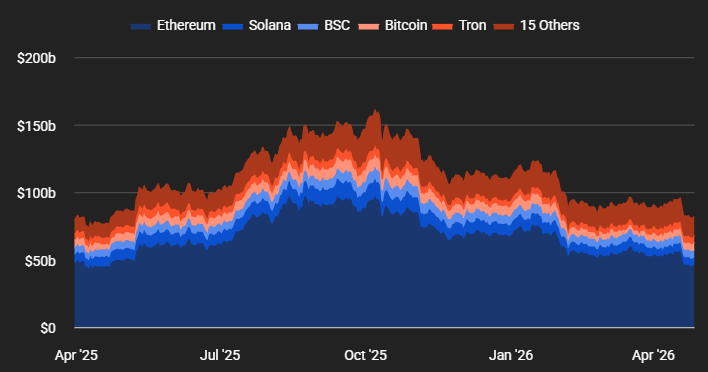
Aave acknowledged the significance of the latest contributions.
“Their contributions are a substantial component of the broader DeFi United effort to restore rsETH's backing and normalize market conditions,” the protocol said, noting that recovery progress depends heavily on coordinated support.
Additional proposals include 25,000 ETH from the Aave DAO, alongside contributions from Lido DAO and Ether.fi.
The initiative has drawn participation from both institutions and individual contributors. Consensys-backed treasury firm Sharplink is also providing strategic guidance, while smaller donors have added ETH and stablecoins to close the remaining gap. Estimates from market participants suggest the funding shortfall could be fully covered if pending proposals are approved.
rsETH hole filling tracker:
— DCF GOD (@dcfgod) April 24, 2026
Hole: 112204 rsETH = 118.4k ETH
Lido: -2.5k ETH
Etherfi: -5k ETH
Arbitrum freeze: -30.7k ETH
Ethena: Didn't say how much, assume -1k ETH
Excess rsETH in aave / coumpound: ~-15k ETH
Stani personal donation: -5k ETH
Layerzero: Didn't say how much,…
The next phase will focus on whether restored collateral backing can stabilize rsETH and prevent further contagion across lending markets, as DeFi protocols face ongoing scrutiny over risk management and bridge security.



