
Cursor has unveiled Cursor 2.0, a major upgrade to its AI-powered software development platform that introduces a multi-agent coding interface and its new frontier model, Composer. The company says the latest release is designed to make AI-assisted programming faster, more collaborative, and more autonomous than ever.


Composer: A new era of low-latency coding
At the heart of Cursor 2.0 is the Composer model, purpose-built for what the company calls “low-latency agentic coding.” Cursor claims Composer performs four times faster than other AI coding models of comparable intelligence, completing most conversational exchanges in under 30 seconds.
Early testers reported that the speed and responsiveness of Composer significantly streamlined their workflows, allowing them to iterate and debug more efficiently. Several developers said they grew to trust Composer with complex, multi-step programming tasks, describing the model as a reliable collaborator rather than just a code generator.
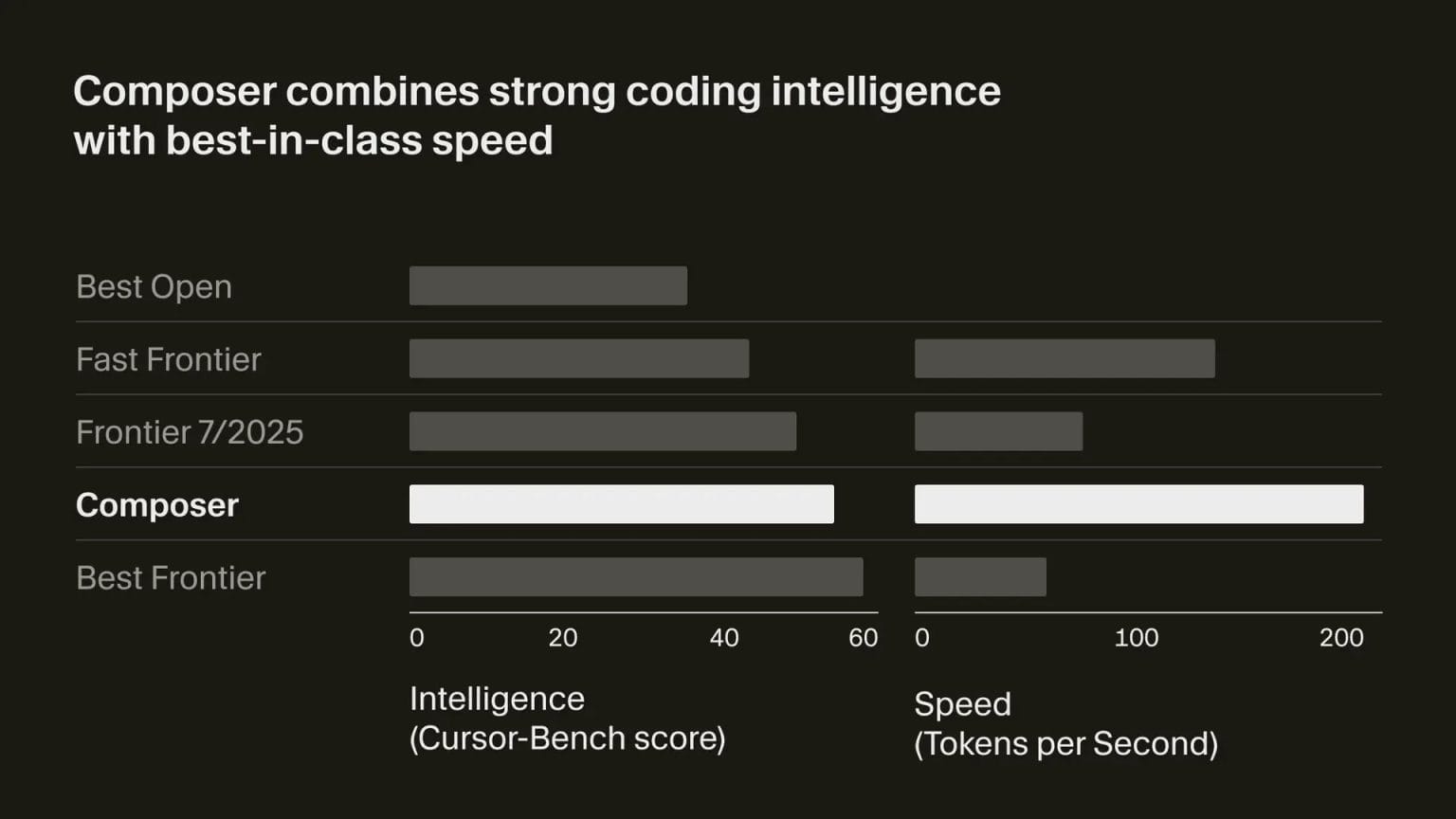
Composer’s performance is partly attributed to its training toolkit, which includes codebase-wide semantic search—a capability that helps it understand and navigate large, interdependent codebases. This feature addresses a long-standing limitation in AI coding assistants, which often struggle to maintain context when working with enterprise-scale projects.
A redesigned interface built around agents
Cursor 2.0 also introduces a new, agent-centered user interface, signaling a shift away from the traditional file-based coding model. Instead of navigating folders and files, developers now interact with AI agents that manage tasks, handle implementations, and collaborate to reach specific outcomes.
This redesign aims to let users focus on what they want to build, while the agents handle the “how.” Developers who prefer a hands-on approach can still open files directly or switch back to the classic IDE layout for a more traditional experience.
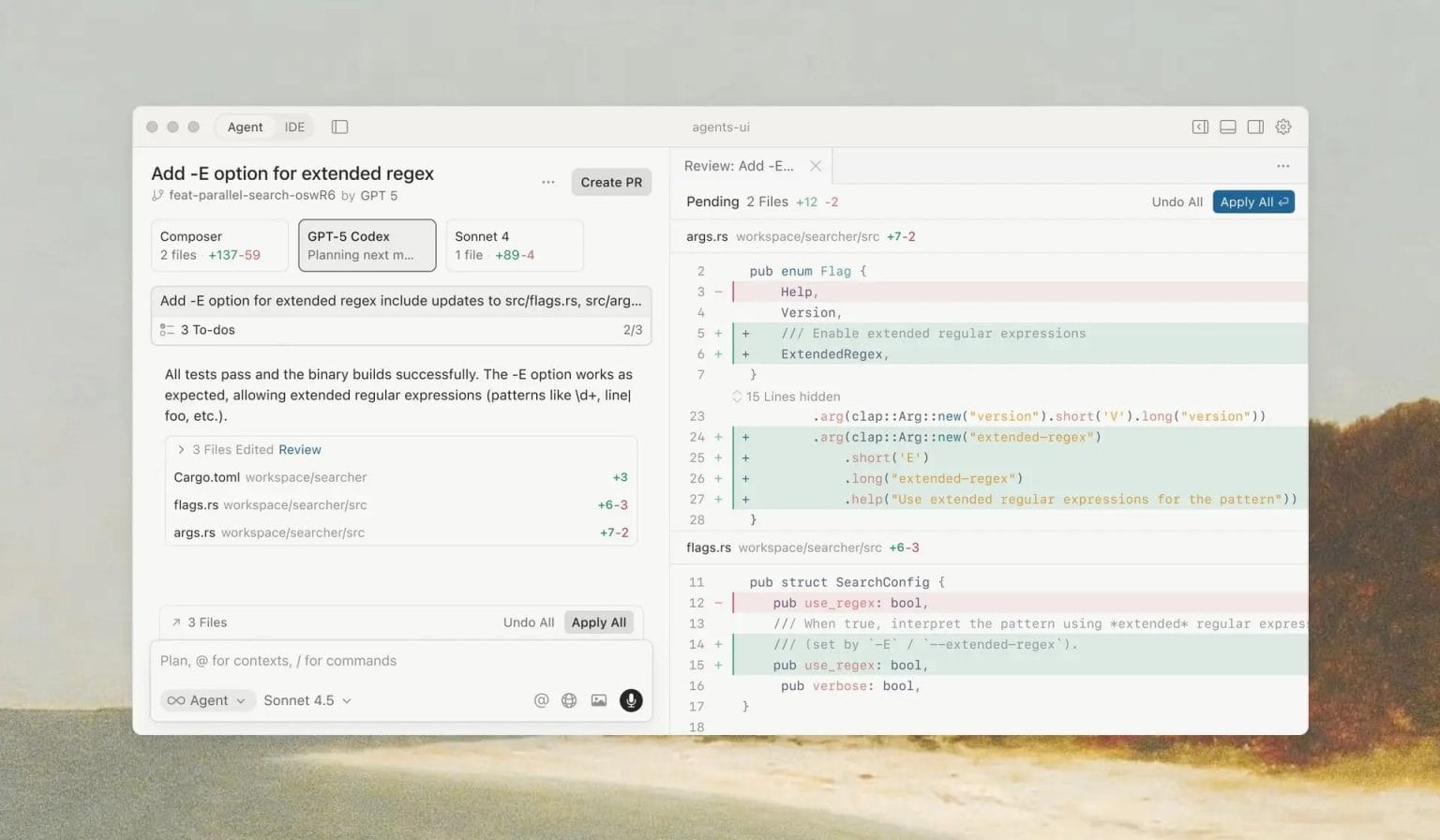
A standout feature of the platform is its ability to run multiple AI agents in parallel using technologies like Git worktrees and remote machines. Cursor says this setup allows agents to tackle different parts of a problem simultaneously—without interfering with each other.
Interestingly, the company observed that assigning the same problem to multiple agents and comparing their solutions often improves the overall code quality, particularly for challenging or abstract problems.
Tackling new bottlenecks: code review and testing
While multi-agent automation speeds up development, Cursor acknowledges that reviewing and testing AI-generated code can become new pain points. To address this, Cursor 2.0 includes a streamlined review system that makes it easier to track and verify code changes made by agents.
The update also debuts a native browser-based testing tool that enables AI agents to test their own code automatically. The system can run, evaluate, and refine its outputs until it produces a working solution—bringing the platform a step closer to fully autonomous software development.



