

A coalition of 112 crypto companies, investors, and advocacy groups has issued a firm warning to U.S. lawmakers: their support for upcoming market structure legislation hinges on explicit protections for blockchain software developers.
On August 27, the alliance — which includes industry heavyweights such as Coinbase, Kraken, and venture capital firm a16z — sent a joint letter to the Senate Banking and Agriculture Committees. The message was clear: without clear legal safeguards for developers, the crypto sector cannot support the legislation.
 DeFi Education Fund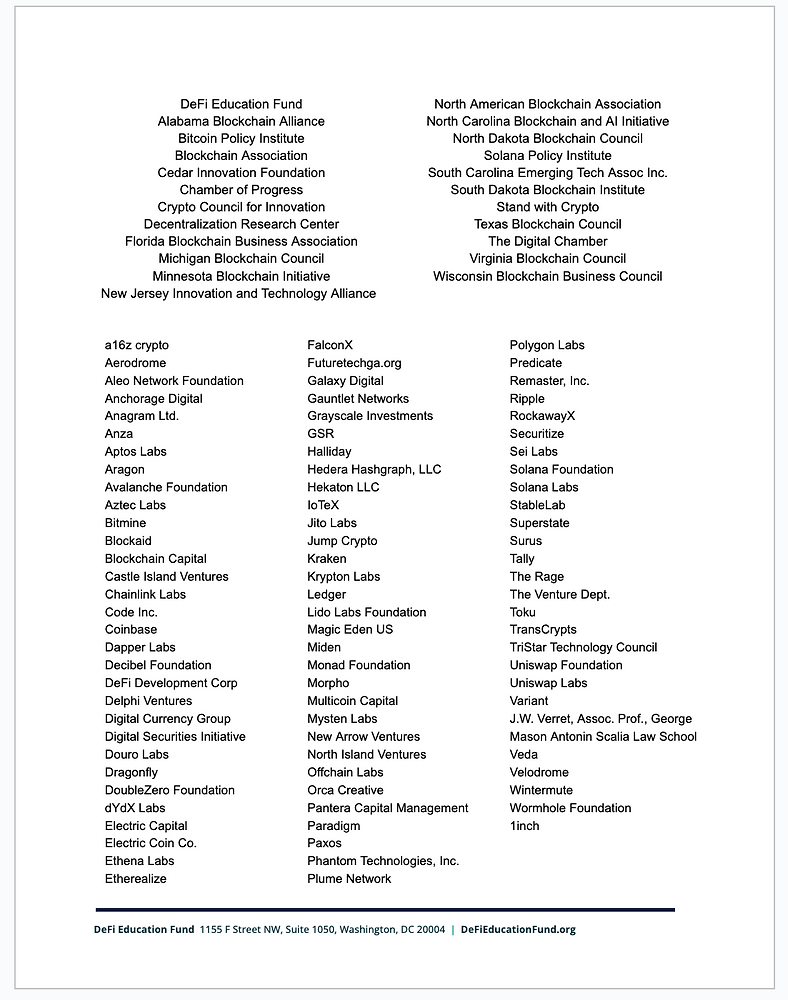
Why Developer Protections Are a Dealbreaker
The letter, coordinated by the DeFi Education Fund, argues that treating open-source developers like regulated financial intermediaries — such as banks or brokerages — is both impractical and damaging.
Industry leaders warn this misclassification could paralyze innovation and accelerate the ongoing brain drain of U.S. talent. According to cited data, America’s share of open-source blockchain developers has already dropped from 25% in 2021 to just 18% in 2025, a decline linked to regulatory uncertainty.
Legal Pressure Adds to Urgency
The push for protections comes amid mounting legal pressure on developers. The recent conviction of Tornado Cash developer Roman Storm has heightened industry concerns. Storm was found guilty of conspiracy to commit money laundering, operating an unlicensed money transmission business, and violating sanctions law.
Prosecutors argued that Storm bore responsibility for the misuse of his privacy-focused protocol by North Korean hackers and other criminal groups — despite the fact that he neither controlled the protocol nor held user funds.
The case has become a flashpoint for the industry, reinforcing fears that developers could face criminal liability for the independent actions of third parties who use their code.
What the Crypto Industry Is Demanding
The coalition’s demands are both specific and sweeping. They want Congress to:
- Explicitly shield developers from being regulated solely for creating, publishing, or maintaining blockchain code.
- Ensure federal preemption so that national protections override conflicting state-level laws.
- Include a carve-out from statute 18 U.S.C. § 1960, which is currently used to prosecute unlicensed money transmission cases.
In their letter, the groups stressed:
“To create an environment in which innovators across America can confidently and safely build financial infrastructure, the final version of market structure legislation must include explicit federal protections for blockchain infrastructure developers and non-custodial service providers.”



