

As the United States contends with rising debt and fiscal uncertainty, an unconventional idea is gaining traction in policy circles and the cryptocurrency community: Bitcoin-enhanced Treasury Bonds, known as "Bitbonds." Proponents suggest these hybrid financial instruments could help stabilize the economy and ease long-term interest burdens — without raising taxes or cutting spending.
Mounting Debt and an Unstable Fiscal Outlook
The U.S. national debt has ballooned to approximately $36.2 trillion, placing enormous pressure on public finances. Interest rates on government bonds have surged, with the 10-year Treasury yield hovering around 4.3%. This sharp rise presents a major challenge: the federal government must refinance a significant portion of its debt—much of which was originally issued during the pandemic at historically low rates.
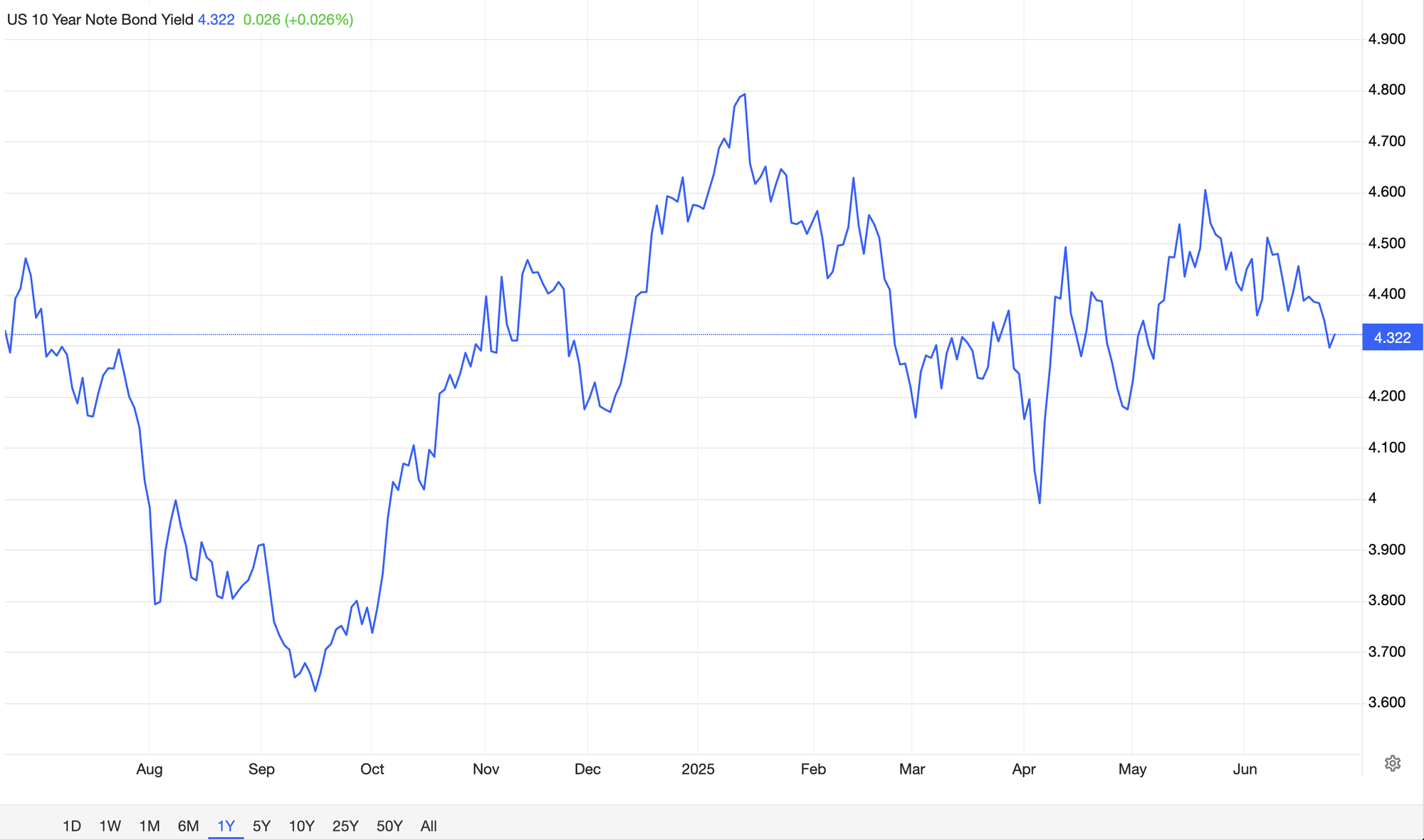
Unless addressed, this will lead to considerably higher interest costs for future generations of taxpayers. Yet, despite the urgency, traditional political and economic pathways to reform remain mired in gridlock.
Matthew Pines, Executive Director of the Bitcoin Policy Institute, believes it's time to think beyond conventional policy frameworks. In a recent policy brief co-authored with Andrew Hohns, he introduces Bitbonds as a possible innovation to attract new investors and manage interest obligations more efficiently.
The Idea Behind Bitbonds
Bitbonds are essentially U.S. Treasury bonds augmented with exposure to Bitcoin. Under the proposal, the government would allocate a small portion of each bond’s proceeds—perhaps 1% to 10%—to purchase Bitcoin for a Strategic Bitcoin Reserve (SBR) or to pay Bitcoin-based incentives to bondholders over the bond’s lifetime.
We’re proud to announce our latest policy brief, “Bitcoin-Enhanced Treasury Bonds: An Idea Whose Time Has Come.” Co-authored by Andrew Hohns & @matthew_pines, it explores the viability of a BitBonds strategy.
— Bitcoin Policy Institute (@btcpolicyorg) March 31, 2025
Read here: https://t.co/Z65iqHnZB9 pic.twitter.com/XzIZC2n87B
For example, if the government issued a $1 billion 10-year bond with a 10% allocation to Bitbond features, $50 million could be placed in a reserve account and another $50 million could be used to periodically distribute Bitcoin to investors. This model combines the stability of government debt with the growth potential of digital assets.
“The idea is to introduce a high-return asset—Bitcoin—into a traditionally low-risk instrument,” Pines explained. This hybrid model could make U.S. debt more attractive, boosting demand and potentially lowering the interest rates the government must offer to raise funds.
Addressing the Structural Imbalance
Despite a relatively strong macroeconomic environment—low unemployment and moderate inflation—the federal government continues to run large deficits. According to Pines, this highlights a structural issue within America’s fiscal system.
“There’s a kind of natural ceiling on tax collection, and politically, it’s very difficult to reduce spending,” he said. “Even when the economy is doing well, we’re still running deficits at levels typical during wartime or crisis.”
This persistent imbalance leaves limited room for maneuver under traditional frameworks. Bitbonds, Pines argues, offer a creative mechanism to address fiscal constraints while adapting to a rapidly evolving global financial landscape.
A Geopolitical Catalyst
Heightening the urgency for innovation is the rising geopolitical tension with China. From manufacturing to rare earth materials, China holds critical influence over global supply chains—leverage that could impact U.S. inflation and economic resilience. This backdrop, Pines suggests, is another reason for the U.S. to explore strategic asset diversification, including digital assets like Bitcoin.
“We’re in a world where traditional solutions may not be sufficient,” Pines said. “Bitbonds are one example of the kind of forward-thinking approach we might need.”
The Case for Institutional Endorsement
While corporations and private institutions have increasingly adopted Bitcoin as a reserve asset, U.S. government participation would mark a major milestone. Pines believes such an endorsement would significantly reshape public perception of Bitcoin—from a volatile fringe investment to a credible, long-term store of value.
“It’s not just about the dollar amount,” Pines emphasized. “The symbolic impact of government adoption would send a powerful signal to markets that Bitcoin is here to stay.”
This shift could reduce the perceived risk associated with Bitcoin, attract broader participation, and reinforce America’s technological and financial leadership in an era of digital innovation.



