
Coinbase has rolled out in-app decentralized exchange (DEX) trading, a move that could make non-custodial crypto trading far more accessible to everyday users. For now, the service runs on the exchange’s own Base blockchain — and the announcement has already sent several Base-linked tokens higher.
The feature is available to most U.S. customers, but not those in New York, due to the state’s BitLicense rules. By removing many of the technical and cost barriers that have traditionally slowed DEX adoption, Coinbase is betting it can bring decentralized trading to a much wider audience.
How Coinbase’s New DEX Works
The launch comes after months of testing and hints from leadership, including a preview at Coinbase’s Crypto Summit 2025 in June. CEO Brian Armstrong confirmed the rollout today, calling it a “major step” toward merging centralized and decentralized trading under one roof.
We're starting the rollout of DEX trading in the U.S. (excluding NY). Our goal is to make Coinbase the simplest way to access onchain markets.
— Brian Armstrong (@brian_armstrong) August 8, 2025
You'll be able to trade millions of @base assets in the Coinbase app.
Support for @solana is coming soon too. pic.twitter.com/YWkCxJEN9d
For now, trading is limited to assets on the Base network, but Solana support is on the roadmap. The integration works directly inside the Coinbase app using the platform’s self-custody wallet, allowing users to trade tokens without leaving the Coinbase ecosystem. In a notable perk, Coinbase will cover network fees — a common friction point for DEX traders.
Market Response and Token Moves
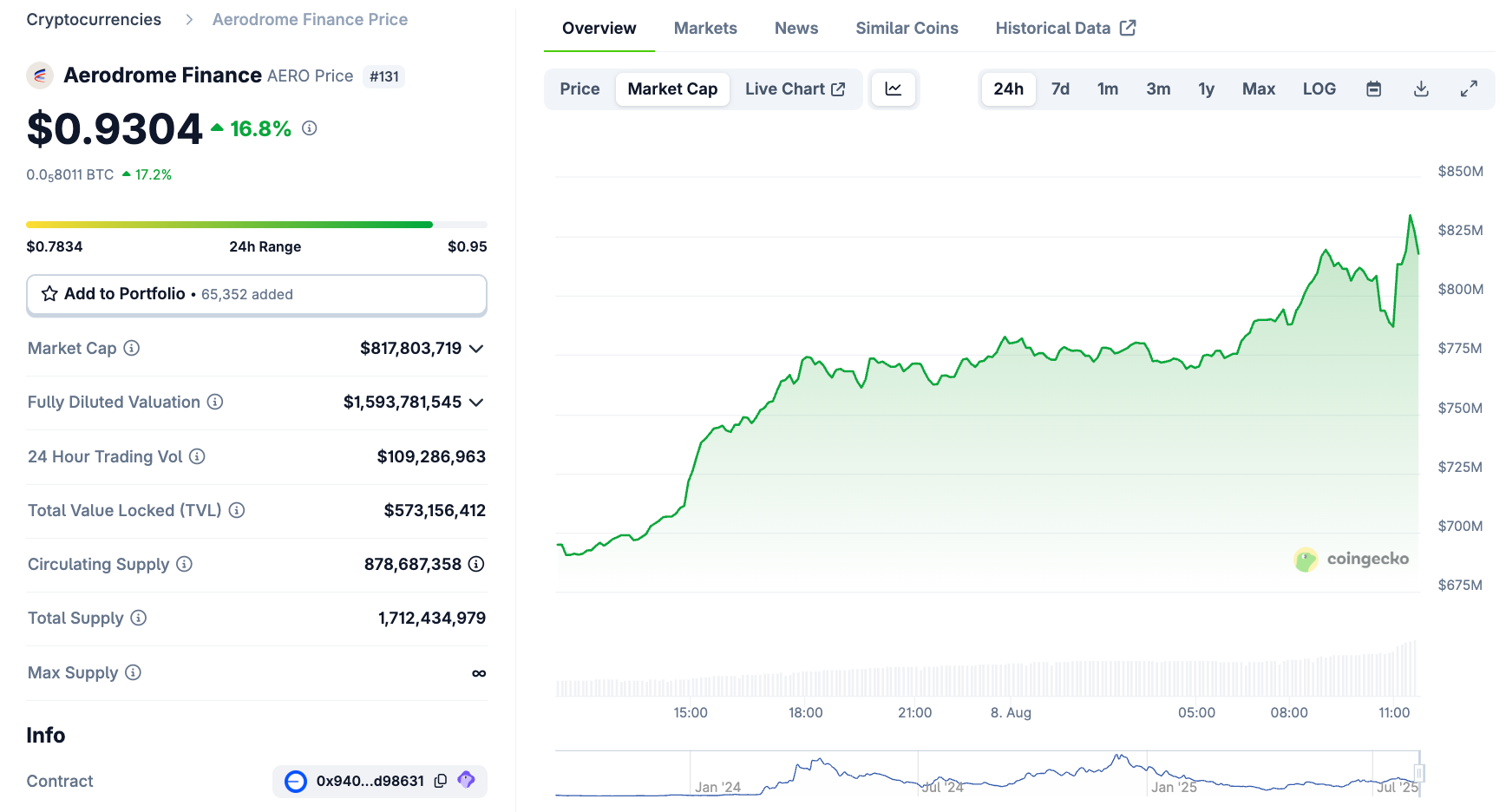
Reaction from the crypto community has been largely positive. Aerodome Finance, the biggest DEX on Base, saw its token rally after the news. Other Base-affiliated projects also recorded gains as traders anticipated higher liquidity and activity.
Still, the rollout hasn’t escaped criticism. Some users pointed out that Coinbase’s centralized exchange still refuses to list certain tokens — like those created under the VIRTUALS protocol — even though they can now be traded through the in-app DEX. Others argue the integration blurs the line between decentralization and corporate control, given that Coinbase owns both the app and the blockchain powering the trades.
Centralized Infrastructure, Decentralized Access
Critics say this isn’t a “true” DEX in the spirit of DeFi. While users hold their own keys, the infrastructure — from the blockchain to the user interface — remains tightly controlled by Coinbase. This trend toward “de-decentralization,” they warn, could consolidate too much power in the hands of major players.
I think CEXs should rephrase « DEX trading » to « on-chain trading » when operating on a chain they built.
— Saint Pump (@Saint_Pump) August 8, 2025
Coinbase fully operates Base’s core infrastructure, nothing decentralized here. https://t.co/NeoRxHCrZ8
Even so, the launch is a breakthrough for U.S. traders who’ve struggled with the complexity of using DEXs: setting up wallets, connecting to platforms, paying unpredictable gas fees, and navigating unfamiliar interfaces. Now, that process is folded into the same app millions already use.



