

Shares of bitcoin miner CleanSpark took a sharp hit on Monday, sliding more than 10% as investors reacted to a mix of regional power-outage concerns and newly disclosed details about the company’s CEO compensation. The drop left CleanSpark underperforming many of its crypto-mining peers and extended a volatile start to the year for the stock.
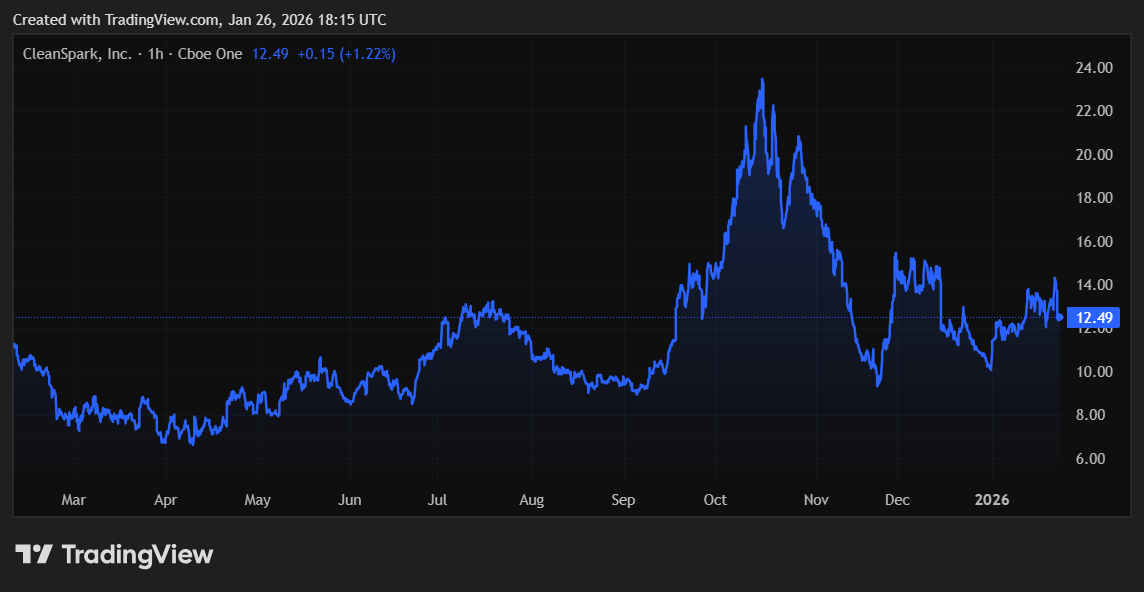
CleanSpark shares were last trading around $12.30, according to price data. The decline came amid broader unease in the crypto-mining sector, where stocks have been moving closely with bitcoin’s recent pullback and growing scrutiny of miners’ costs and corporate governance.
Weather-related power risks in focus
One immediate trigger appeared to be heightened concern about power reliability in Tennessee, a key market for CleanSpark. In a post on X, Matthew Sigel, head of digital assets research at VanEck, said investors were reacting to headlines about power outages in the state, alongside what he described as the “sticker price” of CleanSpark’s CEO transition.
$CLSK steep fall -9% today. Couple reasons:
— matthew sigel, recovering CFA (@matthew_sigel) January 26, 2026
1) Weather Impact: CLSK has the most Tennessee exposure (via GRIID acquisition) among public miners. While their specific sites (East TN) are actually in grid "Green Zones" with power, the market appears to be aggressively pricing in… pic.twitter.com/Pggt1XjKNB
CleanSpark expanded its Tennessee footprint significantly after acquiring GRIID Infrastructure in mid-2024. While the company’s east Tennessee facilities are located in grid “green zones” that are generally protected from forced curtailments, the market seemed to be pricing in broader state-level risks following a weekend winter storm.
At the height of the storm, roughly 250,000 customers across Tennessee were without power, according to data from PowerOutage. Grid analysts have noted that, so far, the U.S. electricity system has avoided the kind of widespread generation failures seen during Winter Storm Uri in 2021. Most recent outages have been linked to downed distribution lines rather than shortages in power supply. Still, the headlines were enough to revive investor sensitivity around weather-related disruptions, especially for energy-intensive bitcoin miners.
The storm’s impact rippled beyond markets as well. It forced a two-day delay of a planned Senate Agriculture Committee markup on crypto-related legislation, while the SEC and CFTC postponed a joint event focused on digital asset regulation.
CEO pay disclosure adds pressure
Adding to investor unease was CleanSpark’s latest definitive proxy filing, which for the first time laid out the full cost of its CEO transition. According to the filing, CEO and chairman Matthew Schultz received total compensation of approximately $44.9 million for fiscal year 2025. The package was largely driven by equity awards and incentive bonuses tied to the leadership transition.
For some shareholders, the size of the payout stood out. The disclosed compensation represents roughly 6% of CleanSpark’s reported revenue for the period, a ratio that has raised eyebrows among investors who are already watching margins closely.
CleanSpark, like many miners, is navigating a challenging environment. Rising energy costs, increased competition, and the effects of bitcoin’s halving have put pressure on profitability. At the same time, the company has signaled ambitions to pivot part of its business toward high-performance computing and AI-related infrastructure, a strategy that requires capital and long-term execution.
A volatile backdrop for mining stocks
January has been a choppy month for crypto-exposed equities, and CleanSpark’s sell-off reflects how quickly sentiment can shift. Even issues that do not directly affect operations, such as weather headlines or governance disclosures, can move stocks sharply when investors are already on edge.
For now, analysts say the reaction highlights the market’s sensitivity to both operational risk and executive decision-making. While CleanSpark’s facilities were not reported to be directly impacted by outages, and the compensation package had been previously agreed, the timing of the disclosures proved unsettling.



