
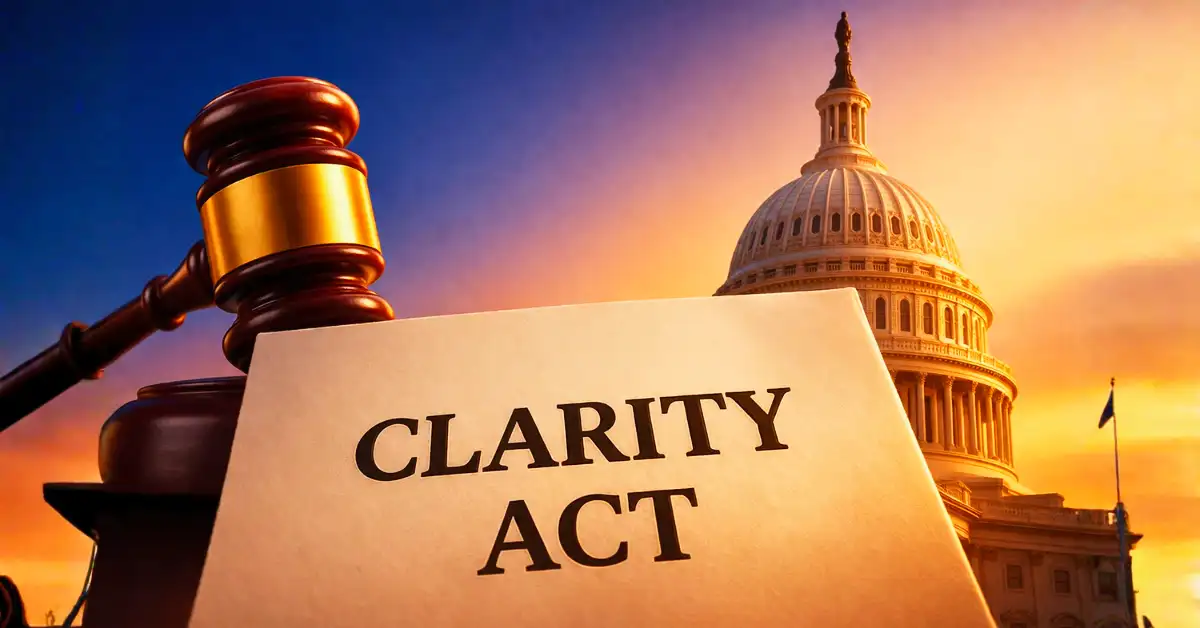
The U.S. CLARITY Act faces a potential delay into May as banking groups intensify lobbying over stablecoin yield provisions. The shift highlights how control over interest-bearing digital dollars is emerging as a central fault line in U.S. crypto regulation.
The Senate Banking Committee must decide by Friday whether to advance the bill for markup the week of April 27. But a crowded legislative calendar, including a confirmation hearing for Federal Reserve chair nominee Kevin Warsh, complicates timing. Industry pressure is also mounting, with banking associations urging lawmakers to revisit recently negotiated terms.
 Crypto in America
Will Stablecoin Yields Reshape Bank Deposit Flows?
The dispute centers on whether stablecoins should be allowed to offer yield to holders, a feature banks argue could accelerate deposit outflows. The American Bankers Association estimates as much as $6.6 trillion could exit the banking system under such a model. Yet analysis from the White House Council of Economic Advisers suggests a yield ban would increase bank lending by only $2.1 billion, or roughly 0.02% of a $12 trillion loan base.
That divergence has sharpened the policy debate in Washington. The Council concluded that restricting yields would impose an estimated $800 million cost on consumers while offering minimal benefit to credit creation. The findings have strengthened the position of crypto firms and fintech advocates seeking competitive returns for stablecoin users.
White House Crypto Council executive director Patrick Witt criticized bank lobbying efforts, stating that institutions are “further lobbying out of greed or ignorance.” He urged lawmakers not to let the legislation be constrained by risks the administration’s own data appears to downplay. Still, key negotiator Senator Thom Tillis has acknowledged unresolved issues and is considering additional stakeholder sessions.
The bill also faces broader hurdles, including provisions covering decentralized finance, conflicts of interest, and trading rules for lawmakers. If stablecoin yields unlock new onchain savings flows, who ultimately captures that liquidity across banks, issuers, and DeFi platforms? The next catalyst will be whether the Senate Banking Committee schedules markup or pushes negotiations deeper into May.



