

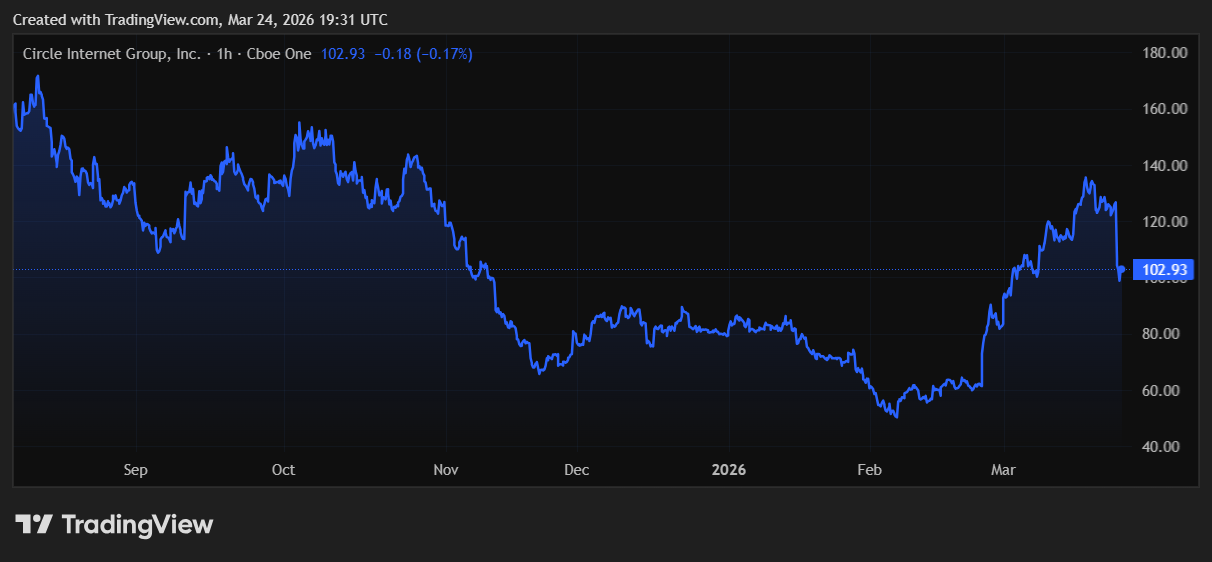
Circle shares fell 20% on Tuesday as regulatory uncertainty around stablecoin rewards intensified. The decline reflects growing concern that new U.S. legislation could weaken key demand drivers for dollar-backed tokens.
The stock traded near $100 during the session, according to data. Analysts at Mizuho linked the drop to draft provisions in the Clarity Act that may restrict reward programs tied to stablecoin balances. The proposed rules would limit exchanges from offering incentives and could constrain how platforms structure yield-like benefits.
Will Stablecoin Reward Limits Reshape Market Demand?
The draft legislation, backed by a bipartisan group of U.S. senators, would go beyond earlier frameworks such as the GENIUS Act. While that law barred issuers from paying interest directly, it allowed third-party platforms to offer rewards. The new proposal could close that gap, reducing incentives that have supported stablecoin adoption across exchanges.
The impact extends beyond Circle. Coinbase shares also dropped nearly 10%, with analysts noting that USD Coin (USDC) contributes roughly 20% of the exchange’s revenue. A significant portion of that revenue is redistributed to users through rewards, creating a feedback loop that could weaken if incentives are restricted.
“Over the long term, not paying rewards reduces the attractiveness of holding USDC,” Mizuho analysts said.
Banks have also pushed for tighter rules, arguing that yield-bearing stablecoins could divert deposits away from traditional financial institutions.
At the same time, competitive pressure is increasing. Tether, which has $184 billion in circulating USDt, announced plans to complete its first full financial audit with a Big Four accounting firm. The move could narrow Circle’s positioning as a transparency-focused issuer, particularly if audit results provide greater visibility into Tether’s reserves.
Separately, onchain investigator ZachXBT reported that Circle froze 16 USDC-linked wallets tied to unrelated businesses, citing an ongoing U.S. civil case. The combination of regulatory pressure, competitive shifts, and operational scrutiny raises questions about near-term momentum. The next catalyst will be finalized legislative language and whether reward restrictions materially impact stablecoin flows.



