
Circle shares dropped roughly 20% on regulatory concerns tied to proposed U.S. stablecoin rules. The reaction may overstate risk to issuers and instead reflect confusion around how yield restrictions would be applied.
Bernstein analysts argue the Clarity Act (US) primarily targets distributors rather than stablecoin issuers. The proposal would limit platforms from offering yield on passive stablecoin balances, while allowing activity-based incentives linked to trading or payments. Circle, which issues USD Coin (USDC), does not directly pay yield to holders.
Do Stablecoin Rules Threaten Issuers Or Platforms?
Circle’s revenue model centers on reserve income rather than user-facing yield. The firm manages roughly $80 billion backing USDC, primarily invested in short-term U.S. Treasurys, generating about $2.64 billion in income in 2025. This structure places it outside the scope of restrictions aimed at yield-bearing accounts.
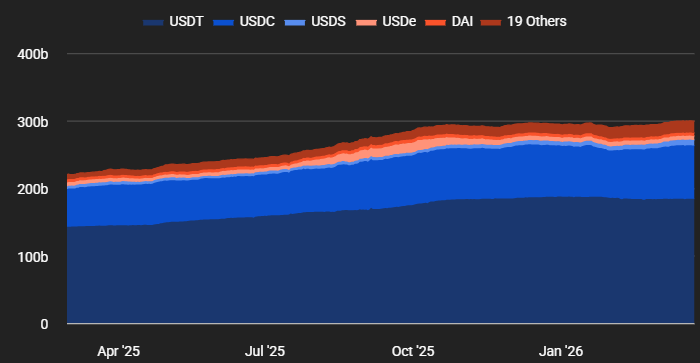
The distinction comes as stablecoin usage continues to scale across financial infrastructure. USDC supply has grown from about $30 billion to $80 billion over two years, while onchain transaction volume reached $11.9 trillion in the fourth quarter of 2025. That growth suggests demand extends beyond yield incentives into payments and collateral use.
“Don’t conflate stablecoin issuer with distributor,” Bernstein analysts led by Gautam Chhugani wrote, emphasizing that platforms like Coinbase facilitate yield distribution rather than generate underlying returns.
Coinbase currently offers around 3.5% yield on USDC balances, sharing reserve income with Circle.
Still, intermediaries may face near-term adjustments if rules are implemented as drafted. Platforms could shift toward engagement-based rewards while maintaining user activity. The next catalyst will be how regulators define the boundary between passive yield and permitted incentives under final legislation.



