
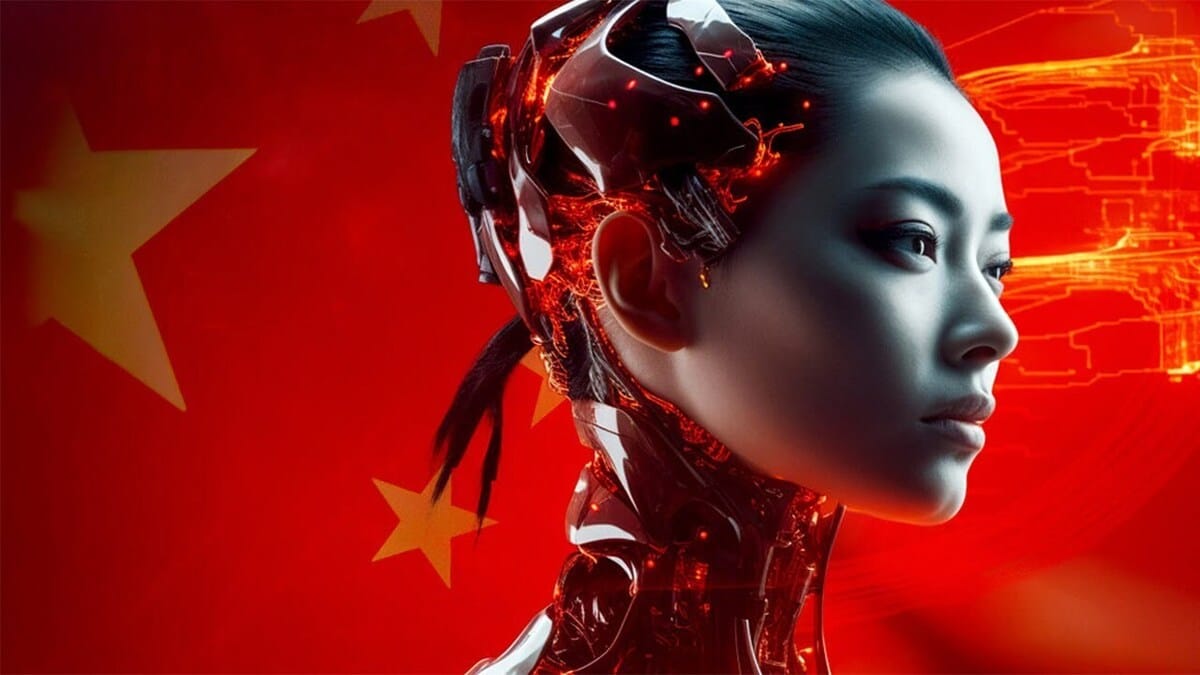
China’s adoption of generative artificial intelligence has surged at a remarkable pace, with the country’s user base doubling to 515 million in just six months, according to a new report from the China Internet Network Information Centre (CNNIC).
The findings, released Saturday, show that 36.5% of China’s internet users engaged with generative AI tools in the first half of 2025 — a rate that underscores the nation’s rapid digital transformation and expanding technological influence on the global stage.
AI Becomes Mainstream in China
The CNNIC report highlights how deeply AI has become woven into daily life in China. From virtual assistants to creative content generators, AI technologies are being adopted across education, business, and entertainment sectors. The surge, CNNIC notes, is powered by “advanced infrastructure and strong policy support” under Beijing’s national AI strategy.
 Vincent Chow
A survey of 30,000 respondents across 31 provinces revealed that users under 40 dominate the demographic, making up 74.6% of all AI users. Those with higher education also account for a significant share, representing 37.5% of the total user base. These figures suggest that AI adoption is strongest among young, digitally literate professionals who are comfortable experimenting with new technologies in both personal and professional settings.
Domestic AI Models Lead the Market
In a notable trend, more than 90% of Chinese users reported that their preferred AI models are homegrown. With U.S. models such as OpenAI’s ChatGPT and Google DeepMind restricted in mainland China, domestic platforms have stepped in to dominate the market.
Popular Chinese AI systems include DeepSeek, Alibaba Cloud’s Qwen, and ByteDance’s Doubao, all of which have seen explosive growth in 2025. Analysts attribute this momentum to Beijing’s emphasis on technological self-reliance and strong government incentives for AI research and deployment.
Global Context: China Pulls Ahead in AI Adoption
Comparative studies indicate that China’s AI adoption rate now surpasses that of the United States. A Microsoft report from September 2024 estimated that China had 195 million AI users at mid-year. That figure more than doubled following the January 2025 release of DeepSeek’s R1 model, which helped push national adoption to 20% within months.
Meanwhile, the U.S. has maintained a steadier adoption rate of around 25%, suggesting that China’s AI growth trajectory could reshape the global balance in technological influence.
Innovation and Policy Drive Expansion
Beyond sheer user numbers, China is also setting records in AI innovation. The CNNIC report found the country had filed 1.576 million AI-related patents as of April 2025 — accounting for 38.6% of the global total, the largest share worldwide.
Zhang Xiao, deputy director of CNNIC, told Xinhua News Agency that China expects continued breakthroughs in “open-source AI, embodied intelligence, AI agents, and AI governance.” These developments align with Beijing’s “AI Plus” initiative, which promotes integrating AI across industries, from manufacturing to public services.
A Parallel AI Ecosystem Emerges
China’s meteoric rise in generative AI use signals more than rapid adoption — it reflects the formation of a parallel AI ecosystem, largely independent of Western platforms. As domestic tools scale and innovate, global technology dynamics are beginning to split into two distinct spheres: one led by American companies, and another driven by Chinese innovation.
How this divergence shapes the future of global AI — from governance standards to research collaboration — remains to be seen. But one thing is clear: China’s swift embrace of AI is redefining the global digital landscape and setting new benchmarks for technological integration at scale.



