
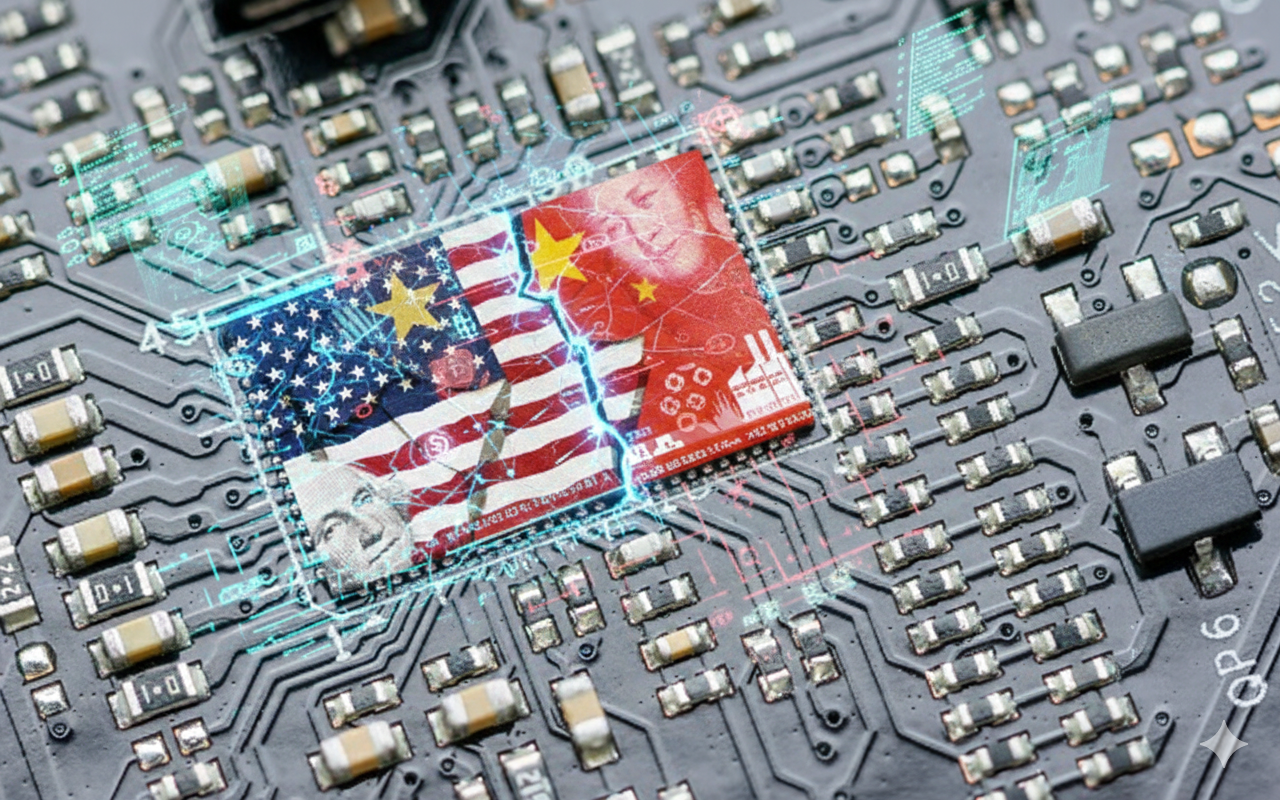
China is reportedly opting out of purchasing Nvidia’s H200 artificial intelligence chips, signaling a deeper commitment to advancing its domestic semiconductor industry amid ongoing U.S.-China tech tensions.
White House AI adviser David Sacks recently stated that China has “figured out” the U.S. strategy of allowing limited exports of the H200, and is instead doubling down on its goal of semiconductor independence. While the U.S. had hoped that permitting sales of the H200—a less advanced chip compared to Nvidia’s newest offerings—would foster market competition and curb reliance on cutting-edge U.S. technology, China appears to be taking a different path.
David Sacks says China is rejecting Nvidia's H200 AI chips, because the country wants "semiconductor independence" and to "prop up and subsidize Huawei" (@eastland_maggie / Bloomberg)https://t.co/8Uy0tFcDWohttps://t.co/5wM2rigGsX
— Techmeme (@Techmeme) December 12, 2025
📥 Send tips! https://t.co/wlNZvXtJTU
The H200, launched in 2023 as part of Nvidia’s Hopper series, sits below the company’s latest Blackwell and Rubin chips. Its export was allowed partly due to its 18-month technological lag, which U.S. officials believed would reduce national security concerns while still generating business for American firms.
Nvidia had estimated China’s data center market could generate up to $10 billion in annual revenue from H200 sales, contributing to a potential $50 billion market opportunity. However, with China showing little interest in the H200—and having already declined the lower-tier H20 earlier this year—that forecast may no longer hold.
On the ground in China, momentum is building around local tech champions like Huawei and Cambricon. Beijing is reportedly preparing a substantial support package worth up to $70 billion to further accelerate domestic chip production. While Chinese officials have emphasized the importance of stable cooperation with the U.S., their actions suggest a strong preference for investing in homegrown innovation.
Sacks noted that China's rejection of the H200 isn't solely about performance. “They want to prop up and subsidize Huawei,” he said, highlighting a broader strategy of prioritizing national champions over imported technology.
Although Nvidia continues to seek export licenses for vetted Chinese clients and criticizes U.S. controls for harming American competitiveness, the broader trend indicates that China is firmly steering toward technological self-sufficiency.



