

BNB just hit a record high, and one Hong Kong investment firm is doubling down.
Hong Kong–based investment bank China Renaissance has announced a $100 million allocation to BNB, the native token of Binance’s ecosystem. The move comes as BNB trades near an all-time high of $900, extending a multi-week rally that’s put the altcoin back in the spotlight.
China Renaissance, a HK public company, buying $100m USD worth of $BNB.
— CZ 🔶 BNB (@cz_binance) August 22, 2025
In additional to buying BNB, many other long-term strategic partnerships involved.
Let's build the ecosystem together!🤝
English version here: https://t.co/IUWJV4YGHQ https://t.co/Q8zznNO0iM
But the bullish news is tempered by turbulence elsewhere. A U.S.-based company that had been building a BNB treasury saw its stock plunge more than 80% this week, leading to a Nasdaq delisting. That collapse has raised questions about the risks of institutional BNB exposure, even as Asian firms move ahead with large-scale investments.
China Renaissance’s BNB Strategy
Unlike some U.S. players that framed their BNB purchases as a digital asset treasury (DAT) strategy, China Renaissance is emphasizing ecosystem development.
In a press release, the firm said it’s partnering with YZi Labs (formerly Binance Labs) to support the BNB Chain through several initiatives:
- Developing fund-based investment products tied to BNB.
- Partnering with software developers to expand blockchain infrastructure.
- Encouraging more Hong Kong–based exchanges to list BNB trading pairs.
- Launching a Real World Asset (RWA) Fund that tokenizes assets backed by BNB.
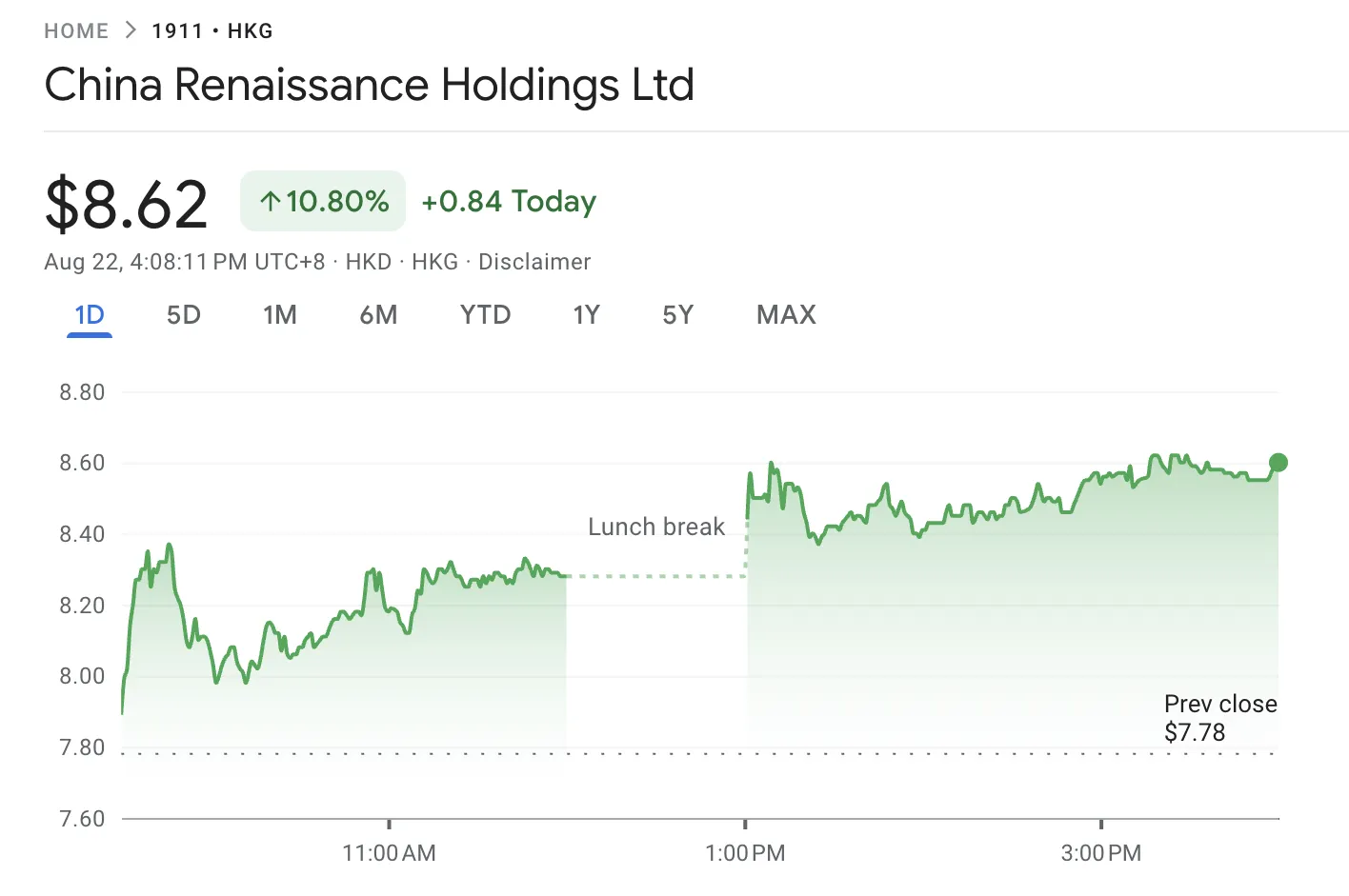
Markets reacted positively to the news. China Renaissance shares surged 10% following the announcement, suggesting investors see the $100 million bet as a long-term growth play rather than a speculative punt.
A Tale of Two Strategies
The contrast between Asia’s cautious optimism and America’s failed BNB experiment is stark.
Last month, a U.S. company announced plans for a $520 million BNB treasury but managed to deploy only $60 million before its share price collapsed, triggering the Nasdaq delisting. That failure has cast a shadow over the idea of BNB treasuries, raising doubts about whether the token can anchor institutional strategies the same way Bitcoin or Ethereum have.
For China Renaissance, the focus is less on holding BNB as a static reserve and more on using it to build new financial products and partnerships. That approach may help shield the firm from some of the risks seen in the U.S. case.
What This Means for BNB
BNB has been one of the least volatile major altcoins this year, a key factor behind its growing appeal to institutional investors. The token’s rise to near $900 has fueled speculation that it could carve out a bigger role in the global crypto economy, even as regulatory scrutiny of Binance itself remains a wildcard.
China Renaissance’s move signals that Hong Kong remains committed to experimenting with digital assets, despite mixed results elsewhere. Still, the failure of the U.S. treasury project shows that institutional adoption of BNB is anything but guaranteed.



