
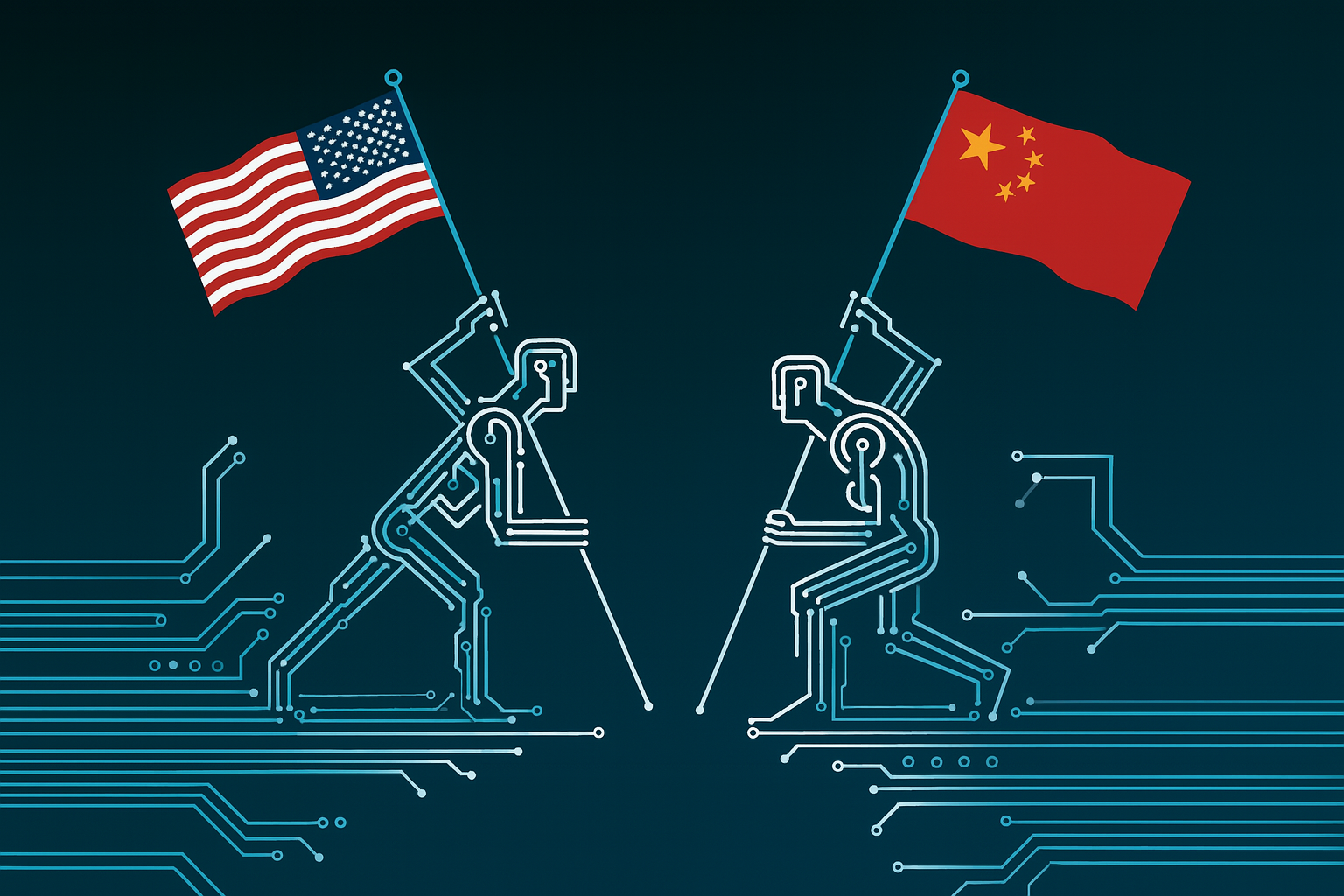
At the World Artificial Intelligence Conference in Shanghai, China unveiled a major new initiative aimed at reshaping the future of global AI governance: the World AI Cooperation Organization. Set to be headquartered in Shanghai, the group seeks to unite countries—particularly those from the Global South—around shared standards for ethical, inclusive, and accessible AI development.
Framed by Premier Li Qiang as a response to the growing risk of monopolization in artificial intelligence, the organization aims to foster collaboration over competition. With the global AI market projected to reach $4.8 trillion by 2033, the move marks a significant step in China's broader effort to expand its technological influence on the world stage.
The event blended high-tech flair—complete with humanoid robots boxing in a ring—with serious global diplomacy. Absent from the gathering was the United States, highlighting the ongoing geopolitical tensions in the tech sphere. While the U.S. reaffirms its intent to lead in AI development, China is actively courting partnerships with nations like Ethiopia, Indonesia, and France.
For many developing countries, Chinese AI solutions present an attractive option. Unlike Western systems that often require advanced infrastructure, Chinese technologies are built with scalability and affordability in mind. “China’s AI offerings are tailored to the needs of lower-income countries,” said Eric Olander of the China-Global South Project.
This strategy draws parallels to China’s earlier Digital Silk Road, which extended its reach in global telecommunications. Now, with AI, Beijing is positioning its tech firms as key players in everything from large language models to digital infrastructure—offering customization and an emphasis on national sovereignty.
While details on the new cooperation body are still emerging, its guiding principles emphasize open access, clean-energy tech, and local control. The contrast with Washington's more cautious and ideologically driven approach underscores a growing divide in global tech governance.
As nations weigh their options in a fast-evolving AI landscape, China’s latest initiative signals a shift toward a more multipolar digital world. For countries navigating between major powers, new alliances like this could redefine the balance of innovation and influence in the years ahead.



