
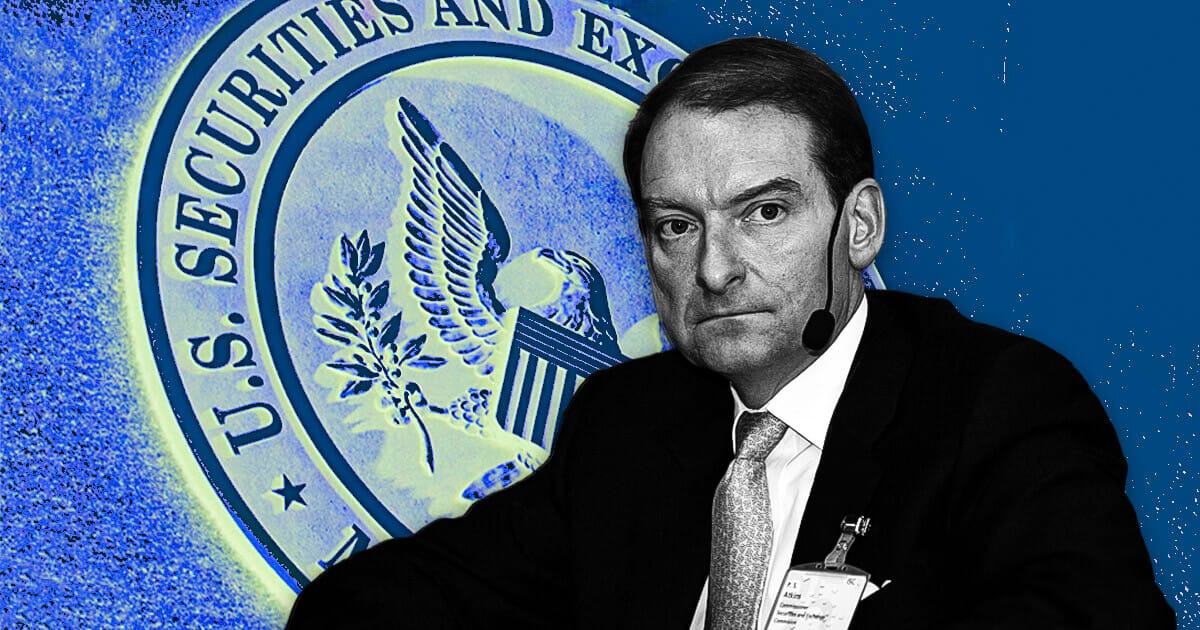
U.S. financial regulators are taking a more coordinated approach to cryptocurrency oversight as the Commodity Futures Trading Commission and the Securities and Exchange Commission formally join forces on a new initiative called “Project Crypto.”
The effort, announced Thursday at the Joint CFTC-SEC Harmonization Event, aims to modernize how digital assets are regulated in the United States. It reflects a shift away from years of public disagreement between the two agencies over who should oversee various parts of the crypto market.
SEC Chair Paul Atkins said the collaboration recognizes how modern financial markets actually function. Trading, custody, clearing, and risk management now span multiple asset classes and technologies, he noted, making rigid regulatory silos less effective. Fragmented oversight, Atkins argued, can confuse investors rather than protect them.
The announcement marks a clear change in tone from recent years. Not long ago, the CFTC and SEC were seen as locked in a turf battle over crypto. Former CFTC Chair Rostin Behnam maintained that most digital tokens fell under commodities law, while former SEC Chair Gary Gensler argued that nearly all tokens, except bitcoin, should be treated as securities.
That standoff began to ease last fall, when then-Acting CFTC Chair Caroline Pham said the agencies would work together instead of competing. Now, under new CFTC Chair Michael Selig, that cooperation is becoming formal policy.
Speaking at one of his first public events since taking office, Selig said the CFTC will partner directly with the SEC on Project Crypto rather than pursuing a separate framework. He described the goal as a unified and coherent approach to federal oversight of crypto markets.
As an interim step, Selig said he has instructed staff to work with the SEC on potentially codifying a shared taxonomy proposed by Atkins. The framework would help clarify which digital assets are treated as securities and which fall under commodities rules while Congress continues to debate broader legislation.
Lawmakers are still working through disagreements on how to regulate crypto market structure. On Thursday, the Senate Agriculture Committee advanced a digital asset bill along party lines, while progress in the Senate Banking Committee has stalled amid disputes over stablecoin provisions.
Despite the delays, Selig said he believes Congress is close to acting. He warned, however, that regulators cannot afford to wait. While the U.S. currently leads global crypto activity, he said that position is not guaranteed unless rules are modernized to keep pace with innovation.
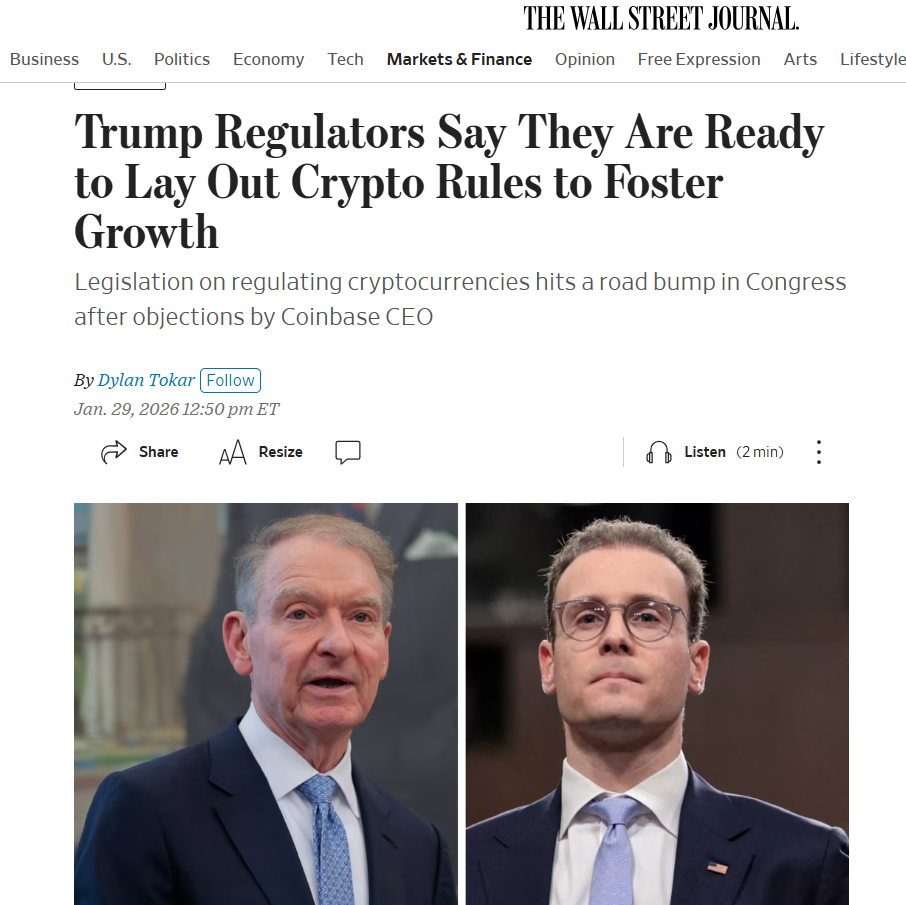
Atkins echoed that view in a recent interview with The Wall Street Journal, saying legislation would be preferable in the long run, but that regulators can still act within their existing authority. Both agencies also plan to sign a memorandum of understanding to formalize their cooperation.
Beyond crypto assets, Selig also signaled changes ahead for prediction markets, which have grown rapidly in popularity over the past year. He said the CFTC will withdraw a proposed rule from 2024 that sought to ban political and sports-related event contracts, along with a later advisory that warned firms about such products.
According to Selig, those measures added uncertainty rather than clarity. Platforms like Polymarket and Kalshi saw sharp growth during the 2024 election cycle, even as regulators debated how to oversee them. He now wants staff to draft clearer rules for event contracts, aiming to provide consistent standards for market participants.
The shift follows a period of mixed signals. While previous leadership raised concerns about election-related contracts, recent approvals have allowed several firms, including Gemini Titan, MIAX Derivatives Exchange, and Bitnomial, to enter the space. Other companies, such as Truth Social, are also exploring prediction market features through crypto partnerships.
Selig said the existing framework has proven difficult to apply and needs updating to reflect how these markets operate today.
Together, Project Crypto and the planned work on prediction markets point to a broader effort by U.S. regulators to reduce uncertainty, align oversight, and adapt to rapidly evolving financial technologies. Whether Congress acts soon or not, the message from both agencies is clear: coordination is no longer optional.



