
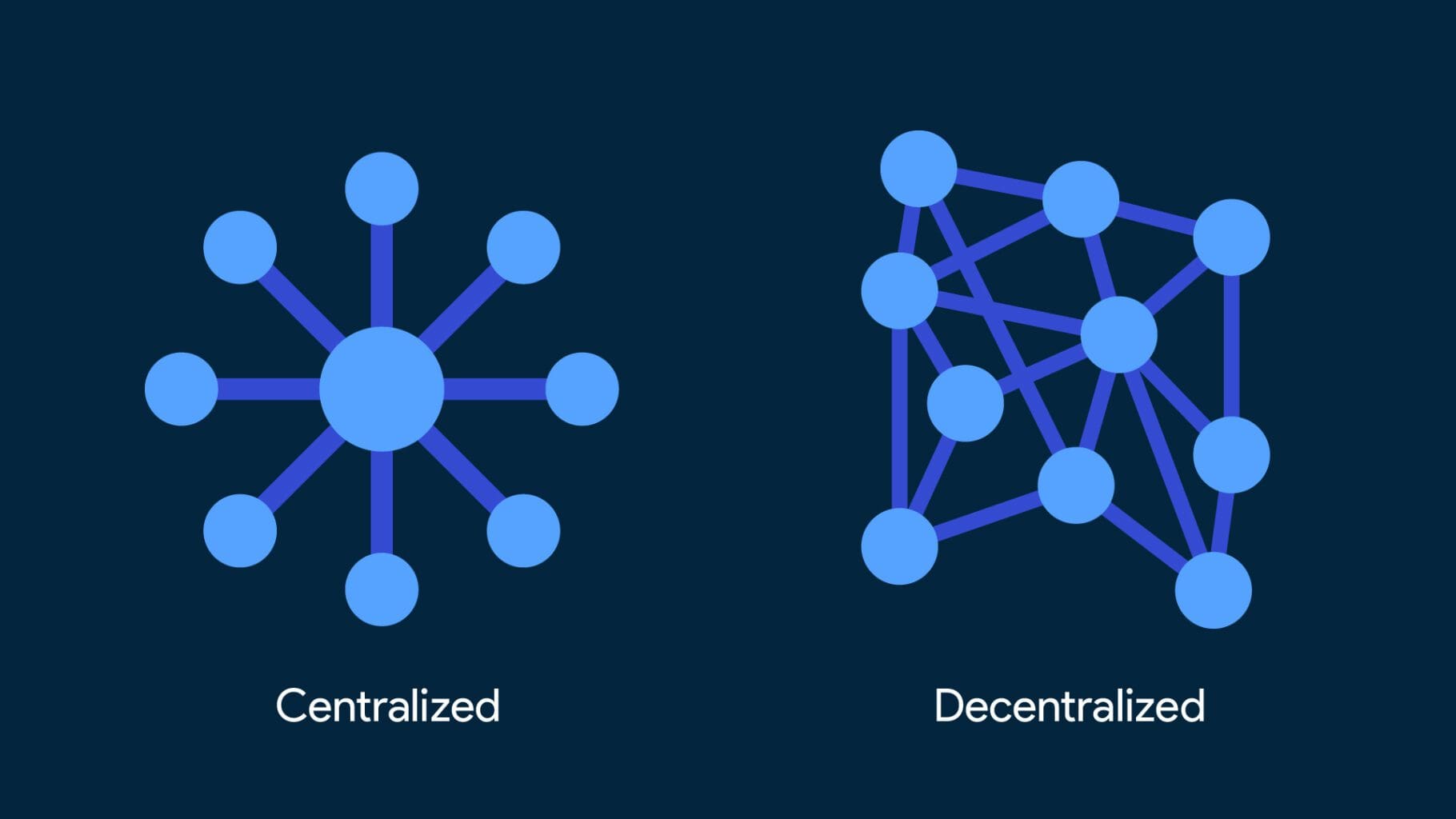
When Bitcoin introduced blockchain technology to the world, it launched a revolution built on a single, powerful idea: decentralization. It’s the ultimate buzzword in the crypto space, but what does it actually mean, and why is it considered the "ultimate knockdown argument" against traditional systems?
In simple terms, centralization is about having one boss, while decentralization is about sharing control among a community. This philosophical difference has massive implications for security, reliability, and power.
Centralized Networks: The Single Point of Control
In a centralized network, there is a single entity that holds complete authority over the entire system. All data and processes flow through this one gatekeeper.
Think of it this way: a traditional bank is centralized. Facebook is centralized. When you upload a photo, that data flows from your device to Facebook's single, massive server infrastructure. That central authority is responsible for storing, processing, and transmitting everything.
The danger here is the single point of failure:
- If the central server goes down, the whole system stops (no fault tolerance).
- If a hacker targets that one server, all the data is compromised (low attack resistance).
- The entity controlling the system can change the rules, censor content, or misuse your data whenever it chooses.
Decentralized Networks: Power to the Peers
A decentralized network operates on a peer to peer principle, meaning no single entity holds total control. Work, responsibility, and data are shared across many independent entities.
A classic example outside of crypto is torrents. When you download a file via torrent, you aren't connecting to one central server; you are downloading fragments of the file from dozens of other users (peers) who already have it on their computers.
Public blockchains (like Bitcoin and Ethereum) take this concept and add an agreed upon set of rules and an immutable ledger. This design offers crucial advantages:
- Fault Tolerance: Since the system relies on thousands of independent nodes across the globe, it's highly unlikely they would all fail at once. The network stays online even if a large chunk of nodes goes down.
- Attack Resistance: To compromise a decentralized blockchain, a malicious actor would have to attack and gain control over a majority of the nodes simultaneously, a task that is technically difficult and prohibitively expensive.
- Collusion Resistance: It's much harder for a small group to secretly collude or act selfishly at the expense of everyone else. Because the ledger is public, any attempt at malicious behavior is immediately visible to the wider community.
The Blockchain Spectrum: Not All Ledgers are Decentralized
It's a common misconception that all blockchains are decentralized. The technology is simply a tool for creating a shared, cryptographic ledger, and it can be implemented in three distinct ways:
- Public Blockchains (Decentralized): These are open to anyone to read, write, and validate transactions. They are the backbone of most major cryptocurrencies and represent the true ideological aim of decentralization.
- Private Blockchains (Centralized): These are controlled by a single individual or company. Only authorized members can participate, and the central controller maintains ultimate authority. They are essentially secure, distributed databases for a single organization.
- Permissioned Blockchains (Hybrid): These fall in the middle. While they use distributed ledgers, participants must be approved or granted specific permissions to read or validate data. They're often used by consortiums of companies (like banks or supply chain partners) who need a trusted, shared system without the openness of a public chain.
Ultimately, the choice between centralized and decentralized networks is a trade off between efficiency and ideology. When you exchange traditional, centralized currency for a decentralized cryptocurrency, you're not just making a financial transaction; you’re making a statement about who should control the flow of money and information.



