

From January 1, 2026, crypto regulation will enter a new phase as the OECD’s Crypto-Asset Reporting Framework, known as CARF, comes into force across 48 jurisdictions. Early adopters include the United Kingdom and the European Union, marking the first coordinated global effort to standardize how crypto transactions are reported to tax authorities.
While the rules officially go live in 2026, their impact will be felt well before then. Exchanges and other crypto platforms are already preparing for sweeping changes to how they collect user data, verify tax residency, and report activity.
What CARF Means in Practice
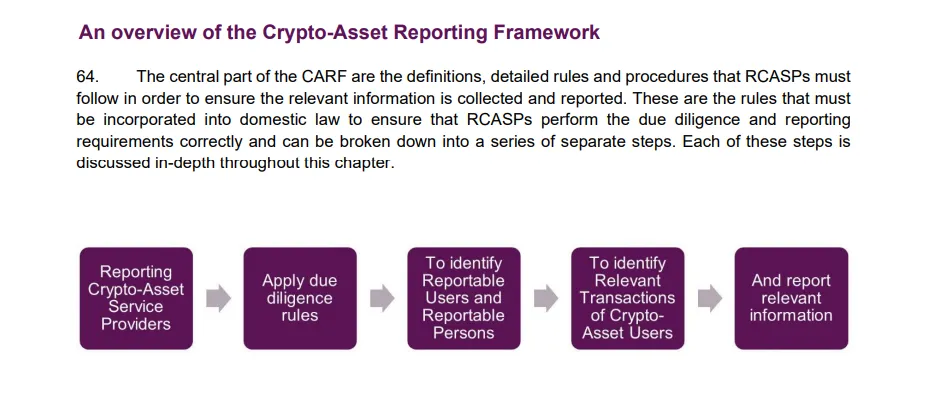
CARF requires crypto platforms that fall within its scope to collect more detailed customer information than before. This includes verifying users’ tax residency and reporting account balances and transaction data on an annual basis. That information will be shared with domestic tax authorities and exchanged across borders under existing international agreements.
According to Lucy Frew, partner and head of the global Regulatory & Risk Advisory Group at law firm Walkers, CARF represents a fundamental shift. She describes it as a “game-changer” that will reshape compliance expectations for both digital asset businesses and their customers.
In practical terms, users can expect more detailed onboarding questions, regular account reviews, and far less anonymity when using overseas or offshore platforms. Frew notes that companies that act early are more likely to manage risk effectively and maintain user trust, while those that delay could face regulatory and reputational fallout.
A Structural Shift for Crypto Exchanges
For exchanges, CARF is not a minor compliance update. It requires structural changes to systems and workflows. Platforms will need to integrate CARF requirements into existing Know Your Customer and Anti-Money Laundering processes, redesign onboarding to capture tax residency and self-certification data, and upgrade reporting infrastructure.
 Adam Fayed
This will likely involve new governance frameworks, staff training, and closer coordination between compliance, engineering, and customer support teams. The challenge is even greater for platforms operating across a mix of CARF and non-CARF jurisdictions.
UK-licensed exchanges are among those preparing for the transition. Asher Tan, CEO and co-founder of CoinJar, said users will be asked to provide additional tax residency information as the rules are phased in. The key challenge, he said, is meeting regulatory expectations without undermining the clear and user-friendly experience customers expect.
For regulated platforms, that balance could become a competitive advantage as crypto continues to move into the financial mainstream and users increasingly seek compliant, transparent services.
What It Means for Retail Crypto Users
For individual users, CARF does not introduce new taxes. Instead, it strengthens enforcement of existing tax rules. The most immediate change is a higher likelihood of audits.
From 2026, UK tax authority HM Revenue & Customs will receive standardized, machine-readable data directly from exchanges, including overseas platforms. That makes discrepancies between tax returns and exchange records much easier to spot.
According to a UK-based crypto tax practitioner, common issues are often unintentional rather than deliberate avoidance. These include forgotten offshore exchange accounts, frequent small trades assumed to be insignificant, and misreported or unreported DeFi or NFT transactions.
The warning is clear: while reporting begins in 2026, the data may be used to review earlier tax years. Users with unresolved issues are encouraged to address them now, while voluntary disclosure options remain available.
A New Era of Transparency
CARF marks a turning point for the crypto sector, bringing it closer to the transparency standards long applied to traditional finance. For exchanges, it demands significant investment in systems and compliance. For users, it removes any lingering assumption that crypto activity sits outside the reach of tax authorities.
As the 2026 deadline approaches, preparation will matter. Those who adapt early, whether platforms or individual investors, are likely to navigate the transition with fewer surprises and greater confidence.



