
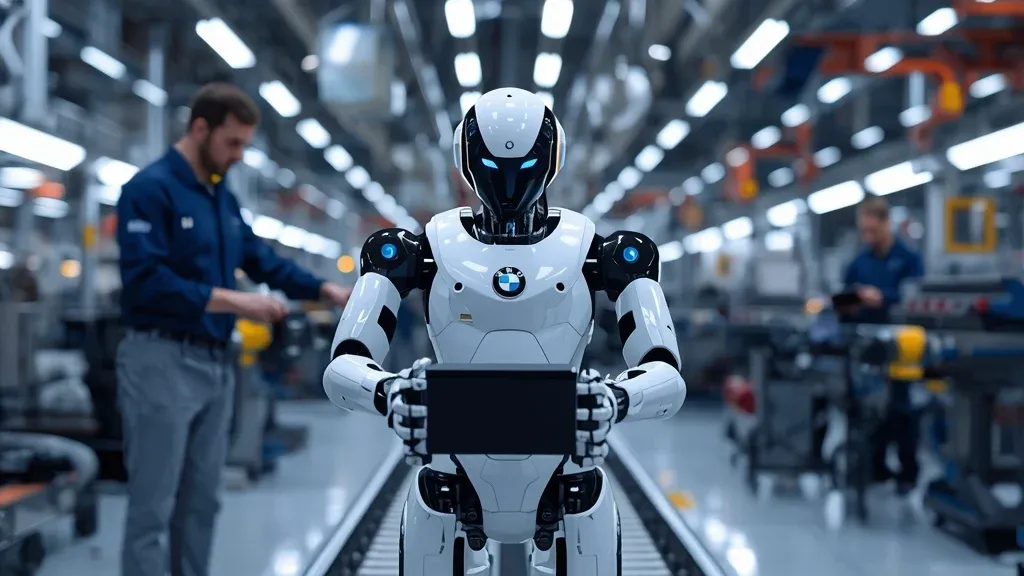
A humanoid robot is now working inside a German automotive factory for the first time. The deployment by BMW Group signals that physical artificial intelligence is moving from research labs into live industrial production environments.
The pilot program launched at BMW’s plant in Leipzig using AEON, a wheeled humanoid robot built by Hexagon Robotics. Announced on March 9, 2026, the project marks the first automotive manufacturing deployment of the AEON platform globally.
 Selina Schmuker
The Leipzig trial follows a 10-month experiment conducted in 2025 at BMW’s Spartanburg facility in the United States. There, the company tested the Figure 02 from Figure AI, which assisted production of more than 30,000 BMW X3 vehicles while operating 10-hour shifts and moving over 90,000 components.
Could Humanoid Robots Reshape European Manufacturing?
The AEON robot differs from many humanoid prototypes currently showcased by technology firms. Rather than walking on two legs, the machine moves on wheels, a design decision intended to increase efficiency on flat factory floors where mobility and energy consumption are critical constraints.
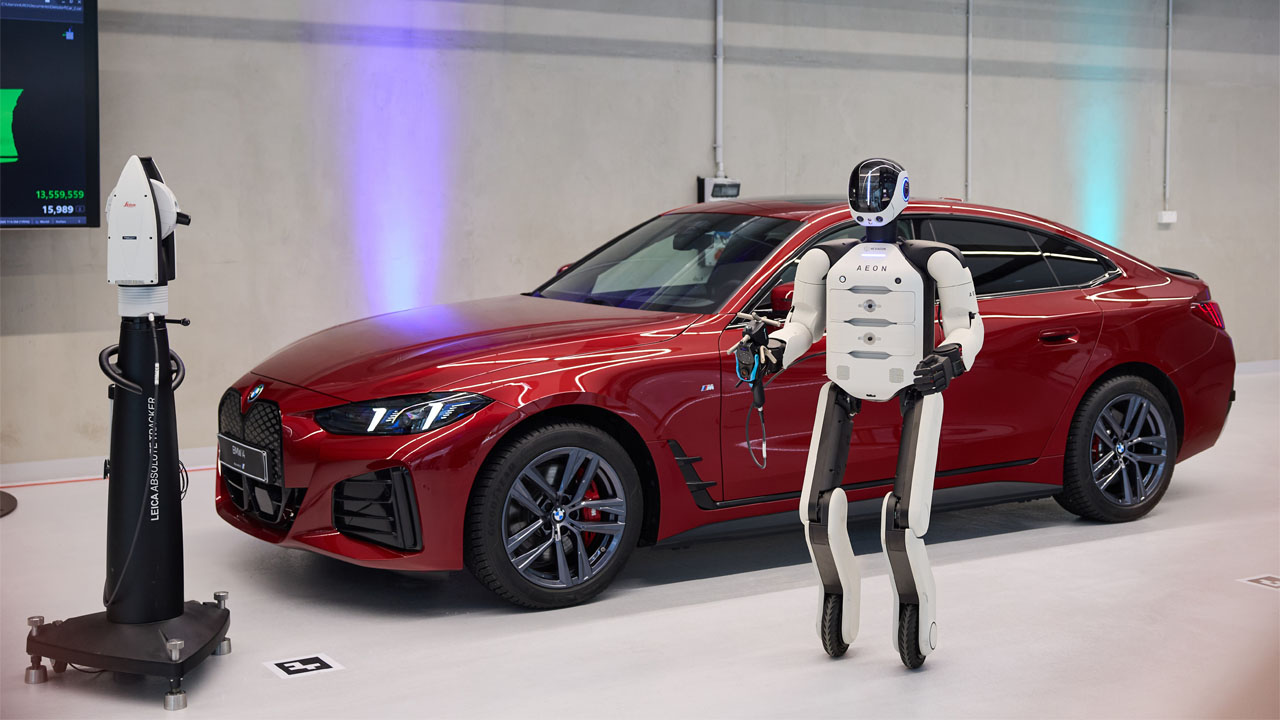
Standing 1.65 meters tall and weighing about 60 kilograms, AEON can reach speeds of 2.5 meters per second and autonomously replace its battery within 23 seconds. The robot integrates 22 sensors, including cameras, infrared systems, and spatial mapping technology, enabling full 360-degree awareness for inspection and handling tasks.
BMW plans a phased rollout. The first test occurred in December 2025, with another trial scheduled for April 2026 before a full pilot phase in summer. During that stage, two AEON units will support high-voltage battery assembly and exterior component manufacturing.
“We’re not in the dancing business—we’re in the working business,” said Arnaud Robert, describing the design philosophy behind the machine.
The deployment is supported by a broader AI infrastructure. The robot runs on computing hardware from NVIDIA using its Jetson Orin platform and was trained in simulation through NVIDIA’s Isaac robotics environment.
Industry data suggests the trend could accelerate. According to Deloitte, 58% of companies surveyed in its 2026 enterprise AI report already use physical AI in some form, a figure projected to reach 80% within two years.

BMW has also created a dedicated internal hub, the Centre of Competence for Physical AI in Production, to evaluate robotics technologies across its global manufacturing network. The Leipzig pilot now becomes the test case for whether humanoid machines can operate reliably under the demanding pace of automotive assembly lines.



