
Blue Origin is taking its space tourism business into the cryptocurrency era. The company, founded by Jeff Bezos, announced it will now accept Bitcoin, Ether, Solana, USDt, and USD Coin for tickets aboard its New Shepard suborbital flights.
The move comes through a partnership with Shift4 Payments, enabling customers to make direct payments from popular digital wallets such as MetaMask and Coinbase. Blue Origin has already sent more than 75 passengers past the Kármán Line — the recognized boundary between Earth’s atmosphere and space — and hopes the new payment option will appeal to tech-forward travelers.
Taylor Lauber, CEO of Shift4, said the initiative reflects a vision to “revolutionize commerce beyond Earth.” Alex Wilson, head of crypto at Shift4, added that cryptocurrencies and stablecoins are likely to become increasingly common for high-value purchases like space travel.
Blockchain’s growing footprint in aerospace
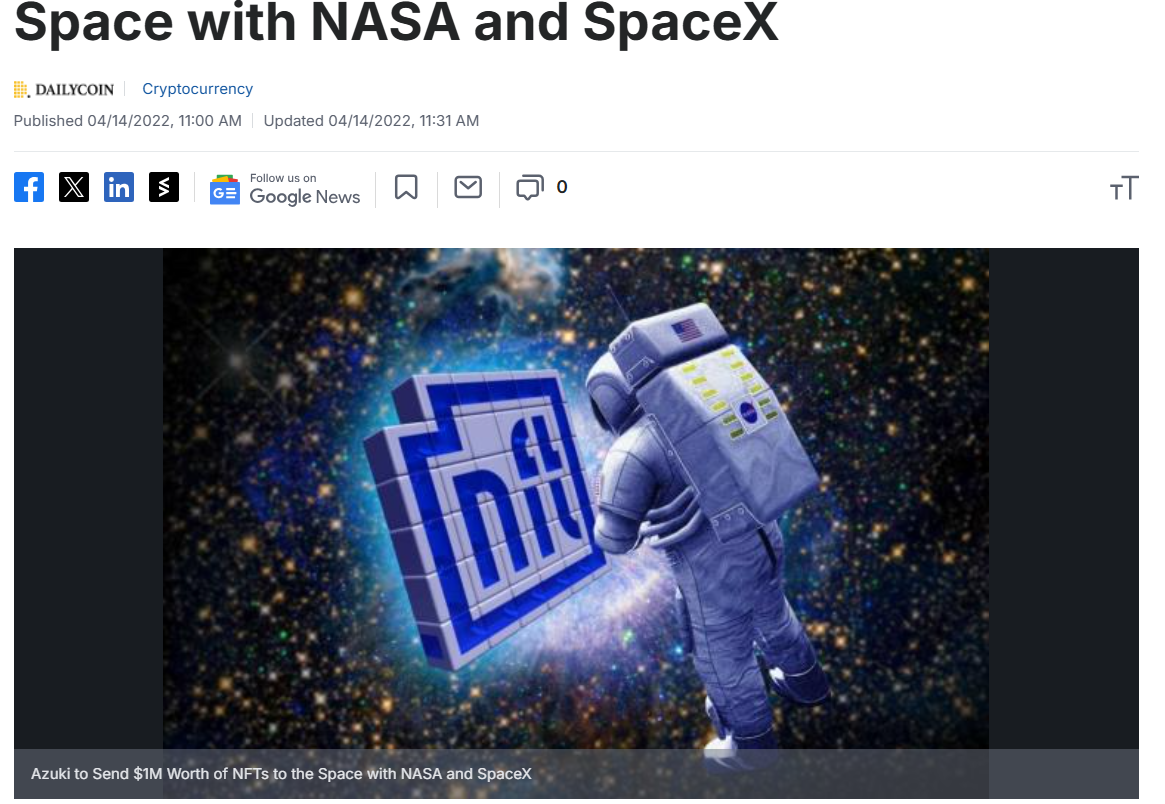
This isn’t the first time blockchain technology has reached beyond Earth. In 2022, NFT project Azuki sent its “Bobu the Bean Farmer” character into space via a SpaceX/NASA mission, blending digital collectibles with real-world exploration. Two years earlier, Spacechain executed what it called the first multisignature Bitcoin transaction from the International Space Station, showing blockchain operations could be conducted entirely in orbit.
More recently, projects like Spacecoin XYZ have launched satellites to develop blockchain networks in space, aiming to support future decentralized economies. Meanwhile, telecom startup World Mobile is taking a different approach — using hydrogen-powered drones flying at 60,000 feet to deliver 5G connectivity across vast regions. The network integrates with a decentralized physical infrastructure network, promising faster speeds and lower costs than traditional satellite services.
A familiar link between blockchain and Blue Origin
Blue Origin’s crypto connection isn’t entirely new. In August 2024, Tron founder Justin Sun took a seat on the company’s NS-34 mission from West Texas after winning a 2021 auction with a $28 million bid. Proceeds from the ticket were donated to 19 space-focused charities supporting STEAM education. Upon his return, Sun reflected on the experience, saying,
“Earth is so small, and it’s our home. We definitely need to do whatever we can to protect it.”
As space tourism edges closer to mainstream accessibility, the acceptance of cryptocurrency payments marks another step in merging emerging technologies with frontier exploration — signaling a future where buying a ticket to space could be as simple as sending Bitcoin from your phone.



