

Bitget Wallet has announced a major upgrade with the integration of HyperEVM, the Ethereum-compatible smart contract layer of the Hyperliquid blockchain. The move connects Bitget users directly to one of the fastest-growing decentralized finance (DeFi) ecosystems in the crypto space.
With this update, Bitget Wallet users can now perform cross-chain transfers, interact seamlessly with HyperEVM-based DeFi applications, and use HYPE, Hyperliquid’s native token, all within the wallet’s interface. The integration aims to bridge liquidity and functionality across multiple blockchain ecosystems while maintaining user self-custody.
“Our goal is to simplify access to one of crypto's fastest-growing ecosystems,” said Jamie Elkaleh, Chief Marketing Officer at Bitget Wallet. “By integrating HyperEVM end-to-end, we’re enabling users to engage with a high-performance infrastructure that supports trading, programmable finance, and cross-chain flows.”
Hyperliquid, launched in 2023, has quickly made its mark as a high-performance decentralized exchange offering onchain order books and liquidity levels comparable to centralized trading platforms. Its HyperCore engine powers both spot and perpetual markets with ultra-low latency, while HyperEVM extends those capabilities with smart-contract functionality—allowing DeFi protocols to build on top of the exchange’s deep liquidity.
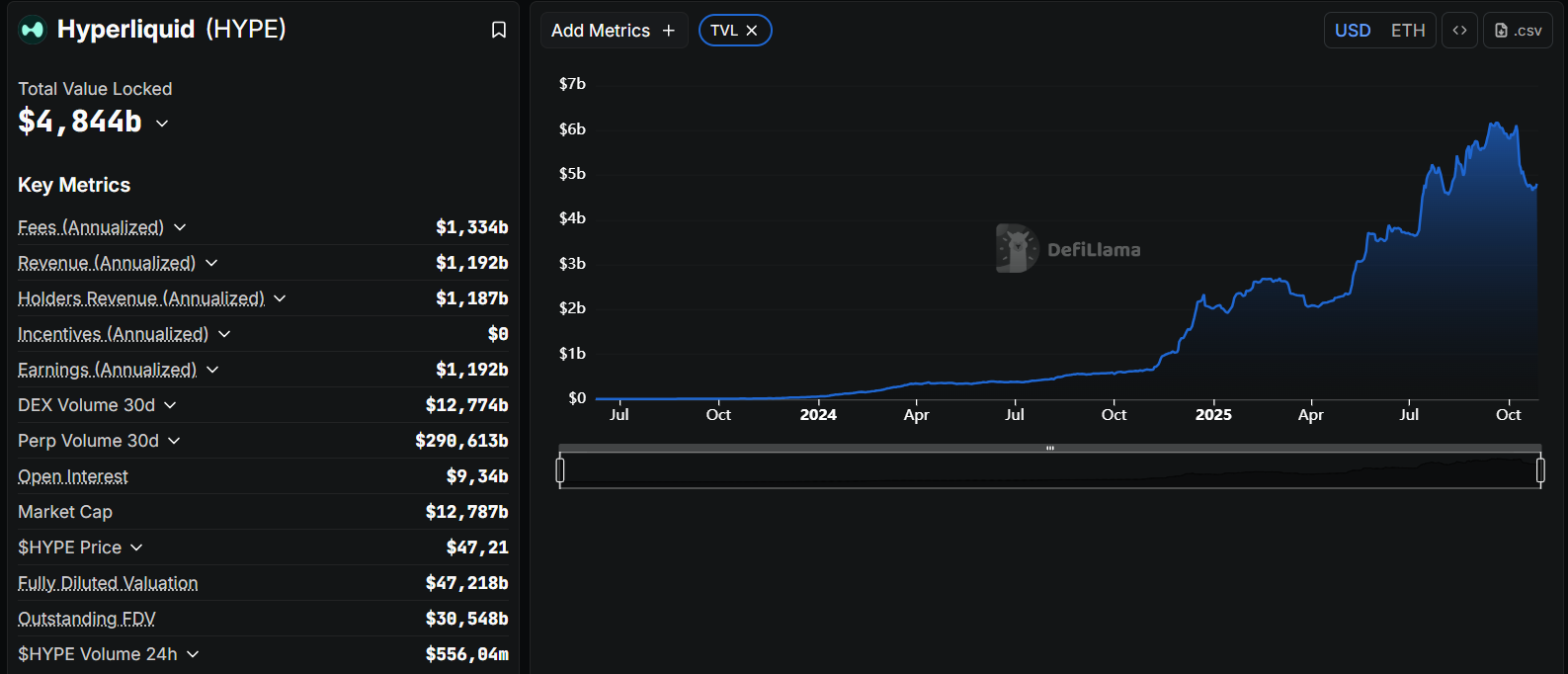
According to data from DefiLlama, Hyperliquid has processed over $1.5 trillion in total trading volume and currently holds about $4.85 billion in total value locked (TVL).
Bitget Wallet, one of the largest self-custodial wallets globally, supports over 130 blockchains and serves more than 80 million users. The platform also maintains a user protection fund exceeding $700 million, underlining its focus on security and reliability.
The company plans to roll out additional features in the coming weeks, including perpetual trading, contract support, and more DeFi tools, further expanding its multi-chain ecosystem.
As the decentralized finance landscape evolves, collaborations like this one highlight the industry’s drive toward greater accessibility, performance, and interoperability—bringing users closer to a unified, cross-chain financial future.



