
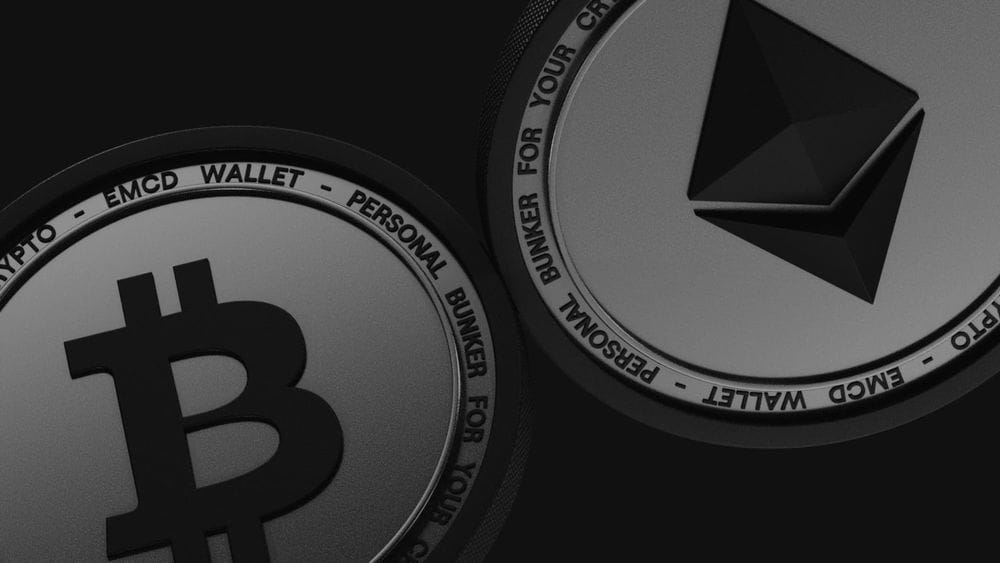
In the sprawling universe of cryptocurrency, two names stand unequivocally apart from the rest: Bitcoin and Ethereum. While thousands of other digital assets have launched and faded, these two giants have remained the undisputed leaders.
However, viewing them as direct competitors is a common mistake. While they both run on blockchain technology, they were built with fundamentally different visions. If Bitcoin is digital gold, Ethereum is the digital oil powering a new internet.
The Origin Stories: Money vs. The Machine
Bitcoin (BTC) emerged from the ashes of the 2008 financial crisis. Its mysterious creator, Satoshi Nakamoto, introduced it as a "peer-to-peer electronic cash system." The goal was singular and revolutionary: to create a decentralized form of money that operated outside the control of banks and governments. It was designed to be secure, scarce, and censorship-resistant.
Ethereum (ETH) arrived six years later, in 2015, founded by the visionary programmer Vitalik Buterin. He recognized the genius of Bitcoin's underlying technology but felt it was too limited. Buterin didn't just want to create a new currency; he wanted to create a decentralized "world computer." He collaborated with a team of developers to build a blockchain that could run programmable applications, not just track payments.
The Core Difference: Digital Vault vs. Global Computer
To understand the difference, you have to look at what they are trying to solve.
- Bitcoin is a Store of Value: The Bitcoin network is purpose-built to do one thing incredibly well: track the ownership of digital assets securely. It eliminates the need for third parties like Visa or the Federal Reserve. While developers are working on layers to make it faster, the base layer remains intentionally simple and rigid to maximize security. This has led to the narrative of Bitcoin as "digital gold"-a safe haven asset.
- Ethereum is a Platform: Ethereum shares Bitcoin’s ability to transfer value, but its primary function is computation. It introduced the concept of the Ethereum Virtual Machine (EVM), a global computing network that executes "smart contracts." These are self-executing agreements written in code. This innovation birthed entire industries like Decentralized Finance (DeFi) and Non-Fungible Tokens (NFTs). If you are using a decentralized app (dApp) to lend money or trade art, you are likely using the Ethereum network.
Under the Hood: Miners vs. Validators
For years, both networks operated similarly, but a massive shift in 2022 sent them down divergent technological paths.
Bitcoin relies on a consensus mechanism called Proof of Work (PoW). In this system, powerful computers (miners) race to solve complex mathematical puzzles to secure the network and mint new coins. It is energy-intensive by design, as the sheer cost of electricity required to attack the network is what keeps it secure.
Ethereum also started as a PoW chain but underwent a historic upgrade known as "The Merge" in September 2022. It transitioned to Proof of Stake (PoS). In this system, energy-hungry miners were replaced by "validators" who lock up (stake) their ETH to secure the network. This shift made Ethereum over 99% more energy-efficient and set the stage for future scalability upgrades.
Tokenomics: Scarcity vs. Utility
The economic models (tokenomics) of the two assets are also strikingly different.
- BTC (Hard Cap): Bitcoin has a hard limit. There will never be more than 21 million coins. This absolute scarcity is why investors treat it as a hedge against inflation. The supply of new Bitcoin issued to miners is cut in half roughly every four years in an event known as the "halving," ensuring the inflation rate trends toward zero.
- ETH (Dynamic Supply): Ethereum does not have a fixed maximum supply. Originally, this led to concerns about infinite inflation. However, a mechanism introduced in 2021 now "burns" (destroys) a portion of the ETH paid in transaction fees. When network activity is high, more ETH is destroyed than is created, making the asset deflationary.
The Verdict
Bitcoin and Ethereum are often pitted against each other, but they serve different masters. Bitcoin is the fortress-secure, immutable, and scarce money. Ethereum is the factory-a dynamic, programmable layer upon which the future of finance and the internet is being built.



