

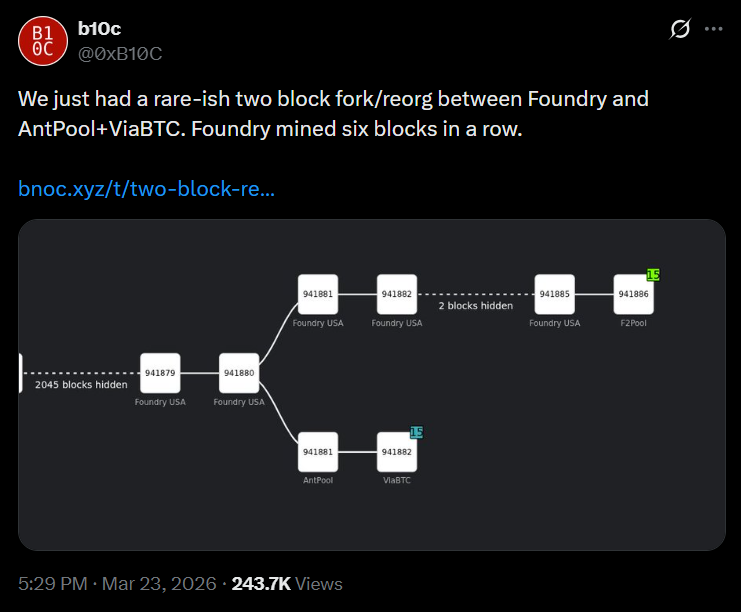
Bitcoin recorded a rare two-block chain reorganization at heights 941881 and 941882. The event underscores how mining concentration can influence short-term chain selection during network forks.
The reorg occurred when multiple mining pools discovered valid blocks nearly simultaneously, creating competing versions of the blockchain. Foundry USA Pool mined one branch, while AntPool and ViaBTC extended another. According to onchain data and analysis from developer b10c, Foundry ultimately extended its chain further, invalidating rival blocks.
How Do Mining Pools Influence Reorg Outcomes?
Bitcoin resolves these conflicts by selecting the chain with the greatest cumulative proof of work. Foundry mined seven consecutive blocks after the fork, giving its branch enough weight to become canonical. Blocks produced by AntPool and ViaBTC were marked as stale, meaning they were valid but excluded from the final ledger.
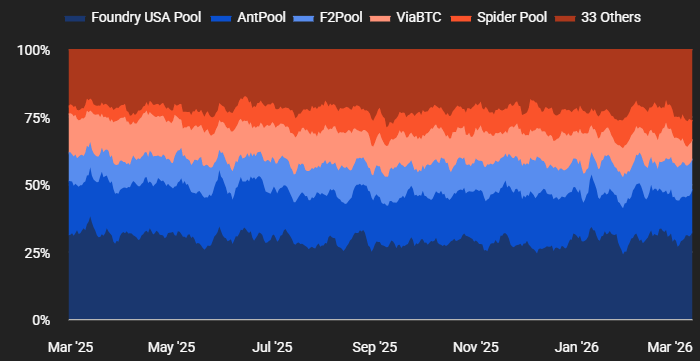
The outcome reflects broader dynamics in Bitcoin mining. Foundry controls about 32.2% of total network hashrate, compared with 15.7% for AntPool and 7.2% for ViaBTC, according to data. Larger pools have a statistical advantage in extending chains during temporary forks, increasing their likelihood of winning these races.
Observers noted that such events are uncommon but not abnormal. Single-block reorganizations happen periodically, while two-block reorgs require a longer tie between competing chains.
“A pool’s chance of finding the next block is equal to its share of network hashrate,” b10c wrote in analysis shared on the Bitcoin Network Operations Collective forum.
 b10c
b10c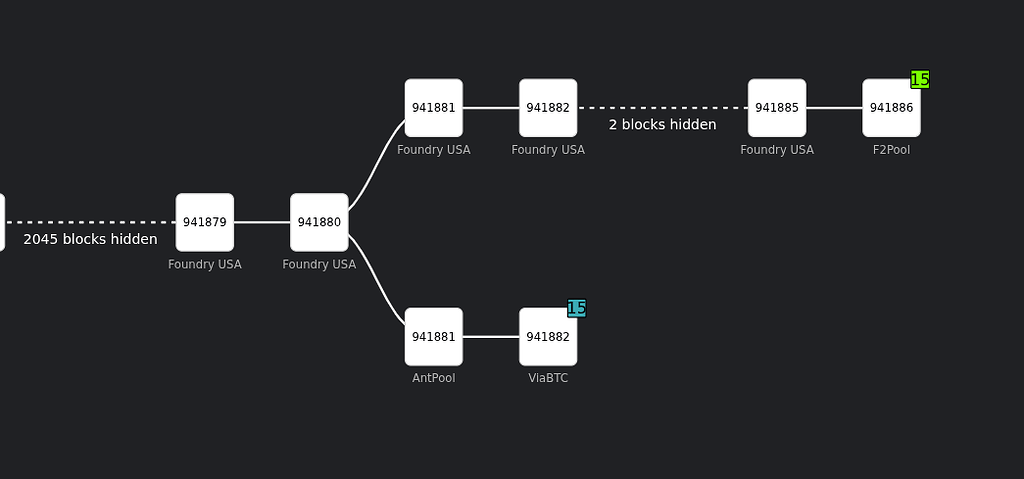
Importantly, the reorganization did not result in lost transactions. Transfers included in stale blocks either remained in the accepted chain or returned to the mempool for later inclusion. The process reflects Bitcoin’s built-in consensus design, which prioritizes the longest valid chain without manual intervention.
The episode draws attention to mining pool distribution and its role in network behavior under edge conditions. The next catalyst to monitor is whether hashrate concentration continues to increase among top pools, potentially shaping future fork resolution dynamics.



