

Bitcoin has fallen back toward the $69,000 level, erasing all gains made since its previous all-time high in late 2021, as mounting selling pressure grips both spot and derivatives markets.
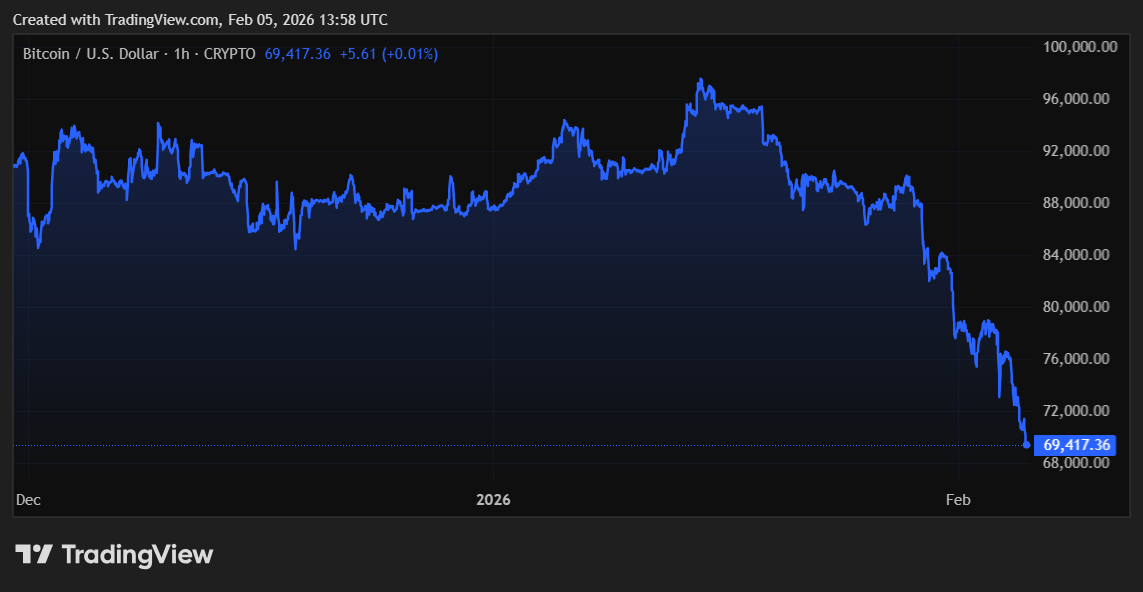
The world’s largest cryptocurrency dropped as low as $69,040 on Thursday, its weakest price since October 2024, according to market data. At the time of writing, bitcoin was down more than 8% on the day, roughly 30% over the past year, and about 45% below its most recent peak set in October.
Bears tighten their grip
The move below $70,000 marks a notable shift in market structure. Onchain data suggests the downturn is being driven by forced selling, thin spot demand, and a cooling of institutional interest.
Analysts at Glassnode say the market has entered a clearly defensive phase, with realized losses rising as more investors exit positions at a loss. Spot trading volumes remain subdued, pointing to what the firm describes as a demand gap where selling pressure is not being met by consistent buying.
Bitcoin has also slipped below its “True Market Mean,” an onchain metric that reflects the average cost basis of actively circulating coins. Glassnode notes that losing this level reinforces a broader breakdown that has been forming since late 2025, echoing the early stages of previous bear market transitions.
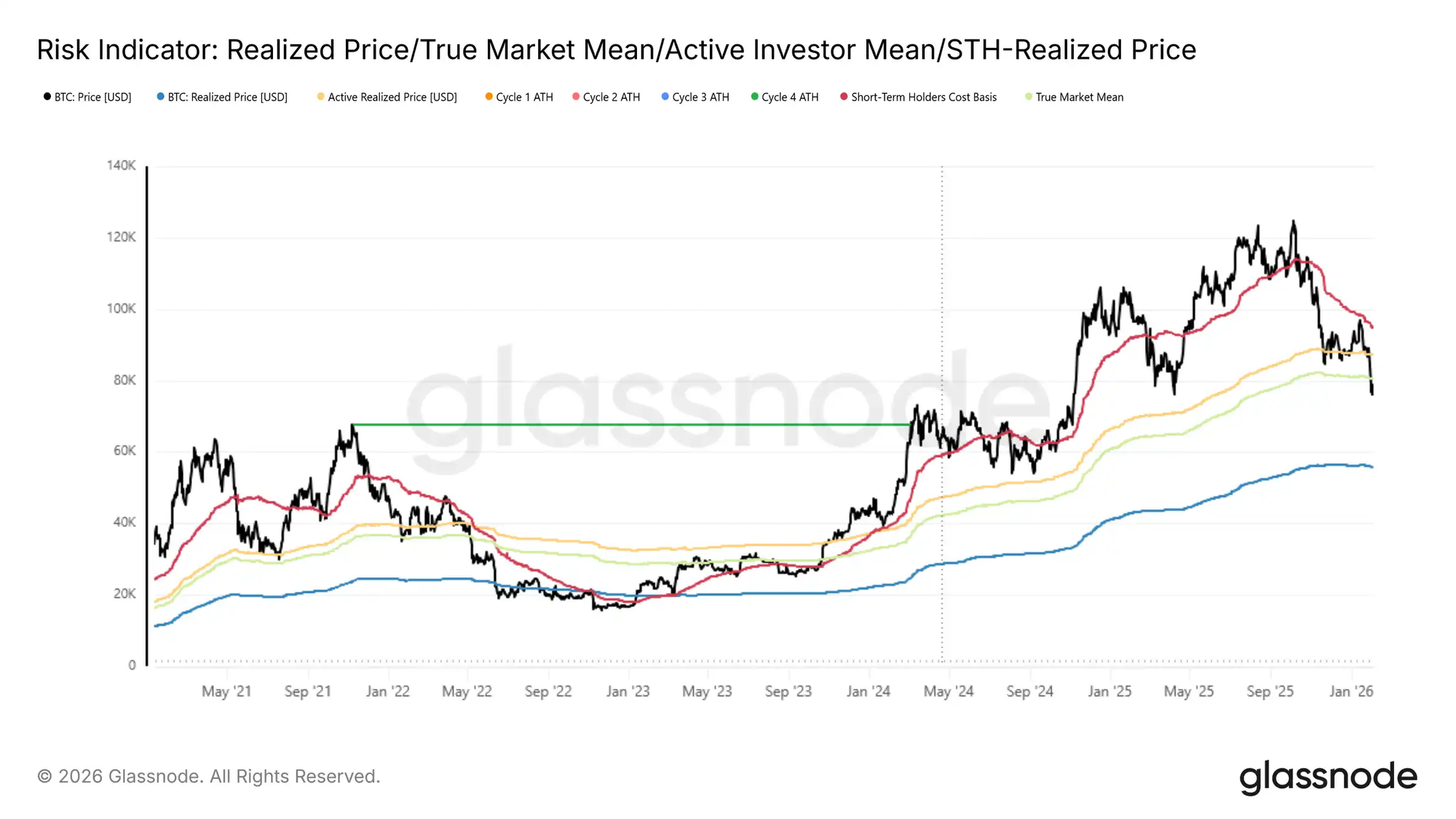
That said, data shows early signs of accumulation between $70,000 and $80,000, with a dense cluster of buying interest around $66,900 to $70,600. This zone could provide short-term support. Still, analysts caution that realized losses averaging more than $1.2 billion per day indicate fear-driven selling remains a dominant force.
Leverage unwind accelerates losses
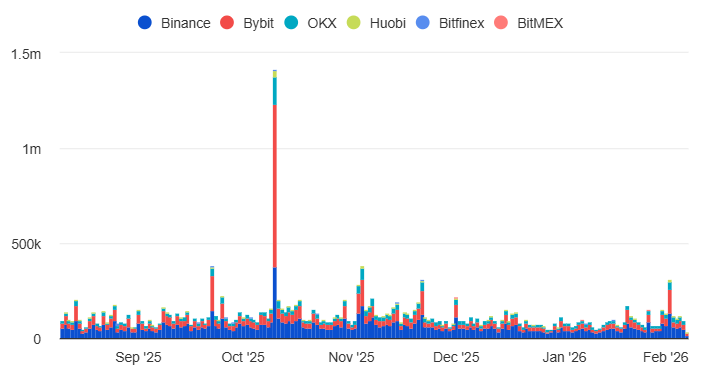
Derivatives markets have intensified the downturn. Bitcoin futures recorded their largest wave of long liquidations during this drawdown as prices slid into the low $70,000 range, wiping out leveraged positions that had rebuilt despite weak spot demand.
More than $1 billion in crypto liquidations were reported over the past 24 hours, mostly from long positions, according to CoinGlass. Because exchanges report deleveraging data in stages, actual losses may be significantly higher.
Options markets are also signaling caution. Short-dated implied volatility has climbed, and downside protection has become more expensive as traders brace for further declines.
Institutional demand cools
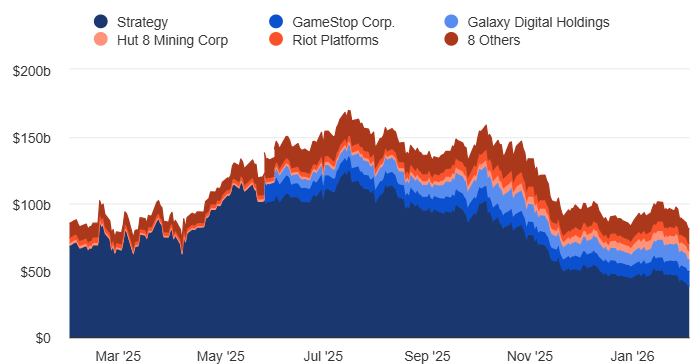
Support from large investors has weakened as well. Net flows across spot bitcoin ETFs, corporate treasuries, and government-linked holdings have turned negative, removing a key pillar that previously helped stabilize prices.
U.S. spot bitcoin ETFs saw a second straight day of outflows earlier this week, totaling $545 million, according to available data. The pullback has put pressure on high-profile bitcoin treasury strategies. Strategy, led by Michael Saylor, holds more than 713,000 BTC at an average price just above $76,000, leaving its holdings underwater at current levels. ETF investors, whose average cost basis is also higher than today’s prices, are facing similar paper losses.
Market analysts suggest the downturn is less about shifting narratives and more about balance-sheet stress. Kyle Rodda, senior market analyst at Capital.com, said bitcoin’s decline reflects broader deleveraging across global risk assets, with volatility spreading across equities, commodities, and crypto.
Others view the move as part of a longer adjustment. Nic Puckrin, co-founder of Coin Bureau, described the phase as a transition from distribution to reset, noting that such periods historically take months, not weeks, to play out.
A cautious road ahead
Glassnode emphasizes that the key factor to watch is spot demand. Without a sustained return of new buyers, bitcoin remains vulnerable to further downside and uneven rebounds.
For now, analysts warn that any short-term rallies are likely corrective rather than signaling a lasting trend reversal. A more durable recovery, they say, will depend on time, steady absorption of supply, and renewed confidence from spot market participants.



