

Bitcoin’s latest pullback is stirring familiar concerns across the crypto market, with some investors warning that the asset may be slipping back into its traditional four-year boom-and-bust cycle. Yet according to research firm K33, the current downturn looks meaningfully different from past bear markets, making a repeat of an 80% collapse far less likely.
In a report published Tuesday, K33 Head of Research Vetle Lunde noted that bitcoin has fallen about 40% from its October high. The decline accelerated last week, with prices dropping 11% amid rising global risk aversion that has weighed on broader financial markets.
 Vetle Lunde
Lunde, who previously dismissed the idea that bitcoin remains locked into a rigid four-year cycle, acknowledged that recent price behavior is uncomfortably reminiscent of the steep sell-offs seen in 2018 and 2022. This time, he said, market psychology appears to be driving price action more than changes in underlying fundamentals.
Still, Lunde argued that the broader environment has shifted. Institutional participation has expanded, regulated investment products have attracted billions of dollars in inflows, and monetary conditions are easing rather than tightening. These factors, he said, set the current cycle apart from earlier downturns.
According to K33, fears of a familiar cycle repeating could become self-reinforcing. As long-term holders reduce exposure to lock in gains and new capital hesitates to enter, selling pressure can build in a way that mirrors previous declines. This dynamic has emerged despite what the firm views as stronger structural support for the market, including wider advisor access to crypto products and banks rolling out digital asset services.
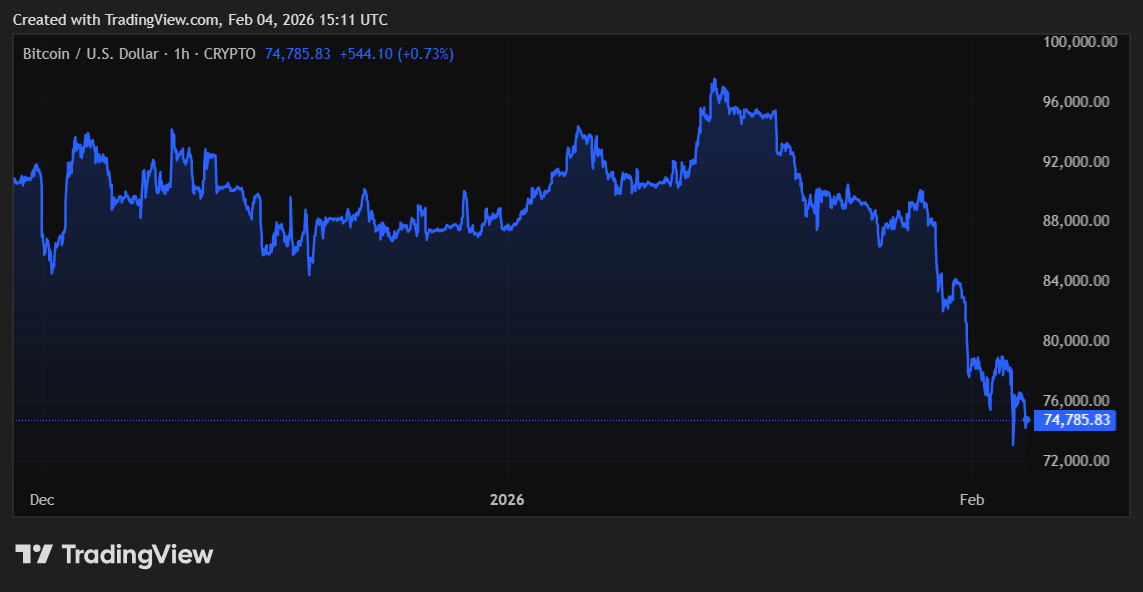
Even so, Lunde maintained that “this time is different.” He does not expect a year-long peak-to-trough drawdown of around 80%, as seen in past cycles. He pointed to the absence of forced deleveraging events such as the collapses of Luna, Three Arrows Capital, BlockFi, Genesis, and FTX, which magnified losses during the 2022 downturn. An easing interest rate backdrop also reduces pressure compared with earlier tightening phases.
At the same time, several indicators often linked to market bottoms are beginning to appear. On Feb. 2, bitcoin logged a 90th-percentile spot trading day, with more than $8 billion in volume as prices revisited lows seen earlier in 2025. In derivatives markets, open interest and funding rates dropped sharply following roughly $1.8 billion in long liquidations, a combination that has historically preceded short-term reversals.
Lunde said these signals suggest a potential bottom may be forming, particularly while bitcoin remains above key support levels. However, he cautioned that the evidence is not conclusive. Similar signals have emerged during temporary pauses rather than lasting trend reversals, and past market bottoms often coincided with even more extreme volume conditions.
For now, K33 identifies the area around $74,000 as a critical support zone. A sustained move below that level could open the door to further declines toward the November 2021 peak near $69,000, or even the 200-week moving average around $58,000.
“With bitcoin close to a flat return over the past two years, we see little urgency for long-term holders to sell,” Lunde said.
While the firm would reassess its outlook if support breaks, it does not expect a repeat of prior cycle collapses. Instead, K33 views current price levels as attractive for investors with a long-term horizon.



