

Bitcoin bounced back above $111,000 on Wednesday after briefly dipping to $108,600 earlier in the week. Fresh data suggests the recent wave of selling may be losing steam, setting up the possibility of further upside.
Exchange Flows Point to Cooling Pressure
On-chain analyst CryptoOnchain noted that the 30-day moving average of Bitcoin inflows to exchanges is now falling, according to data from CryptoQuant. This metric tracks how much BTC investors send to centralized exchanges - often a proxy for selling intent.
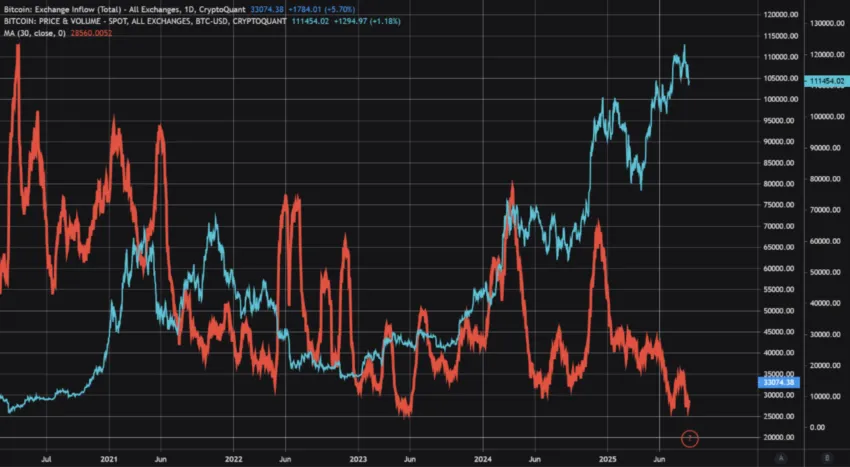
In July, exchange inflows hit a historic low before surging again as Bitcoin climbed to a new all-time high. The spike reflected profit-taking as investors rushed to lock in gains. Flows peaked in April during the announcement of new US tariff policies, but have since slid back to record lows.
“This decline is significant,” CryptoOnchain explained, adding that the shrinking inflows are directly linked to Bitcoin’s recovery above $111,000.
US Investors Holding Back
The analyst also pointed out that US-based traders and institutions - who fueled much of the rally earlier this year-appear to be slowing their selling. Activity on Coinbase Advanced shows a sharper drop in outflows, reinforcing the idea that retail and institutional players in the US are holding rather than selling.
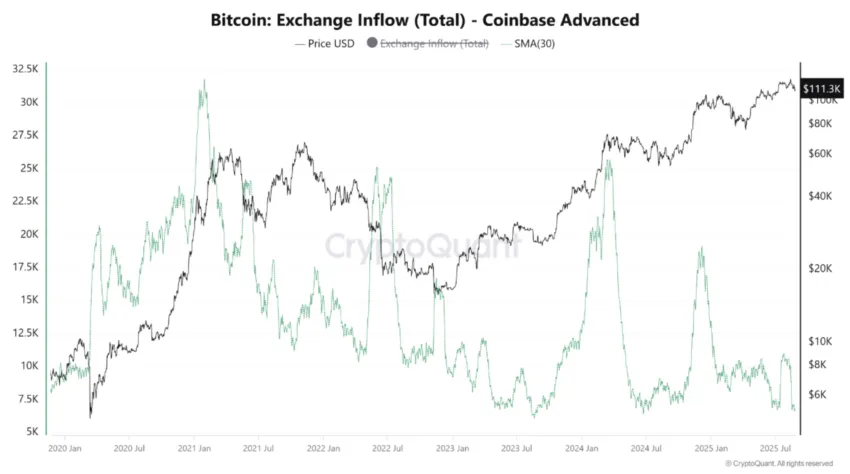
The same pattern is showing up on Binance’s spot market, with supply of “sellable” Bitcoin dwindling. With fewer coins hitting exchanges, upward price pressure could build if demand holds steady.
What It Means for Bitcoin’s Outlook
CryptoOnchain believes a mid-term uptrend is now more likely, given the easing exchange flows and improving sentiment. Simply put: fewer sellers could mean stronger price stability.
Still, the crypto market remains highly sensitive to macroeconomic news and regulatory shifts, so volatility shouldn’t be ruled out.



