
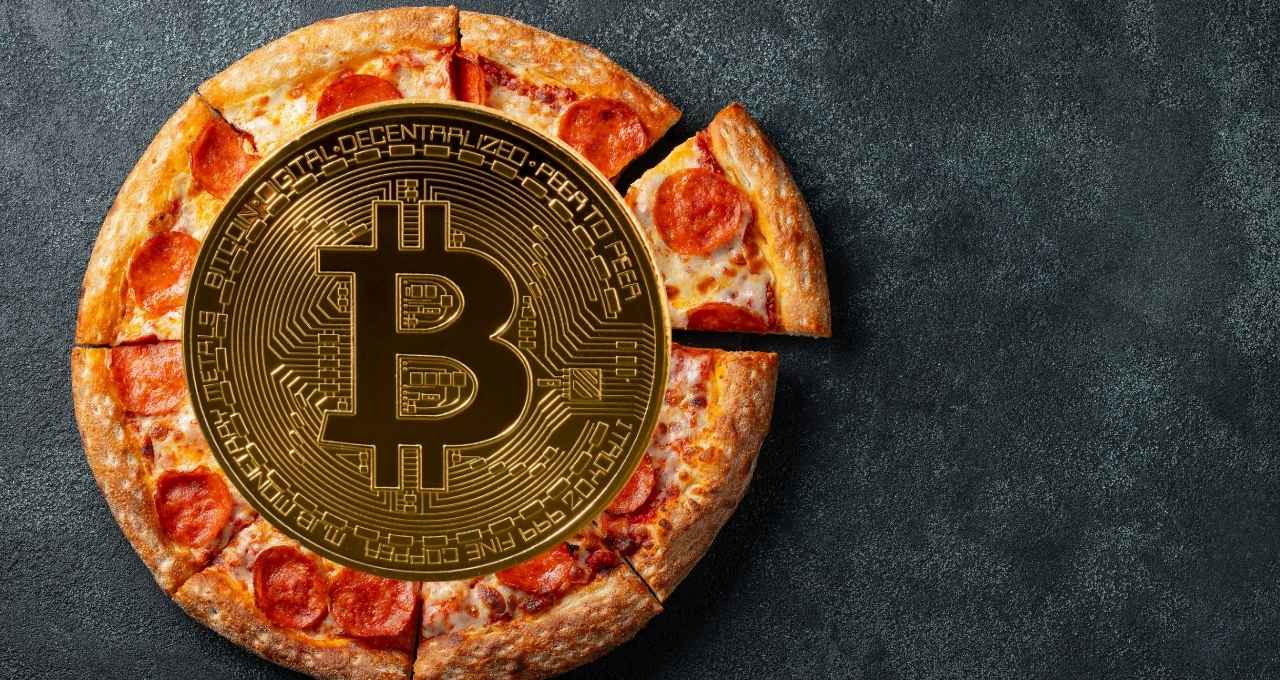
It sounds like an urban legend, but in the crypto world, it is a documented historical fact. On May 22, 2010, a developer in Florida paid 10,000 Bitcoins for two large Papa John's pizzas.
At the time, that digital stack was worth about $40. Today, depending on the market's mood, those same coins would be worth hundreds of millions of dollars-at the market's 2021 peak, the bill for that dinner would have effectively been $680 million.
This event, now known globally as Bitcoin Pizza Day, marks the first time the cryptocurrency was ever used to buy a tangible, real-world good.
The Historic Request
The story began on May 18, 2010, on a Bitcoin forum. Laszlo Hanyecz, an early adopter and contributor to the code, posted a simple offer:
"I'll pay 10,000 bitcoins for a couple of pizzas.. like maybe 2 large ones so I have some left over for the next day. I like having left over pizza to nibble on later."
It took four days for someone to take him up on it. A 19-year-old student named Jeremy Sturdivant (known online as "Jercos") accepted the deal. He ordered the two pizzas from a local Papa John's, paid for them with his own debit card, and delivered them to Hanyecz’s house. In return, Hanyecz sent him the 10,000 BTC.
Hanyecz later posted a photo of his children eating the pizza, cementing the moment in internet history.
The Man Behind the Meme: A Mining Pioneer
While Laszlo Hanyecz is famous for buying the most expensive dinner in history, his technical contributions to Bitcoin are often overlooked. He wasn't just a hungry forum user; he was a brilliant programmer who helped build the network's foundation.
Hanyecz wrote the first code that allowed Bitcoin to be mined using a computer's Graphics Processing Unit (GPU). Before this, mining was done using the standard CPU (central processor). His innovation made the network significantly faster and more secure, kicking off the modern mining industry. He also released the first version of the Bitcoin software for Mac OS, expanding access to Apple users.
In 2010, mining rewards were 50 BTC per block. Because the network was so small, Hanyecz could mine the 10,000 BTC needed for the pizzas relatively easily.
The Question of Regret
Every year on May 22, the internet explodes with calculations of what that pizza would be worth today. Journalists frequently ask Hanyecz if he stays awake at night regretting the purchase.
His answer is consistently refreshing. Hanyecz maintains that he has no regrets. In 2010, Bitcoin was an experiment with no guaranteed value. "I’ve always kind of just wanted people to use Bitcoin and buying the pizza was one way to do that," he said in an interview. "I didn't think it would get as popular as it has, but it's gotten to be a really catchy story for people."
By spending his coins, Hanyecz proved that Bitcoin could function as actual money, taking it from a theoretical project to a functional currency.
Why It Matters
Bitcoin Pizza Day is celebrated not just as a meme, but as a major milestone for blockchain adoption.
- Proof of Concept: It demonstrated that peer-to-peer digital cash could bypass traditional financial rails to settle a real-world debt.
- Cultural Icon: It serves as a reminder of the asset's volatility and its humble beginnings during the fallout of the 2008 financial crisis.
Today, the crypto community celebrates the anniversary by ordering pizza (sometimes paying in crypto) to honor the moment a developer in Florida turned "magic internet money" into a tangible, cheesy reality.
Bitcoin Pizza Day Essentials
- The Date: May 22, 2010.
- The Trade: Laszlo Hanyecz paid 10,000 BTC to Jeremy Sturdivant for two Papa John's pizzas.
- The Milestone: It is recognized as the first real-world commercial transaction using Bitcoin.
- The Legacy: It kicked off the era of commercial crypto adoption.



