

Bitcoin has recorded net inflows while gold ETFs saw nearly $11 billion in outflows this month, signaling a shift in safe-haven demand during geopolitical stress. The divergence suggests investors may be reassessing traditional hedges as liquidity and positioning unwind across markets.
Analysts at JPMorgan reported that gold has declined about 15% month-to-date, pressured by rising interest rates and a stronger U.S. dollar. Silver has also reversed its prior inflows, while both metals experienced heavy position unwinds after reaching record highs earlier this year. In contrast, bitcoin has maintained stable futures positioning and attracted fresh capital during the same period.
Is Bitcoin Emerging As A Modern Safe Haven Asset?
The shift reflects changing behavior during periods of geopolitical disruption, particularly in regions facing currency instability. Chainalysis data cited by JPMorgan shows crypto activity surged in Iran following the outbreak of conflict, as users moved funds into self-custody and offshore platforms. Bitcoin’s performance contrasts with gold’s $11 billion ETF outflows, highlighting a divergence in capital allocation under stress.
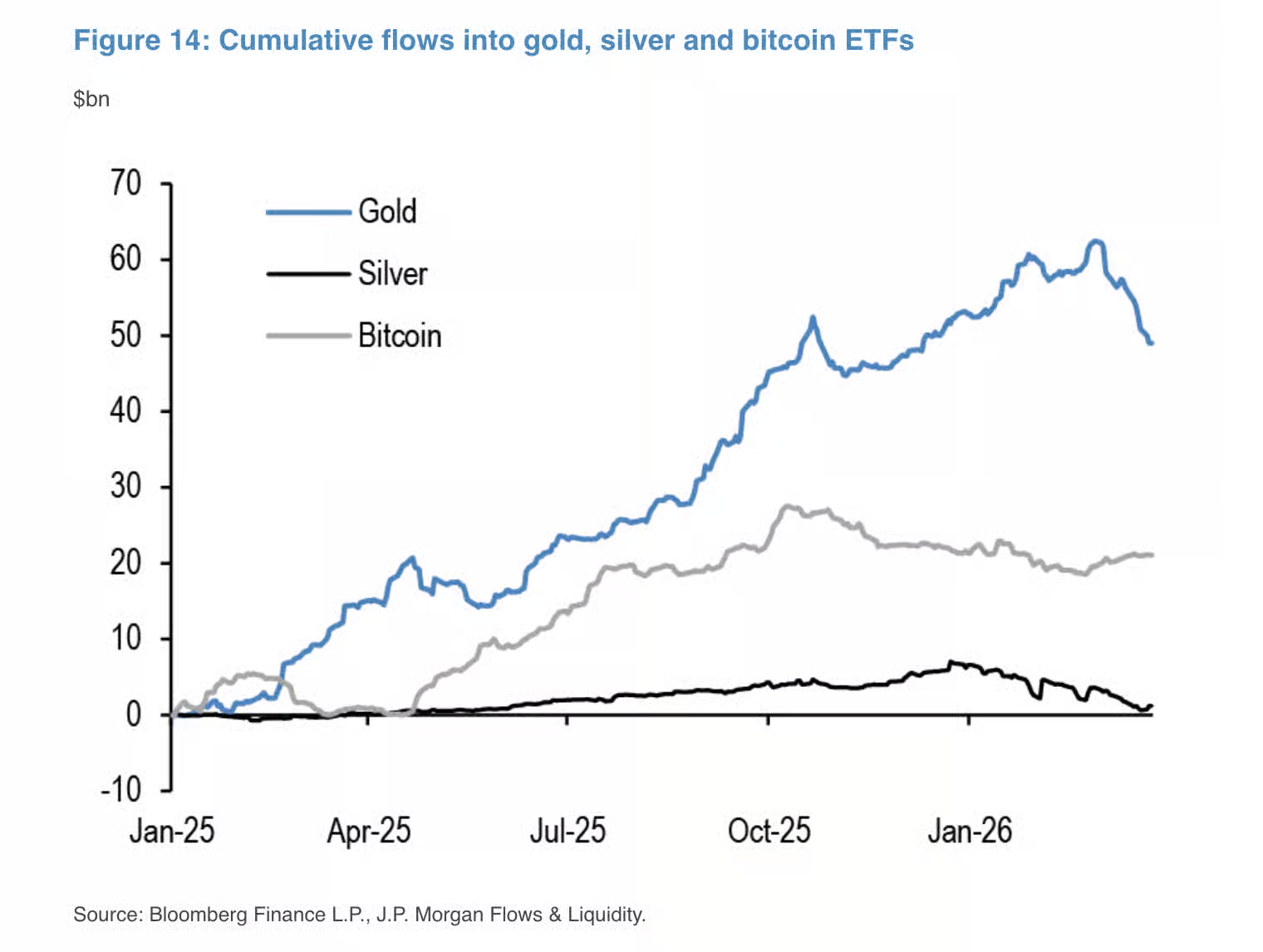
JPMorgan analysts noted that gold and silver moved from “overbought levels to below neutral,” indicating forced liquidations by momentum-driven investors. Bitcoin, however, has recovered from oversold positioning toward neutral levels, suggesting improving sentiment. The report also pointed to deteriorating liquidity in gold markets, with bitcoin now showing stronger market breadth based on Hui-Heubel ratio analysis. But can bitcoin sustain this role beyond short-term geopolitical shocks?
Institutional positioning data reinforces the trend. Futures exposure to gold and silver increased through early 2026 before declining sharply since January, while bitcoin positioning has remained relatively stable. This indicates profit-taking in traditional assets alongside more consistent engagement in crypto markets.
The findings point to a broader reassessment of liquidity, accessibility, and portability in safe-haven assets. Market participants will now monitor whether continued geopolitical tension or macro instability drives further inflows into bitcoin, particularly as central bank policy and currency pressures evolve.



