

Roughly 90% of global Bitcoin mining operates in electricity markets largely insulated from crude oil prices. That finding suggests geopolitical oil shocks may affect miner profitability mainly through Bitcoin’s market price rather than direct energy costs.
New analysis from Luxor Technology and its research arm Hashrate Index examined potential fallout from disruptions linked to the conflict involving Iran. Coordinated strikes by the United States and Israel disrupted tanker traffic through the Strait of Hormuz, a route that normally carries about 20% of the world’s oil supply.
The disruption briefly pushed Brent crude prices from roughly $60 per barrel to above $100 before easing near $90. Analysts said most Bitcoin mining facilities rely on power markets tied to natural gas, coal, hydroelectric, or geothermal energy rather than oil, limiting the direct cost impact.
Could Oil Price Shocks Hit Bitcoin Miners Through BTC Markets?
According to Hashrate Index estimates, only 8% to 10% of the global mining network operates in electricity systems closely linked to crude prices. Gulf states such as the United Arab Emirates and Oman account for roughly 6% of that exposure, with additional shares tied to Iran, Kuwait, Qatar, and Libya.
The majority of mining activity remains concentrated in countries including the United States, Russia, China, Paraguay, Canada, Ethiopia, and Kazakhstan. Data from the Cambridge Centre for Alternative Finance and the Bitcoin Mining Council shows more than half of the network already runs on non-fossil energy sources.
Instead, analysts argue the primary transmission channel from geopolitical shocks may occur through financial markets. Rising oil prices can lift inflation expectations and strengthen the U.S. dollar, conditions that often pressure risk assets such as Bitcoin.
Hashrate Index data illustrates that dynamic. The metric known as hashprice — miner revenue per unit of computing power — dropped to a record low of $27.89 per PH/s/day in February after Bitcoin fell 23.8%, from around $78,000 to $65,000.
“Crude oil as a direct fuel for mining is essentially a rounding error,” the Hashrate Index analysts wrote, noting the limited link between crude prices and electricity costs in most mining hubs.
Market observers say the broader macro environment remains a key variable. Wenny Cai noted that Middle East tensions briefly strengthened the U.S. dollar, creating a near-term headwind for risk assets.
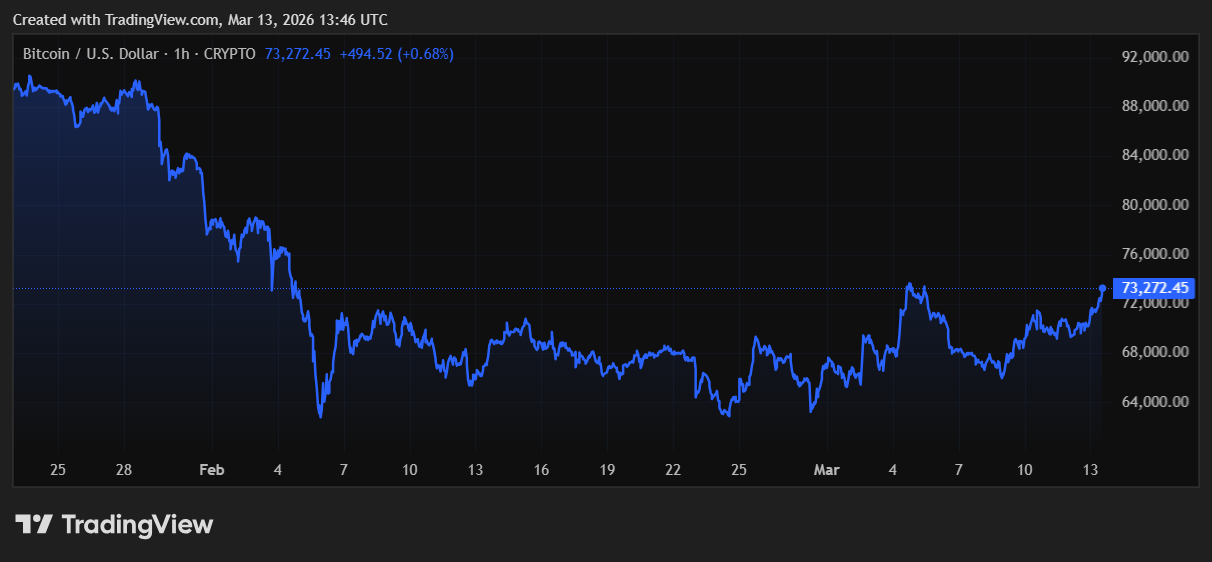
Traders are now watching whether Bitcoin can hold key technical levels between $69,000 and $73,500 as geopolitical risks evolve, a range that could determine the next shift in mining profitability.



