

Cango, a New York Stock Exchange–listed bitcoin miner, has sold a significant portion of its cryptocurrency holdings as it reshapes its balance sheet and accelerates a strategic move into artificial intelligence infrastructure.
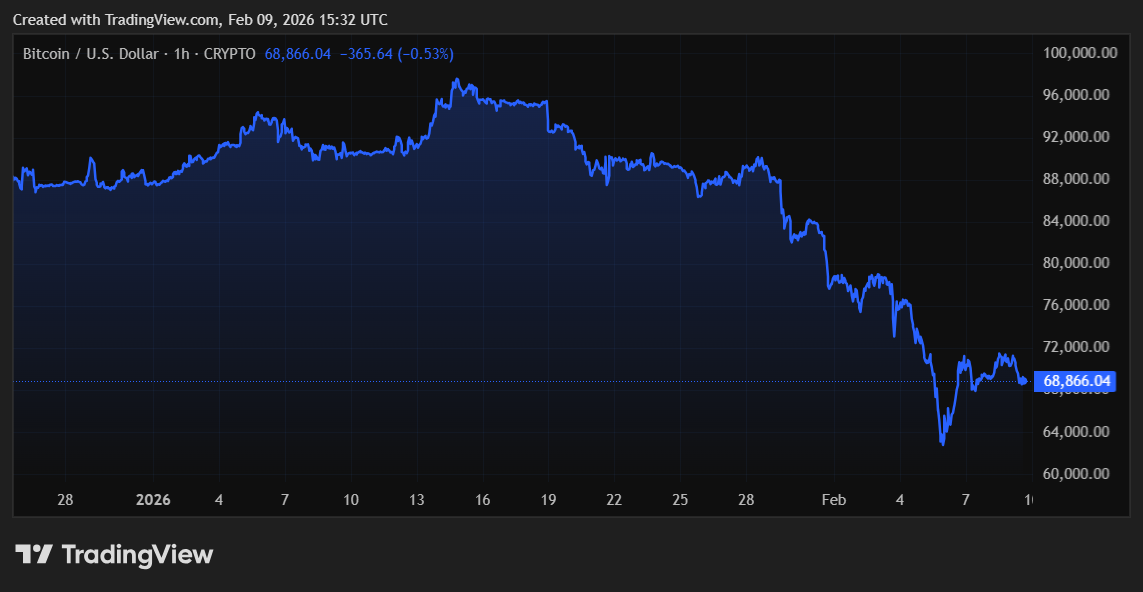
The company disclosed on Monday that it sold 4,451 bitcoin over the weekend, generating net proceeds of roughly $305 million. The transaction was settled in Tether’s USDT stablecoin, with all proceeds used to partially repay a loan backed by bitcoin collateral. By doing so, Cango reduced leverage at a time when mining margins remain sensitive to energy costs and cryptocurrency price swings.
 Cango Inc.
According to the company, the decision followed a review of market conditions and received approval from its board of directors. Cango emphasized that the sale was a financial adjustment rather than a retreat from bitcoin mining. It said it remains committed to its mining operations while seeking greater capital flexibility to support new areas of growth.
Strengthening the balance sheet
Bitcoin-backed borrowing has become a common financing tool for miners, but it also exposes companies to volatility when prices fluctuate sharply. By using the proceeds to pay down debt, Cango aims to improve its financial resilience and lower risk tied to collateralized loans.
The company framed the move as part of a broader effort to manage its capital structure more conservatively. With mining economics under pressure across the industry, balance-sheet strength has become a key focus for publicly traded miners seeking to reassure investors.
Cango ended 2025 with more than 7,500 BTC in reserves, following its entry into bitcoin mining in late 2024 after restructuring its legacy auto-related business. The latest sale reduces its holdings but leaves the company with a substantial remaining position, which it says will continue to support its core mining strategy.
Expanding into AI compute
Beyond debt reduction, the bitcoin sale is also tied to Cango’s growing ambitions in artificial intelligence. The company plans to use its existing, grid-connected mining sites to deploy modular, containerized GPU infrastructure designed for AI workloads.
The initial phase of this expansion will focus on inference capacity for small and mid-sized enterprises. Over time, Cango intends to develop software that can coordinate and optimize workloads across its distributed infrastructure, effectively turning its sites into a flexible AI compute network.
To support this effort, Cango has appointed Jack Jin as chief technology officer of its AI business line. Jin previously worked on large-scale GPU infrastructure and orchestration systems at Zoom Communications, experience the company says will be critical as it builds out its AI platform.
This strategy places Cango among a growing group of bitcoin miners exploring AI and high-performance computing as complementary revenue streams. Firms such as IREN, Riot Platforms, CleanSpark, Core Scientific, TeraWulf, Bitfarms, and HIVE have all announced AI-related initiatives in recent quarters.
A shifting industry outlook
Industry analysts have increasingly highlighted miners’ access to secured power, land, and data-center infrastructure as assets well suited for AI deployment. Analysts at Bernstein and JPMorgan have noted that these advantages could help miners diversify income and reduce their dependence on bitcoin price cycles.
As a result, some investors are beginning to evaluate mining stocks not only on their exposure to bitcoin, but also on their longer-term potential in digital infrastructure more broadly. Cango acknowledged this shift, saying the bitcoin sale reflects a changing calculus that prioritizes flexibility and optionality alongside mining scale and efficiency.
Looking ahead
Cango says it will continue to balance investment in its bitcoin mining operations with measured expansion into AI compute. By reducing debt and redeploying capital toward infrastructure that can support both mining and AI workloads, the company is positioning itself for what it sees as the next phase of demand for digital infrastructure.
While the success of this strategy will depend on execution and market conditions, the move underscores how rapidly the bitcoin mining sector is evolving as companies seek stability and new growth paths beyond cryptocurrency alone.



