

Bitcoin (BTC) is holding above $74,000 despite a dense schedule of global central bank decisions. The resilience signals stabilizing demand as macro uncertainty intensifies across rates, inflation, and geopolitical risk.
The asset rebounded from a higher low near $66,000 and approached $76,000 this week, supported by steady spot demand and renewed institutional inflows. Data from Glassnode indicates easing sell-side pressure, while exchange-traded fund (ETF) inflows accelerated, including $202 million on March 16, according to SoSoValue.
Is Bitcoin Decoupling From Macro Risk Cycles?
Bitcoin’s relative strength contrasts with broader risk assets facing pressure from energy-driven inflation concerns and policy uncertainty. The total crypto market remains sensitive to liquidity conditions, yet BTC has begun outperforming gold, narrowing a gap that widened during February’s drawdown while correlation between the two assets has turned positive.
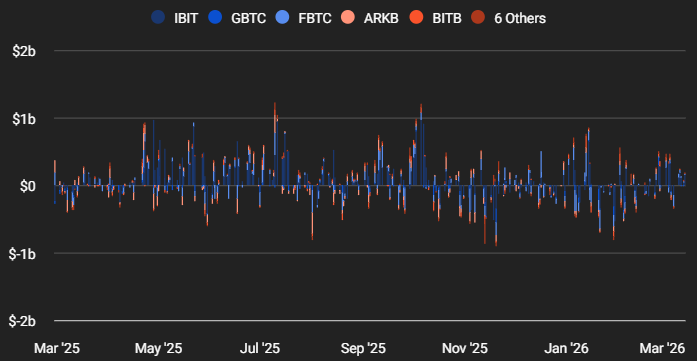
Onchain indicators show early accumulation signals, with declining exchange balances and rising whale holdings. Still, derivatives positioning remains cautious, and overall network activity is subdued, suggesting the market has not fully re-engaged despite improving momentum.
“Perpetual futures open interest was starting to rise off very low levels,” said Jim Ferraioli, managing director at Charles Schwab. “Their funding rates are negative, which indicates there is more demand for shorts versus longs.”
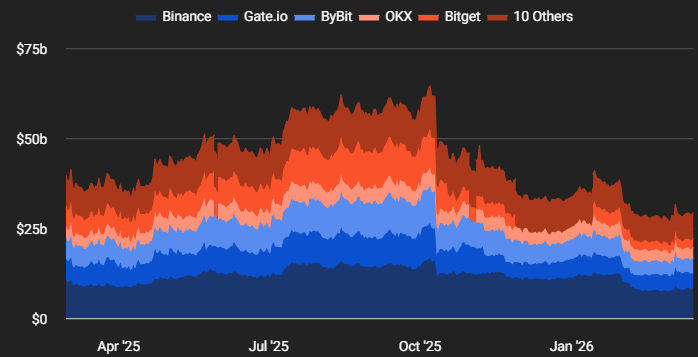
He added that this dynamic left short positions exposed to liquidation as spot demand strengthened.
Macro conditions remain the immediate catalyst. Analysts expect the Federal Reserve (US) to hold rates steady, while parallel decisions from the European Central Bank (EU), Bank of Japan, and Bank of England compress policy risk into a narrow window. The next directional move will likely depend on forward guidance and whether institutional inflows persist through potential volatility.



