

Bitcoin steadied just above $110,000 on Thursday after a volatile week that saw the cryptocurrency drop 12% from record highs, pressured by large-scale whale selling, a surge in put demand, and renewed U.S.–China trade tensions, according to market analysts.
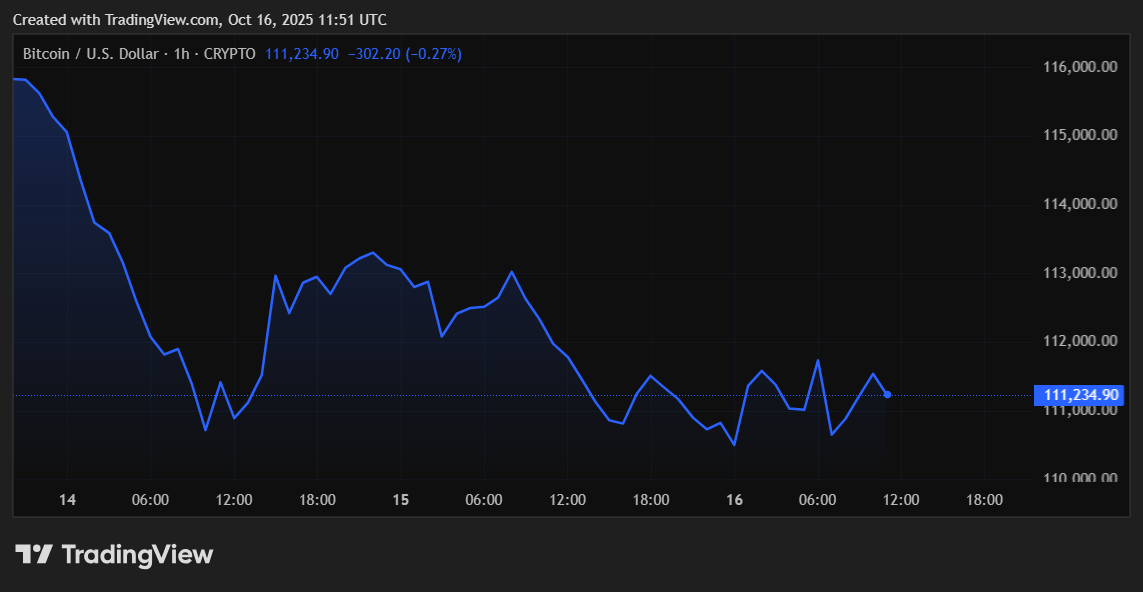
The world’s largest digital asset briefly fell to $109,800 before recovering to $111,200, marking a 2% daily decline following what analysts have called the largest deleveraging event in crypto history. Data shows that more than $19 billion in crypto positions were liquidated over the weekend, triggering cascading forced sales across exchanges.
Bitwise CIO Matt Hougan described the event as a market “reset” rather than a collapse, noting that structural conditions in crypto remain intact.
Whales Trim Positions, Options Traders Hedge Downside
“Bitcoin is testing a crucial floor at $110K as whales trim exposure and put demand spikes,” said Timothy Misir, head of research at BRN.
He noted that bulk put options exceeded $1.15 billion, accounting for 28% of total trade flow, while call interest remains concentrated around $115K to $130K.
Misir added that wallets holding between 10 and 10,000 BTC offloaded roughly 17,500 coins this week but remain net buyers year-to-date, having accumulated over 318,000 BTC.
“It’s selective distribution, not panic,” he said, characterizing the move as a tactical rotation rather than a broad exit.
Options data shows a put-call open interest ratio above 0.5, reflecting a defensive stance among traders. Implied volatility has climbed back above 60%, levels last seen during the early October correction.
Market-Wide Pullback and Macro Pressures
The sell-off extended across major cryptocurrencies. Ethereum slipped below $4,000, while Solana and XRP each fell more than 3%, bringing the total crypto market capitalization down to $3.8 trillion.
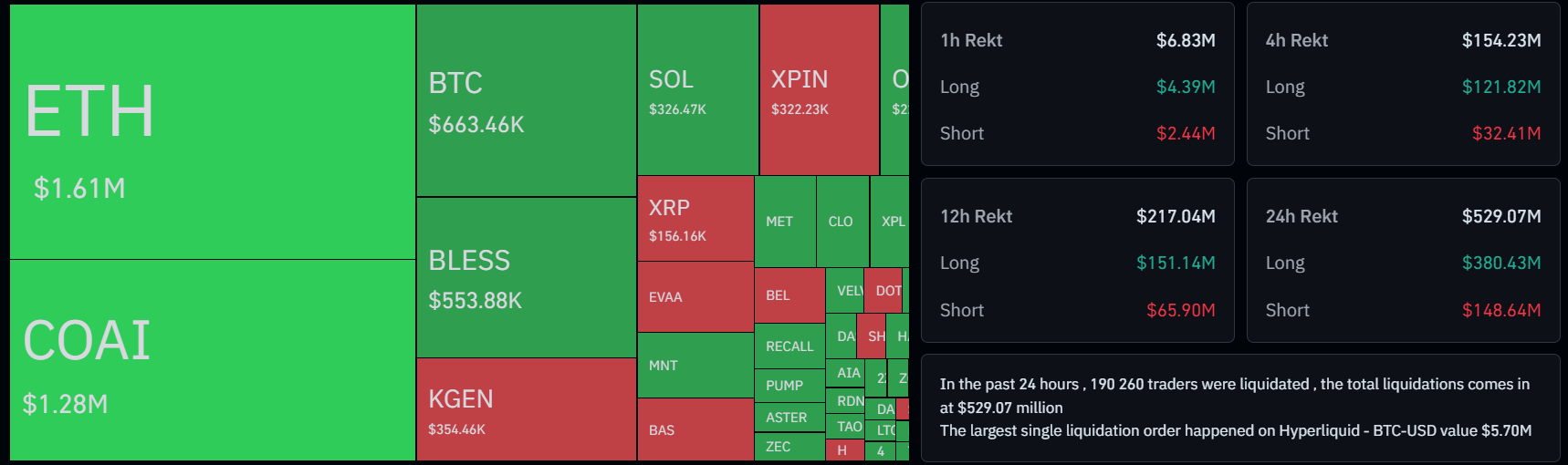
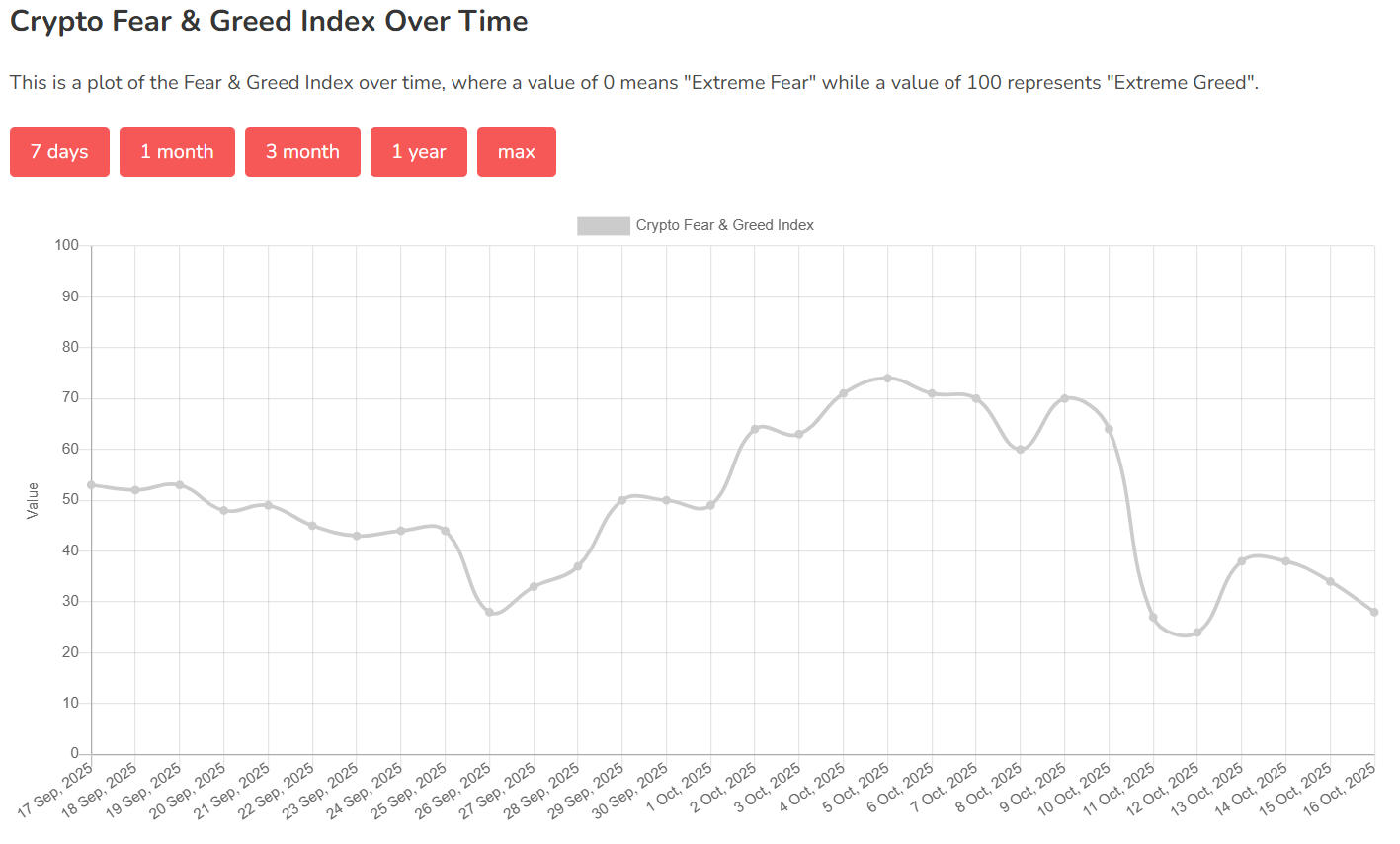
CoinGlass reported over $500 million in leveraged liquidations within the past 24 hours, echoing similar forced unwinds earlier in the week. Meanwhile, Fear & Greed Index fell to 28, signaling growing caution among investors.
Analysts suggest that macro headwinds—including tariff tensions between Washington and Beijing and concerns over a U.S. government shutdown—have amplified the risk-off mood across global markets.
Signs of Resilience Beneath the Surface
Despite short-term weakness, some experts see reasons for optimism. Matt Mena, a crypto research strategist at 21Shares, said Bitcoin’s stability amid aggressive deleveraging highlights “structural demand anchored by ETF inflows and a more dovish policy outlook.”
According to Mena, U.S. Bitcoin ETFs attracted over $6 billion in inflows in the past month. With leverage largely flushed out and potential monetary easing on the horizon, he believes the setup into year-end looks “increasingly constructive,” with a possible path toward $150,000 Bitcoin if institutional demand persists.
However, Mena cautioned that a decisive break below $110,000 could trigger a slide toward $104,000–$108,000, while regaining $115,000 might restore bullish momentum.
A Market Defined by Headlines and Hedging
For now, the market remains caught between caution and conviction. “The surge in put buying signals fear,” Misir said, “but call concentrations at higher strikes show institutions are hedging, not leaving. This remains a two-way, headline-driven market.”



