

Long-term bitcoin holders reduced selling activity across all age cohorts in March, signaling easing distribution pressure in the market. The shift points to a more stable supply dynamic at a time of macro-driven volatility.
VanEck reported that transfer volumes from long-term holders declined month-over-month, indicating fewer coins moving to market. At the same time, miner selling remained largely unchanged despite worsening economics. Miner revenues fell 11% over the period, while mining equities dropped 7%, reflecting tighter operating conditions.
Is Reduced Selling Enough To Support Bitcoin Stability?
The data suggests experienced holders are stepping back from distribution even as broader onchain activity weakens. Total bitcoin transfer volume declined 31%, while daily fees fell 27%, partly due to activity shifting toward offchain venues such as derivatives and exchange-traded products. This contrasts with prior cycles where declining miner profitability often triggered aggressive selling.
VanEck analysts described the slowdown in long-term holder activity as “a potentially constructive signal,” noting that reduced transfer volumes typically indicate lower sell-side pressure. Miner behavior also reflects restraint, with outflows to exchanges rising just 1% in BTC terms despite margin compression.
Still, structural pressures are building within the mining sector. Aggregate miner balances stood near 684,000 BTC, down only 0.5% year-over-year, even as approximately 164,000 BTC were newly issued. According to the report, miners effectively sold most of the new supply to sustain operations and capital expenditures.
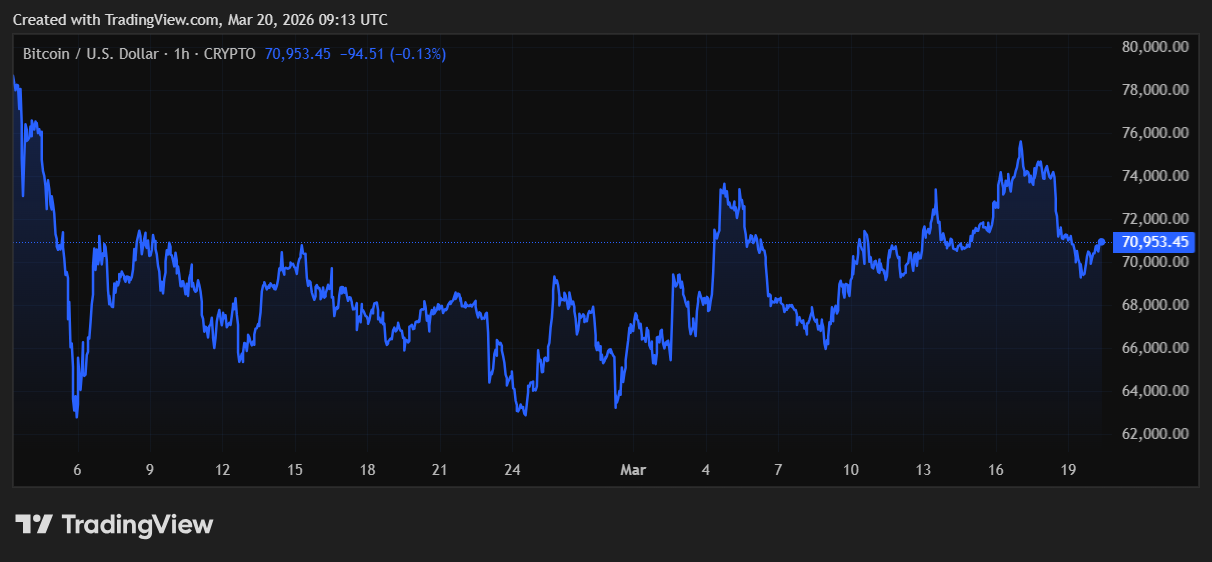
The evolving business model adds another layer of uncertainty. Several mining firms are pivoting toward artificial intelligence infrastructure, with some liquidating bitcoin reserves to fund the transition. If price weakness persists alongside high operating costs, miner distribution could accelerate, making supply dynamics the next critical variable to watch.



