

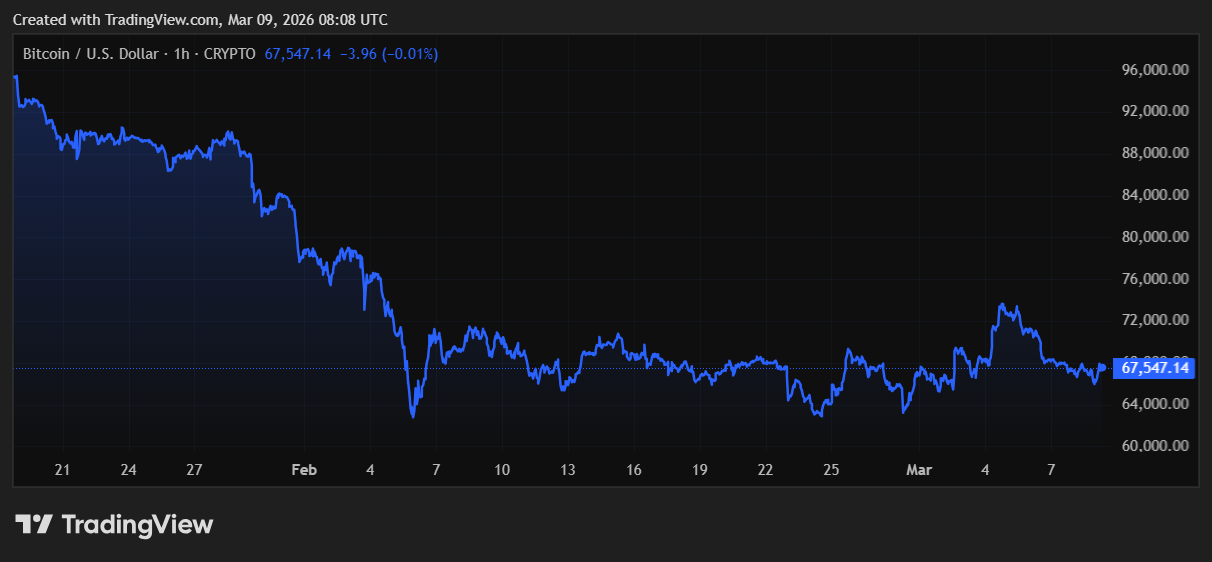
Bitcoin fell to $66,010 on Monday after crude oil surged past $110 per barrel, triggering a sharp risk-off shift across Asian equity markets. The move erased much of last week’s rally and reinforced the growing influence of macro shocks on digital asset pricing.
Data shows Bitcoin dropped 1.87% over the past 24 hours and now trades roughly 10% below the March 5 peak of $73,500. The retreat coincided with steep declines in Asian equities, where Japan’s Nikkei fell 7% and South Korea’s KOSPI slid 7.9% at the open.
Is Bitcoin Becoming Increasingly Sensitive To Global Macro Shocks?
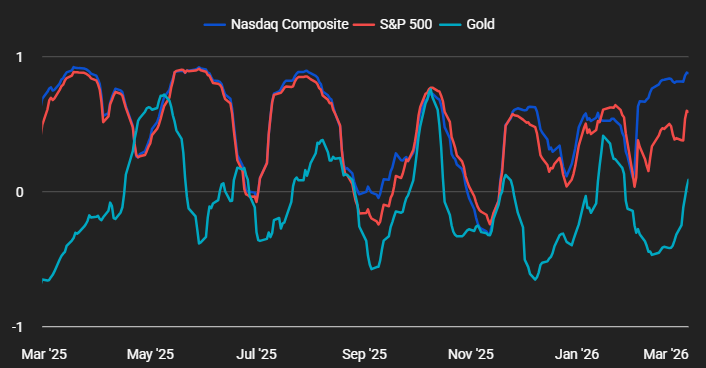
Bitcoin’s pullback also aligns with earlier analysis from CryptoQuant, which described last week’s advance as a temporary “relief rally” rather than the start of a sustained bull cycle. Correlation metrics reinforce that view. 30-day Pearson correlation shows Bitcoin moving closely with equities, posting an 88% correlation with the Nasdaq Composite as of March 6.
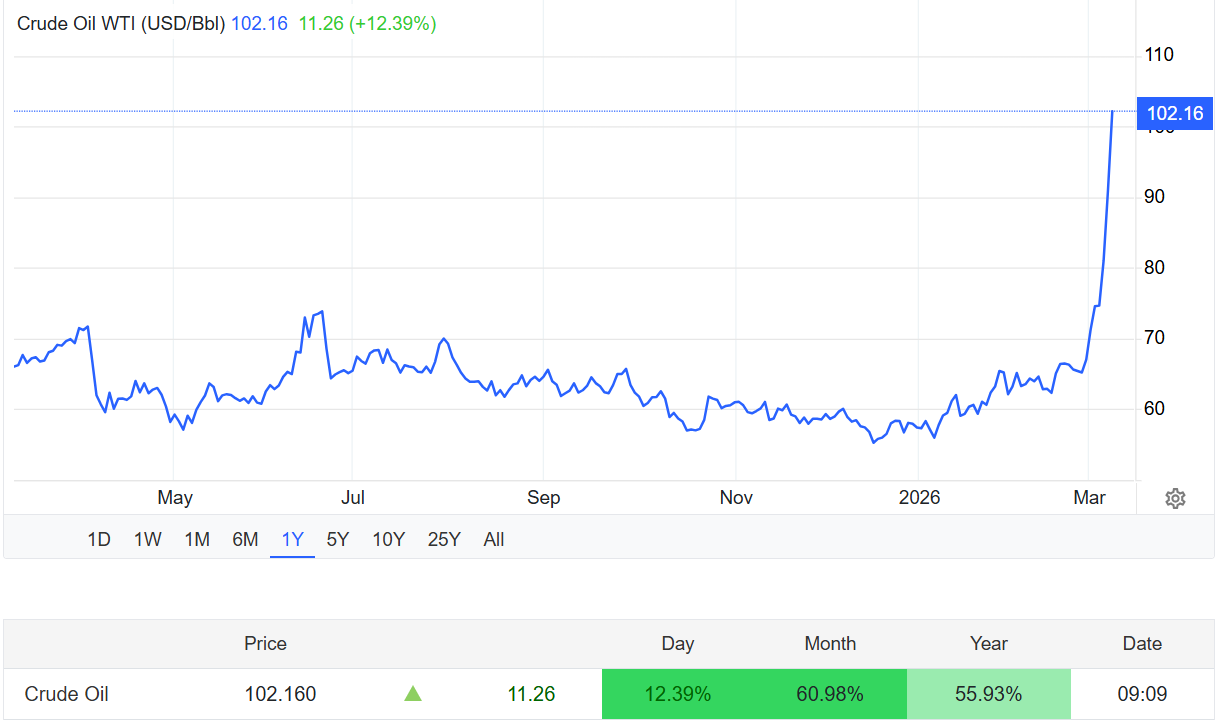
The broader market stress traces back to oil. Crude prices surged 22% in a single day and have climbed 72% over the past month, according to Trading Economics. U.S. President Donald Trump said Sunday that the surge was “a very small price to pay,” adding prices should stabilize once the “destruction of the Iran nuclear threat is over.”
“BTC’s move to $66K is driven by a macro-driven pullback,” said Dominick John, analyst at Zeus Research. “Elevated geopolitical risk, particularly the lack of de-escalation in the Middle East, pushed markets into a more risk-off posture, while rising oil prices are adding to inflation concerns and tightening global financial conditions.”
Jeff Mei, chief operating officer at BTSE, said higher oil costs amplify inflation pressure because crude feeds into production across multiple industries. That dynamic is weighing on global growth expectations and pushing investors toward defensive positioning, he said.
Bitcoin exchange-traded funds have also added pressure. The funds recorded $576.6 million in combined net outflows last Thursday and Friday, reversing a prior streak of steady inflows.
Zeus Research identifies $65,000 as near-term support for Bitcoin, while the $68,000 to $69,000 band represents a critical resistance zone. Traders are now watching macro signals closely, including this week’s U.S. consumer price index release and initial jobless claims data, which could determine whether institutional flows return to digital assets.



