

Bitcoin has slipped back under the $90,000 mark, giving up gains from an early 2026 rally that was fueled by strong exchange-traded fund inflows but has since met renewed market caution.
The world’s largest cryptocurrency started the year on a strong note, climbing close to $95,000 after around $1.2 billion flowed into U.S. spot bitcoin ETFs during the first two trading sessions, according to data. That momentum has faded in recent days. By Thursday, bitcoin had fallen below $90,000 as ETF flows turned negative for a second straight session and broader risk appetite cooled across financial markets.
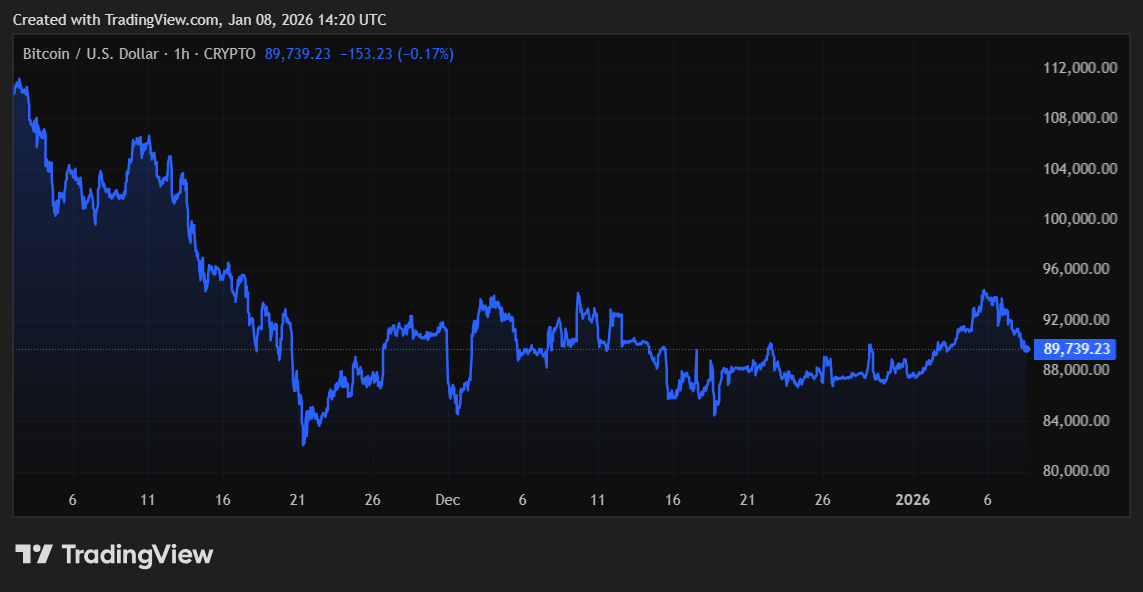
Paul Howard, senior director at trading firm Wincent, said the pullback aligns with recent market patterns. He noted that both bitcoin and ether could drift lower in the near term as traders look to fill a gap on CME futures contracts, while macroeconomic pressures continue to weigh on sentiment.
“ETF inflows and other early-year catalysts helped kick off 2026, but a move below $91,000 to fill the CME gap would be a natural next step,” Howard said, adding that current conditions favor short-term trading over longer-term directional bets.
He also pointed out that January has historically been a relatively flat month for crypto prices.
Rebalancing, resistance, and cautious derivatives markets
The latest decline comes as investors continue to assess bitcoin’s uneven performance in 2025. The asset ended last year down about 6.3%, making it the weakest performer among major asset classes and marking the first time it failed to outperform during its typical four-year cycle, according to analysis from K33. It was also only the second year on record in which bitcoin posted negative returns while the S&P 500 delivered solid gains.
 Vetle Lunde
Analysts at K33 said these dynamics have influenced positioning at the start of 2026. They argued that the early ETF inflows may reflect portfolio rebalancing rather than a decisive shift in investor confidence. Funds with fixed bitcoin allocations may have added exposure after the asset lagged equities and other markets late last year, offering short-term support without signaling a broader change in sentiment.
Onchain data suggests the market remains in transition. Glassnode analysis shows that profit-taking eased toward the end of 2025, allowing prices to rebound from the high-$80,000 range. However, a large concentration of supply from investors who bought near previous highs now sits above current prices, creating resistance as bitcoin moved back into the low to mid-$90,000s.
Chris Beamish
Glassnode identified the short-term holder cost basis, estimated around $99,000, as a key level to watch. A sustained move above that threshold would indicate renewed confidence among recent buyers, while failure to reclaim it could leave the market stuck in a period of consolidation or exposed to further downside.
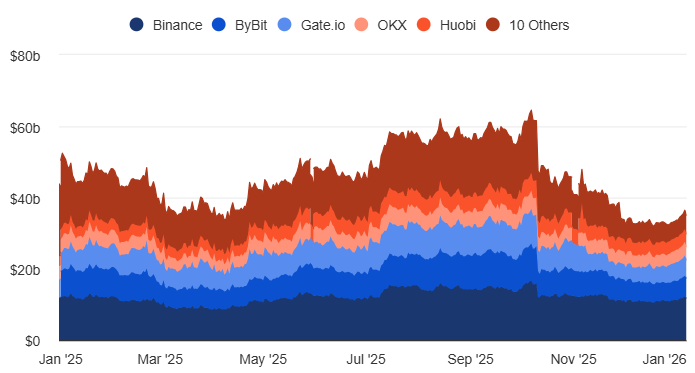
Derivatives markets are also signaling caution. Futures open interest has begun to recover after a sharp year-end deleveraging, but remains well below earlier peaks. Funding rates are muted, and options markets show a gradual normalization rather than aggressive bets on higher prices. Even so, some market participants say the recent pullback does little to undermine bitcoin’s longer-term outlook.
Kevin de Patoul, CEO of market maker Keyrock, said the move should be viewed as part of a broader structural shift rather than a reversal.
“Nothing in bitcoin’s fundamentals has changed,” he said, pointing to rising global debt levels and the growing use of bitcoin as a balance-sheet asset by companies and, in some cases, governments. “Short-term volatility doesn’t alter that story. What’s changed is the scale, with larger players taking more deliberate positions.”
Bitcoin’s dip below $90,000 reflects a market recalibrating after an early burst of optimism, as investors weigh technical levels, ETF flows, and broader macro forces. While near-term volatility may persist, many observers see the current phase as part of a maturing market rather than a break in the long-term narrative.



