
Roughly $128 billion evaporated from the crypto market within hours of explosions reported in Tehran. The swift selloff showed how geopolitical shocks can still trigger risk-off flows across digital assets despite their growing institutional base.
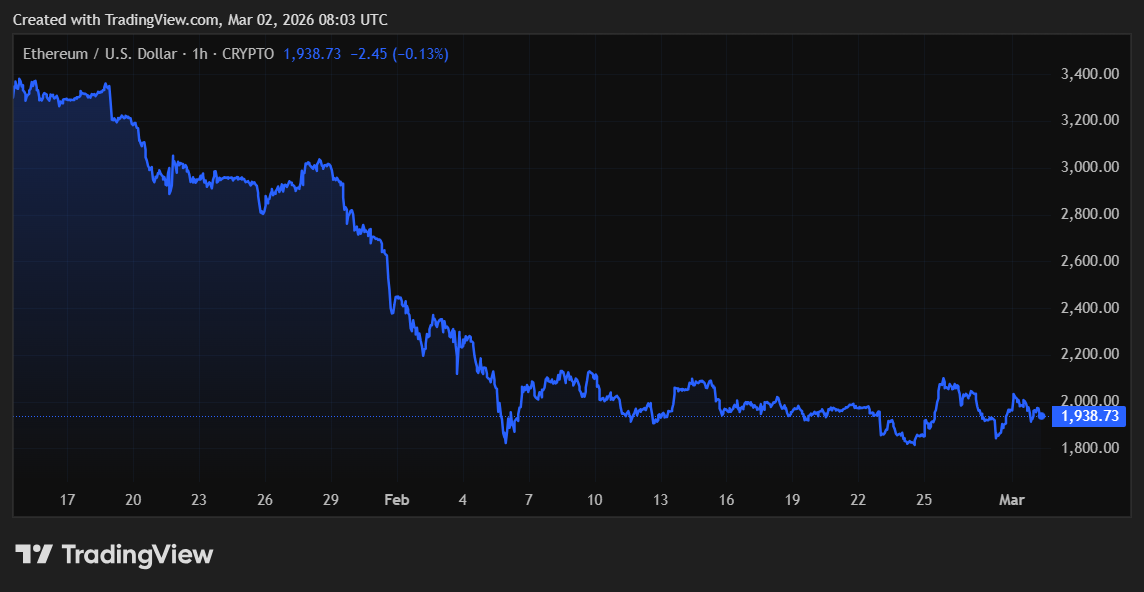
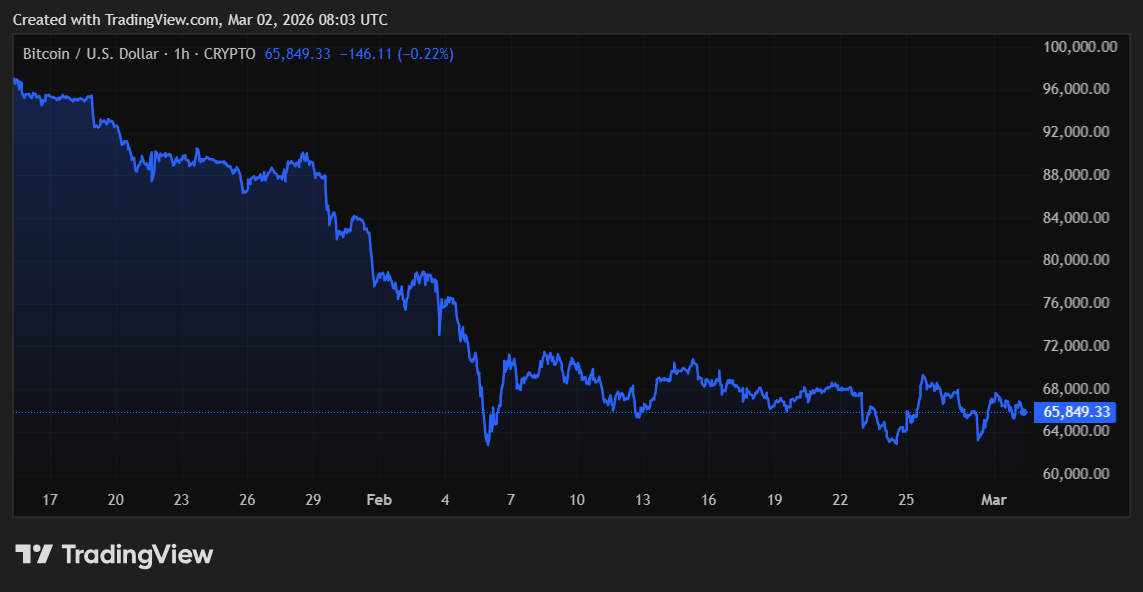
Bitcoin (BTC) fell as low as $63,062, a 4.6% slide from its 24-hour high of $66,108, before recovering to trade at $66,201. Ethereum (ETH) dropped to $1,837 and later rebounded to $1,940, marking a 24-hour range between $1,837 and $1,946. The volatility followed Iranian retaliatory missile launches targeting Israel, Qatar, the United Arab Emirates, and Bahrain, alongside threats against U.S.-linked bases in Iraq.
Are Digital Assets Still A Geopolitical Hedge?
The strikes began Saturday with explosions reported in Tehran, prompting U.S. President Donald Trump to urge Iranians to overthrow their government after the military campaign concludes. Hours later, Iran launched missiles toward multiple regional targets. The United Arab Emirates Ministry of Defence said it intercepted the incoming missiles without casualties, though fragments fell across parts of Abu Dhabi including Saadiyat Island and Khalifa City.
Data at the time showed Bitcoin recovering above $66,000, posting gains of 1.12% over one hour and 1.28% over 24 hours. Ethereum advanced 1.42% over one hour after testing support below $1,850. By comparison, the 4.6% intraday drawdown in Bitcoin was sharper than typical weekend ranges in recent weeks, reflecting immediate headline-driven liquidation before buyers stepped back in.
The UAE Ministry of Defence stated it remains ready to counter threats and is taking necessary measures to safeguard national stability. Both Bitcoin and Ethereum demonstrated rapid stabilization once markets assessed the limited physical damage and absence of reported casualties, suggesting that initial panic selling was not sustained.
Still, the episode reinforces crypto’s sensitivity to sudden geopolitical escalation, particularly when energy corridors and U.S. regional interests are implicated. Traders will watch whether further missile exchanges materialize and whether traditional safe-haven assets outperform digital tokens in the next bout of volatility.



