

U.S. spot bitcoin exchange-traded funds recorded $171.2 million in net outflows in a single session, the largest daily withdrawal in three weeks. The shift signals renewed short-term caution among institutional allocators despite sustained structural demand for bitcoin exposure.
Seven funds posted net redemptions on Thursday, according to data from SoSoValue. BlackRock’s iShares Bitcoin Trust (IBIT) led losses with $41.9 million exiting, while products from Fidelity, Bitwise, and Ark Invest each saw outflows exceeding $30 million.
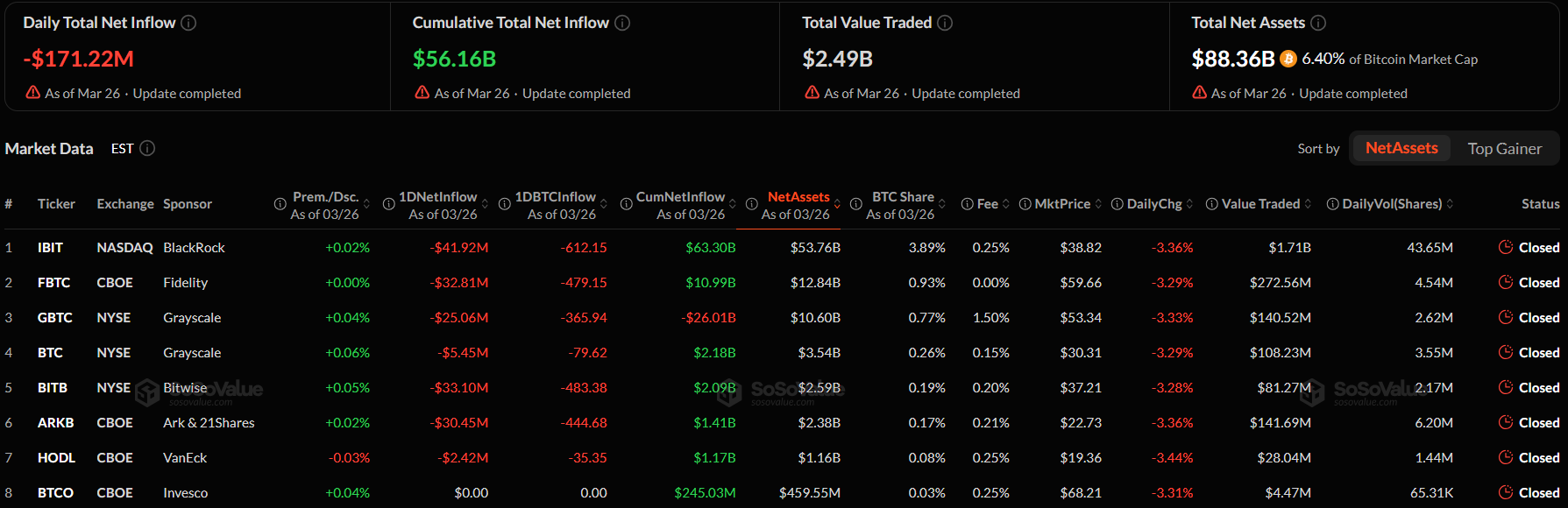
Are Bitcoin ETF Outflows A Short Term Reset?
Spot bitcoin ETF flows have remained sensitive to macro signals since their U.S. launch, with periodic outflows interrupting broader accumulation trends. The latest $171.2 million drawdown marks the largest since March 6, while spot Ethereum ETFs recorded $92.5 million in outflows, extending a seven-day negative streak.
Yet cumulative allocations remain elevated relative to pre-ETF market structure, reflecting continued institutional access to regulated crypto exposure. Compared with bitcoin products, Ethereum funds have shown more persistent selling pressure, suggesting diverging sentiment between the two assets.
“Yesterday's $171 million outflow of spot bitcoin ETFs reflects short-term profit-taking, hedging due to macroeconomic uncertainty, and rotating capital amid broader market volatility rather than a substantial shift in long-term conviction,” said Nick Ruck, research director at LVRG Research.
He added that institutional positioning remains influenced by geopolitical risk and commodity supply shocks.
Still, portfolio adjustments extended beyond ETFs as Ark Invest reduced exposure to its own ARK 21Shares Bitcoin ETF (ARKB), selling 495,000 shares valued at $11.2 million. The firm also trimmed positions in crypto-linked equities and major technology stocks, consistent with its rebalancing thresholds, leaving ETF flow direction as the next signal to monitor.



