

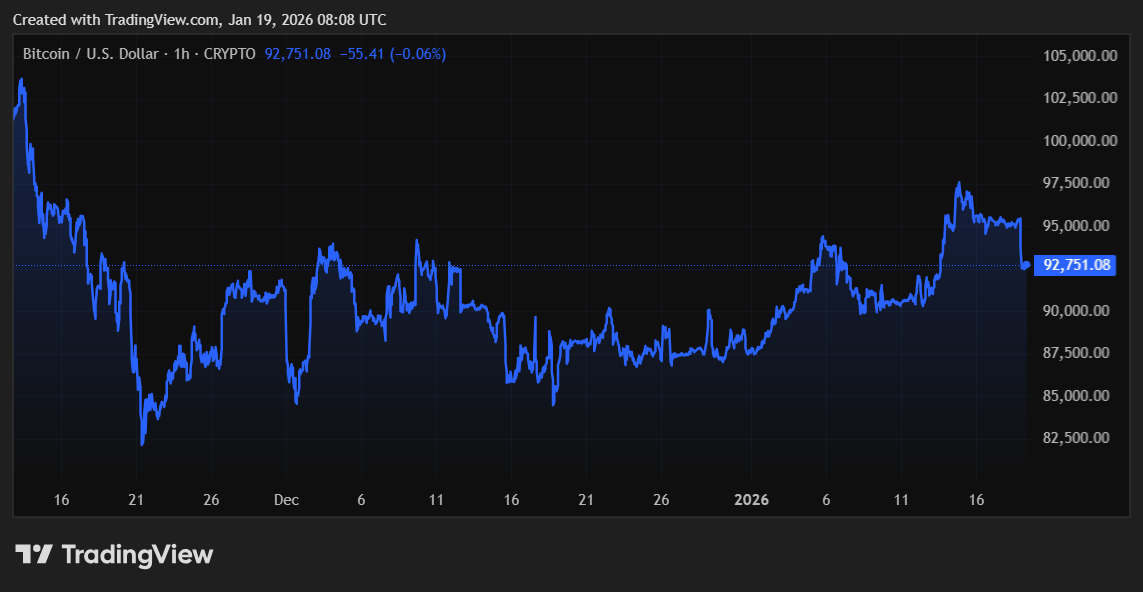
Bitcoin slid sharply late Sunday, dipping below $92,500 as growing fears of a potential trade dispute between the United States and the European Union unsettled already fragile cryptocurrency markets. The sudden move lower sparked heavy liquidations and dragged most major digital assets down with it.
According to data, bitcoin fell from around $95,500 at 5 p.m. ET to roughly $92,474 by 9 p.m., marking a decline of about 3 percent in just a few hours. Ether, XRP, Solana, and other large-cap cryptocurrencies mirrored the drop, reflecting a broad-based pullback across the market.
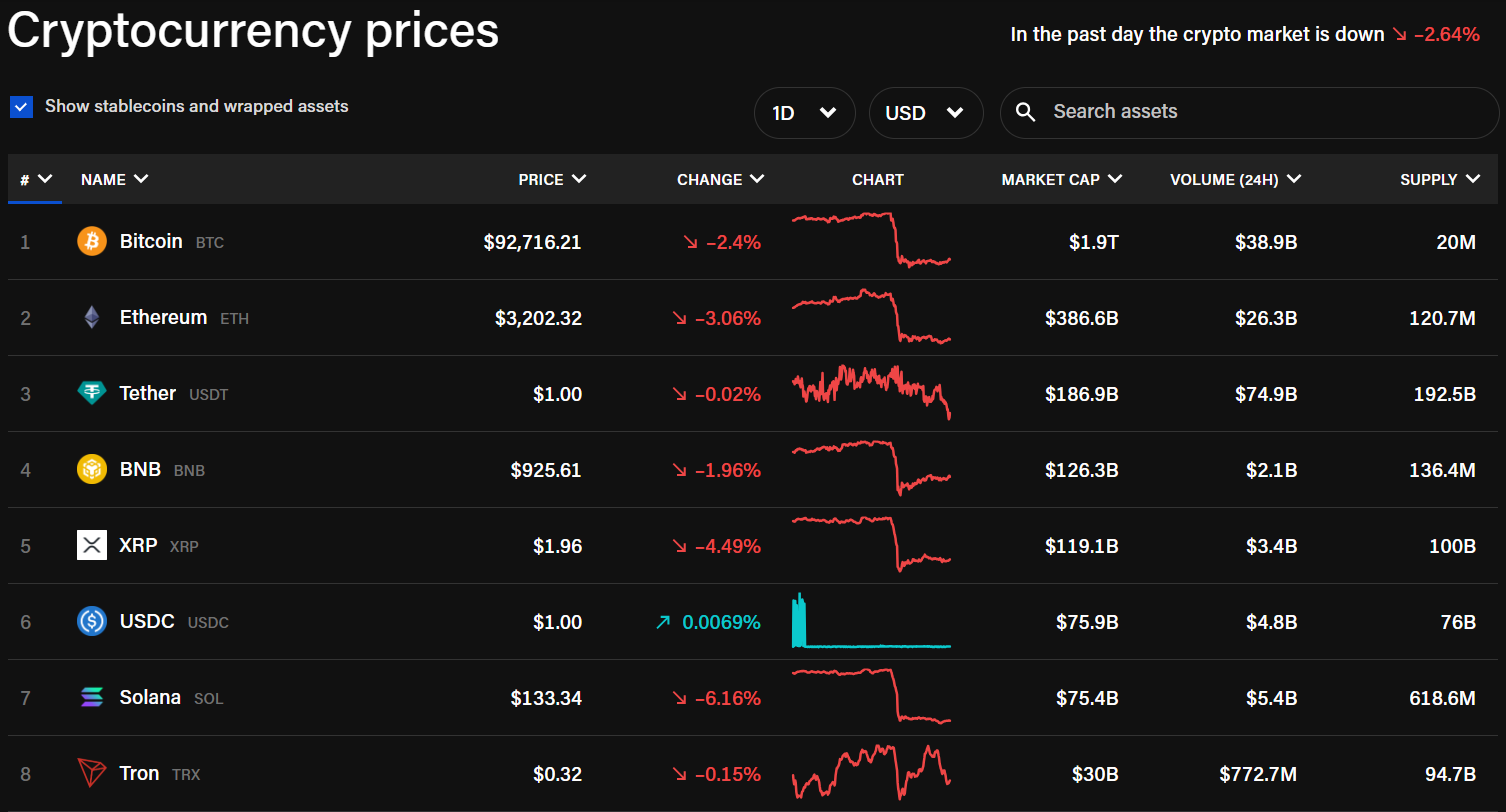
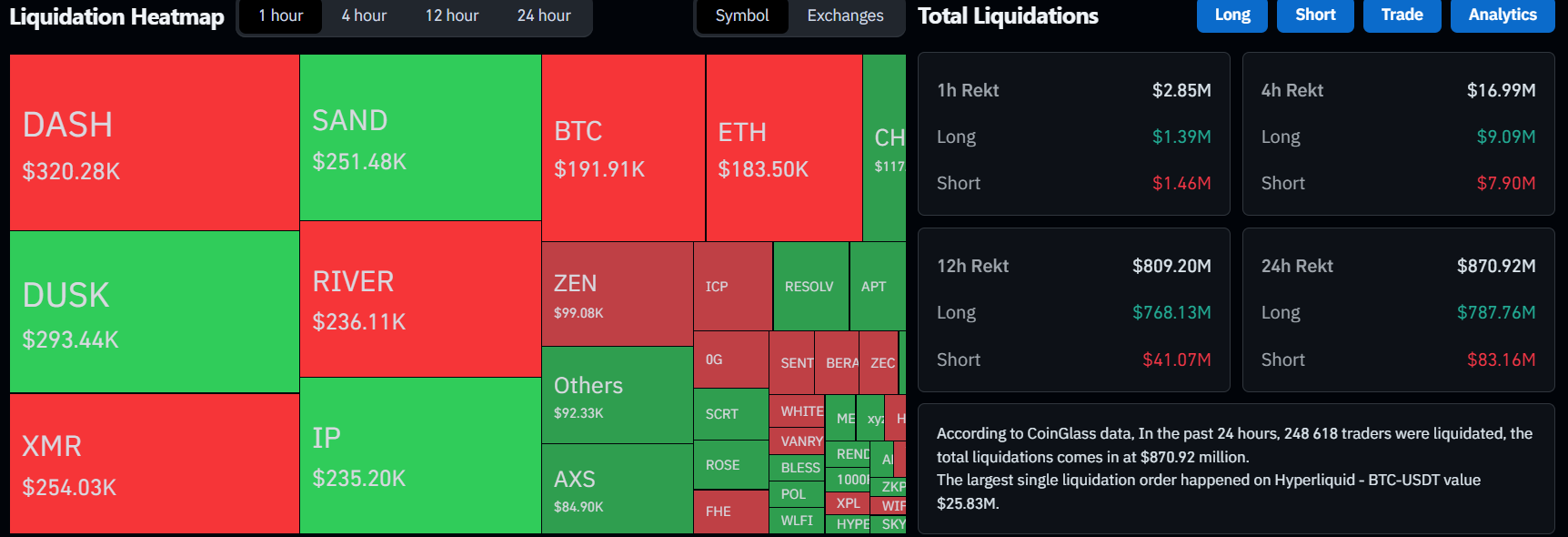
The sell-off triggered significant forced liquidations. Coinglass data shows that more than $750 million in long positions were wiped out over a four-hour period as prices fell rapidly. Analysts say the speed of the decline points to heightened sensitivity among crypto traders to geopolitical headlines and broader macro uncertainty.
Min Jung, an associate researcher at Presto Research, said cryptocurrencies continue to lag other risk assets. While concerns about a U.S.-EU trade conflict weighed on sentiment, Jung noted that markets such as South Korea’s KOSPI were trading flat to slightly higher. This divergence suggests that crypto-specific weakness remains a key factor, with investors showing a preference for other risk assets even as global markets attempt to stabilize.
Trade War Fears Resurface
Renewed anxiety around transatlantic trade relations emerged after U.S. President Donald Trump threatened to impose escalating tariffs on imports from several European NATO allies. The proposed measures would begin at 10 percent on February 1 and rise to 25 percent by June unless Denmark agrees to sell Greenland to the United States. The countries named include Denmark, Norway, Sweden, France, Germany, the United Kingdom, the Netherlands, and Finland.
European leaders reacted strongly to the ultimatum, with some describing it as economic coercion. According to Reuters, EU officials are now considering potential countermeasures, including restrictions on U.S. services operating in Europe, new taxes on American companies, or limits on investment flows. These developments have added another layer of uncertainty to global markets already grappling with shifting interest rate expectations and slowing growth.

Rachael Lucas, a crypto analyst at BTC Markets, said the headlines have amplified volatility but are not the sole reason behind the current downturn. She noted that market sentiment had been weakening even before the latest trade war rhetoric surfaced.
Structural Pressures Weigh on Crypto
Lucas pointed to stalled progress on U.S. crypto legislation as a key factor undermining confidence. After Coinbase withdrew its backing of a proposed crypto market structure bill, the Senate Banking Committee postponed its markup hearing, with no new date announced. The delay dampened hopes for near-term regulatory clarity, which many investors had been counting on.
At the same time, bitcoin has been consolidating for months following its October 2025 peak near $126,000. According to Lucas, traders have gradually taken profits after an extended period of heightened volatility. The recent break below the 50-week moving average triggered algorithmic selling, adding further pressure to prices.
Other indicators also suggest waning risk appetite. Spot Bitcoin exchange-traded funds reportedly saw outflows of about $4.4 billion across November and December, while futures open interest dropped sharply. Together, these signals point to reduced leverage and a more cautious stance among traders.
Looking ahead, Lucas warned that bitcoin could retreat toward the $67,000 to $74,000 range if current macro and market pressures persist. However, she emphasized that the situation does not resemble past crypto winters. The industry is more mature, institutional participation is deeper, and regulatory discussions, while slow, remain constructive.
A Market Searching for Stability
For now, the crypto market remains vulnerable to sudden shifts in sentiment, particularly as geopolitical tensions and policy uncertainty continue to dominate headlines. While the long-term outlook may be more resilient than in previous cycles, the latest drop underscores how quickly confidence can fade when multiple risks converge.
As investors reassess their exposure, the coming weeks are likely to test whether bitcoin can regain its footing or whether further volatility lies ahead. Either way, the episode serves as a reminder that crypto markets, despite their growing maturity, remain closely tied to global economic and political developments.



