

Bitcoin fell to $71,093 late Sunday, extending a 2.6% decline over 24 hours amid renewed geopolitical strain in the Middle East. The move signals heightened sensitivity of digital assets to macro risk, particularly when energy supply routes face disruption.
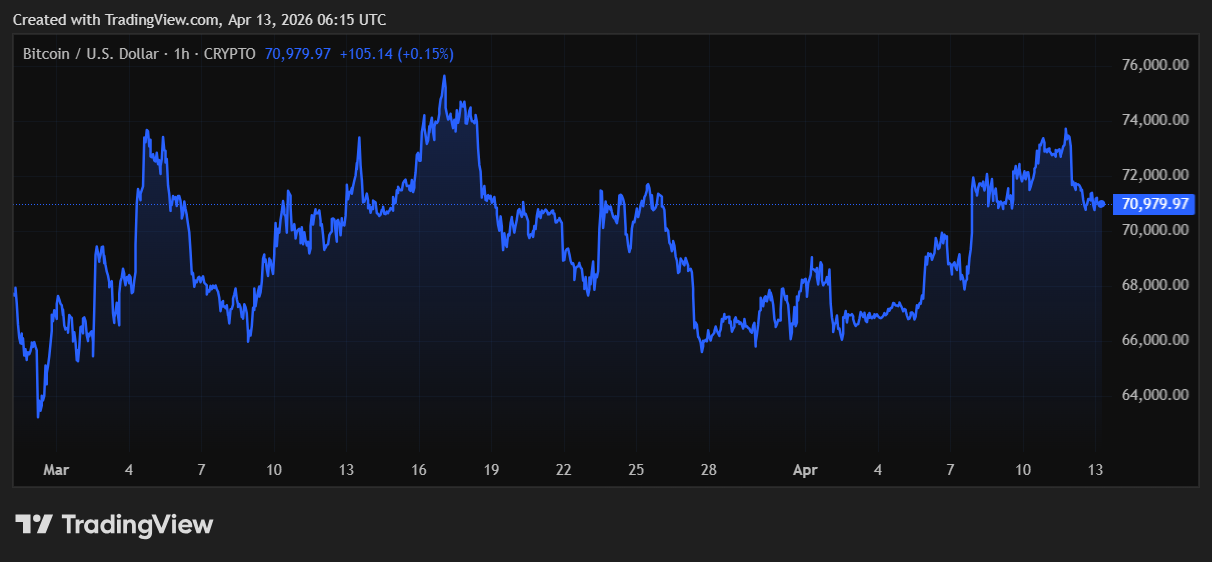
The decline followed failed U.S.-Iran negotiations in Islamabad, where talks collapsed after 21 hours without a ceasefire agreement. U.S. Vice President JD Vance said Iranian officials rejected proposed terms, while Iranian state media cited “unreasonable demands” from the U.S. as the cause. Prices weakened further after President Donald Trump ordered a naval blockade of the Strait of Hormuz, a critical global oil transit chokepoint.
Are Crypto Markets Becoming More Sensitive To Geopolitics?
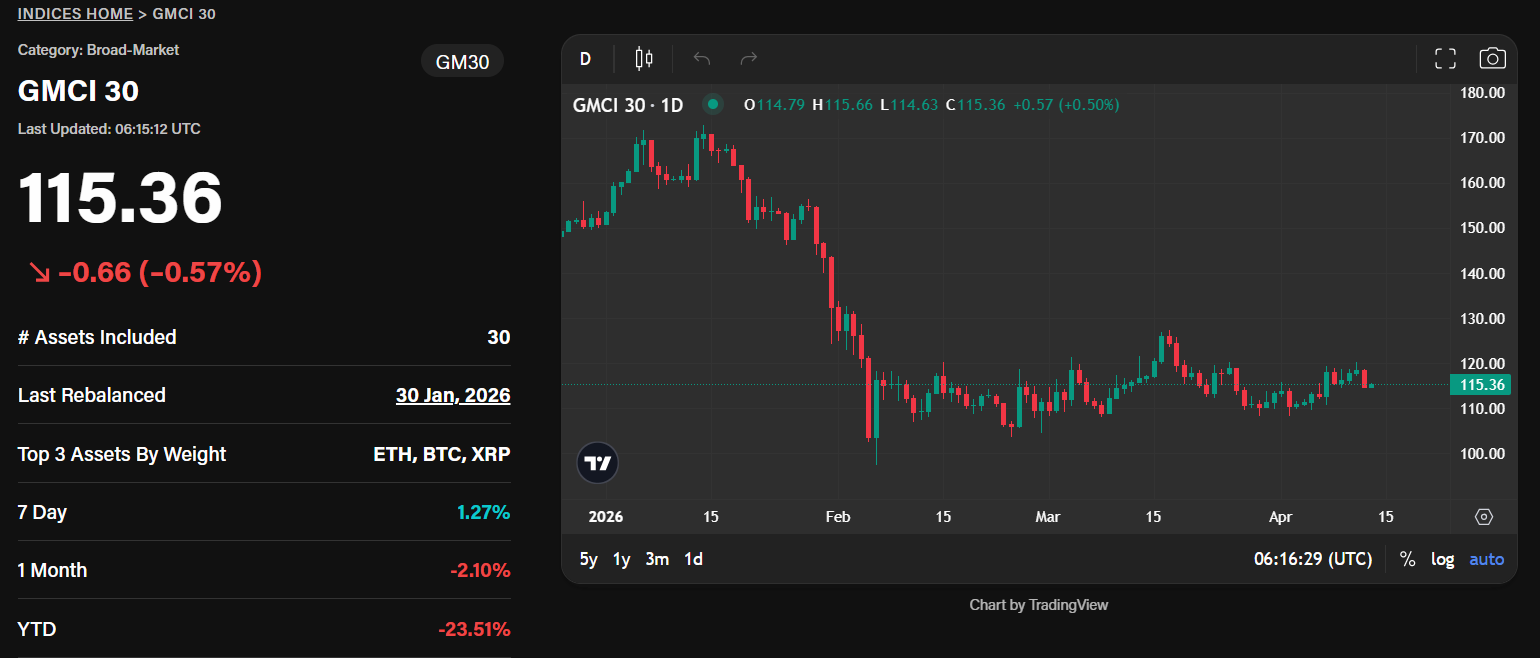
Ethereum dropped 3.6% to $2,202, while XRP fell 2% to $1.33 and Solana declined 3.25% to $82. The GMCI 30 index, tracking the top 30 cryptocurrencies, slid 2.5% over the same period, reflecting broad-based weakness across digital assets. But the pullback remains modest compared to sharper declines seen during prior geopolitical shocks, including the April risk-off cycle that erased over 5% in a single day.
“Geopolitical headlines dominated crypto markets today as U.S.-Iran peace talks in Islamabad collapsed after 21 hours, triggering a sharp risk-off move,” said Rachael Lucas, crypto analyst at BTC Markets.
13th April 2026 Daily crypto wrap: Geopolitical headlines dominated crypto markets today as US-Iran peace talks in Islamabad collapsed after 21 hours, triggering a sharp risk-off move. Bitcoin pulled back from near US$74,000 to around US$70,500 following President Trump's…
— Rachael (@Rachael_M_Lucas) April 12, 2026
She added that bitcoin is now testing a support range between $70,500 and $71,000, with resistance forming near $72,000 to $73,000. A sustained move above that range would likely depend on continued capital inflows.
Still, underlying institutional demand shows resilience despite short-term volatility. Spot bitcoin exchange-traded funds recorded $786 million in net inflows last week, marking the strongest weekly total since February, according to market data. BlackRock’s iShares Bitcoin Trust led inflows, while Morgan Stanley’s newly launched MSBT fund attracted $46 million with a low-fee structure.
 Imogen Dewey
Market participants now watch whether geopolitical escalation disrupts broader risk sentiment or remains contained. The next catalyst will likely hinge on developments in the Strait of Hormuz and whether ETF inflows continue to absorb selling pressure.



