

Bitcoin traded near $65,973, down 3.7% in 24 hours, according to price data. The move signals a market struggling for direction as positioning shifts into a key seasonal lull.
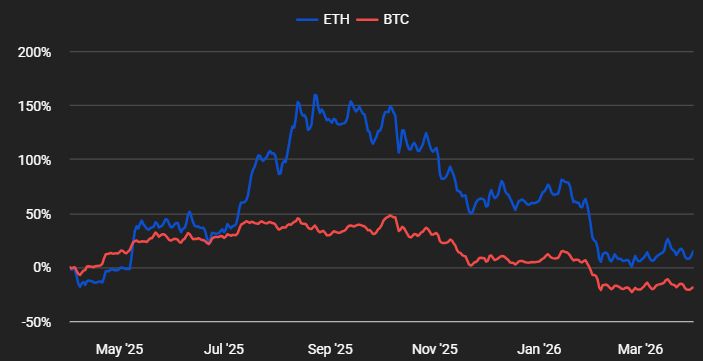
Price action has remained compressed between $60,000 and $70,000 in recent weeks, while ether (ETH) holds near $2,000. Data from Glassnode shows spot demand is beginning to absorb sell pressure, but not enough to sustain a breakout. At the same time, 8 million to 9 million BTC remain held above current prices, creating persistent overhead resistance.
Are Crowded Shorts Setting Up A Reversal?
The current structure reflects a transition phase rather than a confirmed trend. Long-term holders continue realizing losses at elevated levels, while derivatives positioning diverges from spot signals. Funding rates have stayed below zero through much of the first quarter, indicating traders are paying to maintain short exposure despite stable prices.
“Traders are willing to pay a premium to maintain downside exposure,” analysts at Bitfinex said, adding that the imbalance could become self-reinforcing.
Yet sustained short positioning raises the probability of a squeeze if upward momentum emerges. Could an extended short bias become the catalyst for the next move higher?
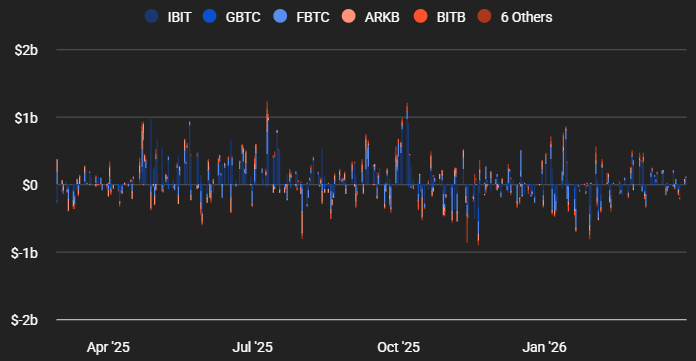
Flow data offers mixed confirmation. U.S.-listed spot bitcoin exchange-traded funds saw two days of inflows late in March, but more recent data shows $174 million in outflows on April 1. Options markets reflect similar caution, with implied volatility compressing and skew tilting toward downside protection, a typical signal of hedging rather than directional conviction.
Macro conditions continue to constrain risk appetite. Analysts at Bitunix described a “supply chain destruction” phase, linking disruptions in energy and metals markets to persistent inflation pressures. Bitcoin remains sensitive to liquidity clusters, with resistance near $69,000 to $70,100 and support around $65,500, positioning the asset as a residual risk barometer.
Longer-term views diverge from near-term caution. Pantera Capital’s Dan Morehead said in a recent interview that bitcoin may take six to eight months to bottom, while arguing institutional participation remains limited. The next catalyst will likely depend on whether spot demand strengthens enough to absorb overhead supply during the post-holiday liquidity return.



