
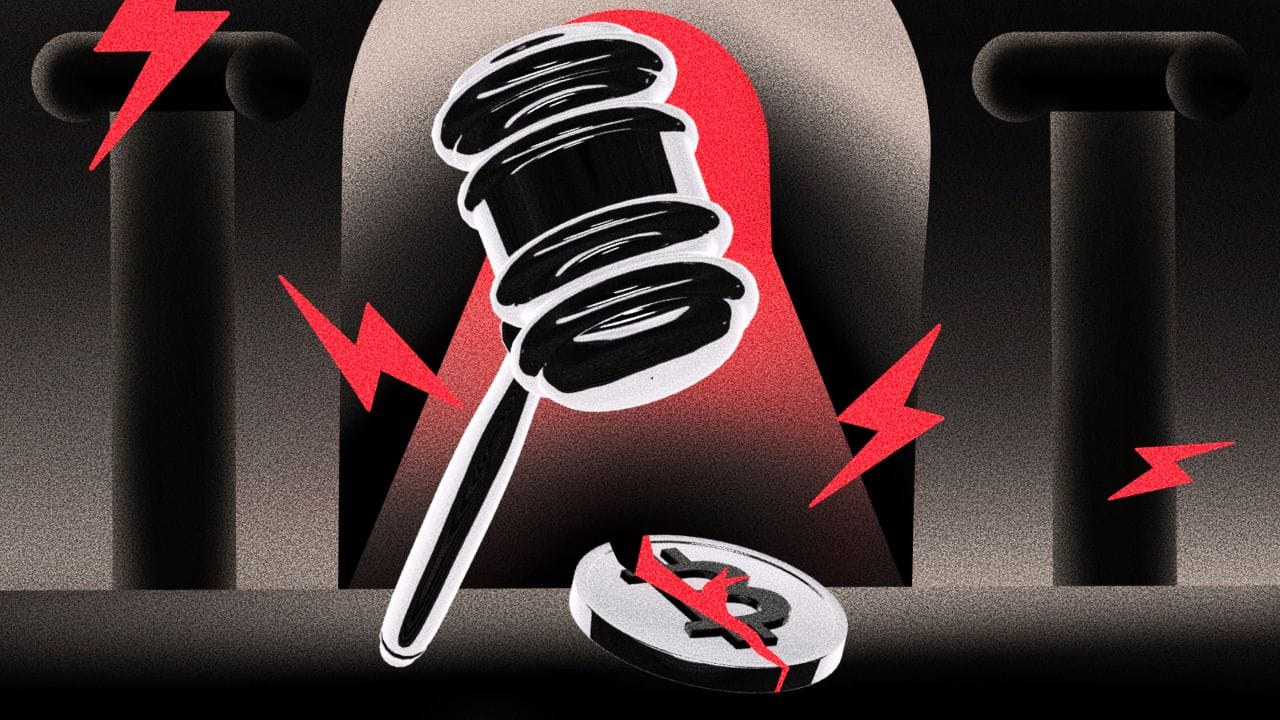
What actually makes the money in your pocket valuable? Is it gold? Is it a promise? Or is it simply the law?
For decades, the answer has been straightforward: money is valuable because the government says it is. This is the definition of legal tender, the official currency that must be accepted for settling debts within a country. But in 2021, the script was flipped when El Salvador became the first nation in history to elevate Bitcoin to the same legal status as the US dollar.
To understand why this matters, we have to look at how money has evolved, from the gold vaults of the past to the digital wallets of the future.
The Evolution: Gold, Fiat, and the Trust Problem
Historically, value was simple. Currencies were backed by tangible assets, most famously the gold standard. A dollar wasn't just paper; it was a claim check for a specific amount of gold stored in a government vault. This system, solidified by the 1944 Bretton Woods Agreement, pegged global currencies to the US dollar, which was convertible to gold.
But in 1971, President Richard Nixon severed that link, birthing the era of fiat currency.
Fiat money is backed by nothing but government decree (the word fiat is Latin for "let it be done"). While this gave governments flexibility to stimulate economies during crises, it also introduced new risks: inflation, endless debt cycles, and centralized control.
Enter Satoshi: A Vision of "Trustless" Money
In October 2008, an anonymous figure named Satoshi Nakamoto published the Bitcoin whitepaper. Interestingly, Satoshi never used the buzzwords "blockchain" or "cryptocurrency" in those nine pages.
Instead, Satoshi proposed a "peer-to-peer electronic cash system." It was designed to be trustless, meaning you didn't need to trust a bank or a government to verify your money. The network relied on math and computing power, not political policy.
While Satoshi likely envisioned Bitcoin as an alternative to state money, he probably didn't foresee it becoming state money itself. Yet, the first block of the Bitcoin blockchain contained a hidden message about bank bailouts, hinting that this new asset was a direct response to the failings of the traditional financial system.
The El Salvador Experiment: A National Test Case
Fast forward to 2021. President Nayib Bukele of El Salvador shocked the world by passing legislation to make Bitcoin legal tender.
The argument was compelling. For a country where huge portions of the population are "underbanked" (lacking access to bank accounts) and the economy relies heavily on remittances from workers abroad, Bitcoin offered a solution. It promised to cut out middlemen like Western Union, allowing money to zip across borders instantly and cheaply via the Lightning Network.
The Reality Check
However, the path from whitepaper to national policy has been bumpy.
- Adoption Hurdles: Despite the launch of the government's "Chivo" wallet, actual usage has been moderate. Reports suggest only a small fraction of remittances are sent via cryptocurrency, and merchant adoption remains mixed.
- Security Struggles: The rollout faced technical glitches and serious security breaches. In 2024, hacker groups leaked personal data linked to millions of users and even exposed the code for the Chivo ATMs.
- Global Pushback: The experiment drew the ire of global financial watchdogs. In December 2024, the International Monetary Fund (IMF) agreed to a $1.4 million loan for the nation but attached a heavy string: El Salvador had to scale back its Bitcoin engagement.
Can Crypto and Government Coexist?
El Salvador serves as the world's petri dish for cryptocurrency policy. It highlights a fascinating tension: Bitcoin was built to bypass the state, yet the state is now trying to adopt it.
For proponents, legal tender status is the ultimate legitimacy, proving that digital assets can stand toe-to-toe with the dollar or the euro. For critics, the volatility and technical complexity make it a risky foundation for a national economy.
What is clear is that the definition of money is no longer static. Whether as a replacement for fiat or a complement to it, Bitcoin has forced a global conversation about who controls value: the government, or the code?



