

Bhutan transferred 175 bitcoin (BTC) worth about $11.85 million on Monday. The move pushes the country’s total BTC outflows in 2026 above $40 million, according to blockchain analytics firm Arkham Intelligence.
BHUTAN IS SELLING BITCOIN pic.twitter.com/lrYWlaHhZU
— Arkham (@arkham) March 9, 2026
The latest transfer follows another movement of roughly $6.8 million in bitcoin last month. Combined, Bhutan has shifted about $42.5 million worth of BTC so far this year, Arkham data shows. The assets are managed by Druk Holding & Investments, the sovereign wealth fund overseeing the country’s digital asset reserves.
Despite recent transfers, Bhutan remains a notable sovereign bitcoin holder. The government currently controls about 5,400 BTC valued near $374 million at recent market prices, reflecting the nation’s multi-year strategy of accumulating bitcoin through domestic mining operations.
Why Is Bhutan Selling Portions Of Its Bitcoin Holdings?
Arkham analysts say the government typically sells bitcoin in relatively small batches.
“Bhutan periodically sells portions of its Bitcoin in clips of $5 million to $10 million,” the firm said.
These incremental transactions contrast with a larger liquidation episode in July, when the country moved more than $60 million in BTC over four days.
At the time of those transfers, Bhutan still held over 11,000 BTC valued near $1.4 billion. That stockpile once represented more than 40% of the country’s gross domestic product, highlighting the unusual scale of digital asset exposure within a sovereign balance sheet.
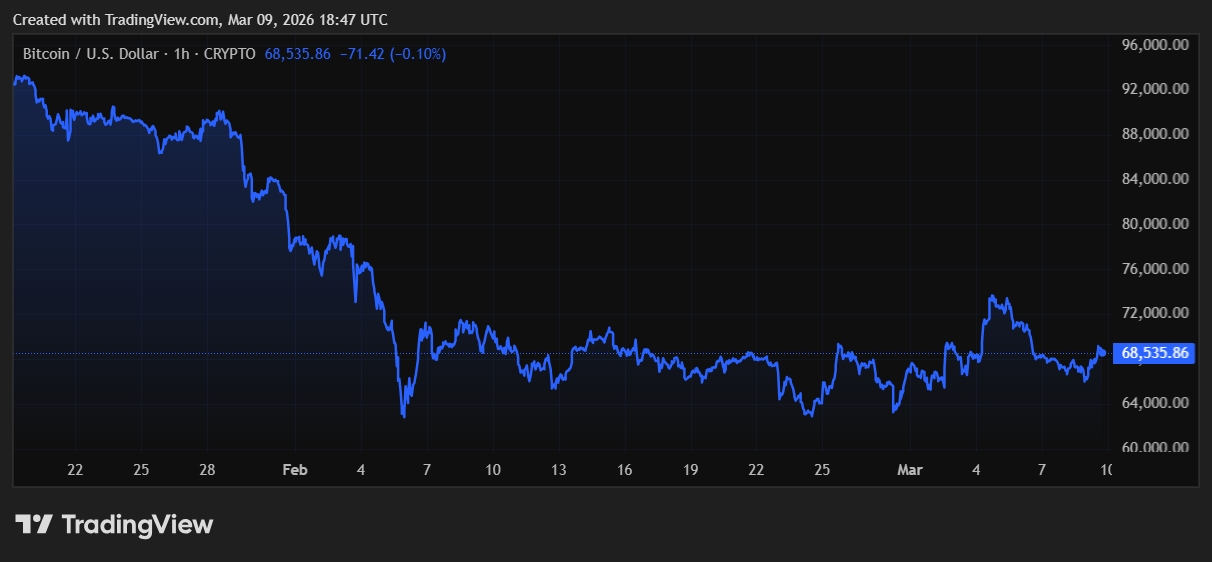
Market conditions have shifted since then. Bitcoin traded near $69,000 on Monday, according to price data, well below the roughly $119,000 level recorded during last year’s peak. Lower prices may influence the timing and scale of sovereign bitcoin transactions as governments manage reserves.
Bhutan’s crypto strategy differs from most countries because the holdings largely originate from mining rather than market purchases. The nation has used abundant hydroelectric power to run environmentally sustainable bitcoin mining facilities, converting excess energy into digital assets.
The recent transfers suggest the government is continuing a measured distribution strategy rather than exiting its position entirely. If bitcoin volatility persists, the next catalyst to watch will be whether Bhutan accelerates sales or resumes accumulation through its hydro-powered mining operations.



