
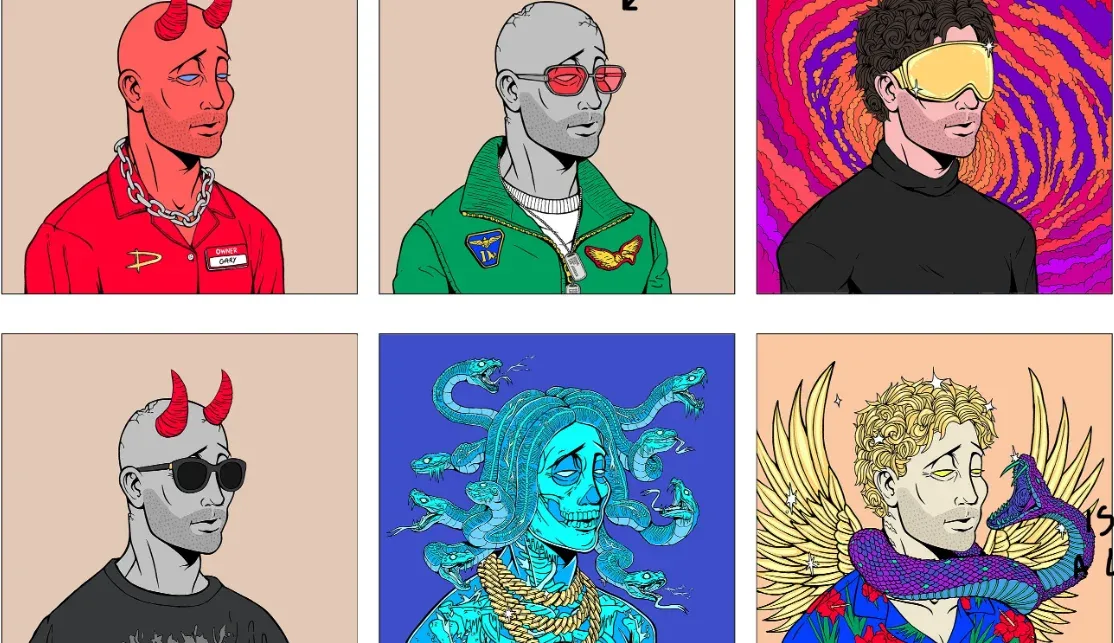
In the fast-moving world of Non-Fungible Tokens (NFTs), few collections have proven as dynamic and, frankly, as controversial as DeGods. What started as a simple profile picture (PFP) project on the Solana blockchain has evolved into a sprawling ecosystem featuring multiple token migrations, a utility token (DUST), a decentralized governance structure (DeDAO), and even a professional sports team acquisition.
DeGods isn't just digital art; it’s a living case study in how NFT projects attempt to create long-term value and utility for their holders.
From Generative Art to Ecosystem Builder
Launched in October 2021 by a developer known by the pseudonym Frank (later revealed as Rohun Vora), the DeGods collection consists of 10,000 unique, algorithmically generated NFTs. Much like the iconic CryptoPunks, each DeGod features a unique combination of 4 to 7 traits, determining its overall rarity and appeal.
However, the DeGods team quickly recognized that simply being a collectible wouldn't guarantee longevity. They designed the collection to be a gateway to an entire ecosystem:
- Staking for DUST: Holders can stake (lock up) their DeGods to generate the utility token DUST, which functions as the currency of the DeGods ecosystem.
- The DeDAO: Ownership grants access to the DeDAO (Decentralized Autonomous Organization), giving holders a voice in guiding the project's development and spending decisions.
- Transcendence to DeadGods: Holders can use DUST to "transcend" their original NFT into a DeadGod, a reimagined, second version of the art.
The PHBT Experiment and Supply Burn
The DeGods journey was marked by bold experiments. Early on, the team tried to combat the issue of "paper hands"—holders selling their NFTs below the floor price (the lowest listed price)—by introducing the PHBT mechanism. This applied a 33.3% tax on any sale below the floor.
While the tax funds were used to "sweep the floor" (buy low-priced DeGods) and burn (destroy) them, which reduced the total supply to 9,465, the mechanism ultimately failed to achieve its price-raising goal. The team wisely removed the tax, with Frank famously tweeting, "We tried some sht. We learned some sht. Now we’re trying some new sh*t."
A Tale of Three Chains: The Great Migration
Perhaps the most defining characteristic of the DeGods story is its willingness to move—not once, but twice—to what the founders believed were better platforms for growth.
- Solana Roots: DeGods started on Solana, taking advantage of its lower fees and faster transaction speeds during the 2021 NFT boom.
- Migration to Ethereum (2022): In December 2022, the developers announced they would move the entire collection to Ethereum. The reason? Frank claimed the project had "capped out on Solana," implying that a move to Ethereum’s larger market size and deeper liquidity was necessary for sustained growth.
- The Bitcoin Block: Never one to shy away from innovation, Frank minted the 535 burned DeGods onto a single Bitcoin block in February 2023, leveraging the new Ordinals protocol to record digital assets directly onto the original blockchain.
This history of migration makes DeGods a compelling example of a project prioritizing market reach and evolution over loyalty to a single blockchain.
DeadGods: Art Rework and Utility
The DeadGods collection was introduced after the team realized some of the original DeGod art was, to be diplomatic, "not very popular." The DeadGods are not new NFTs; rather, they are a complete art rework, giving the existing NFT metadata a second, visually distinct option. Holders can toggle between their original DeGod art and the new DeadGod art using DUST, providing both an artistic upgrade and utility for the ecosystem’s native token.
The Economic Engine: DUST and the DeDAO
The project's longevity is tied to the DUST token and the DeDAO.
DUST Tokenomics
DUST is an SPL token (on Solana, now bridged to Ethereum) used as a fungible currency. What's fascinating about DUST is its genesis: the total supply started at zero. All DUST was created by users staking their DeGods and DeadGods, meaning there was no initial coin offering or pre-mine for investors.
The token has a maximum supply of 33.3 million, and like Bitcoin, it is subject to halvings, reducing staking rewards three times over the project's lifetime to manage supply inflation and encourage scarcity.
The DeDAO in Action
The DeDAO is the governing body funded primarily by marketplace royalty fees (though these fees were later eliminated in late 2022). The DAO is structured with leaders, market experts (Alpha Team), and a voted-in Divine Council. Its most high-profile action to date was the acquisition of the BIG3 "Killer 3s" professional basketball team in April 2022, demonstrating the DeGods community's ability to exert real-world influence with its treasury.
The DeGods saga is a must-study for anyone looking to understand how PFP projects are attempting to pivot from speculative collectibles into genuine, utility-driven digital brands.



