

Robinhood’s addition to the S&P 500 has analysts at Bernstein optimistic about the company’s future, arguing that the trading platform is transforming into a broader financial “super-app” with room to capture more market share.
The brokerage firm’s research note, released Tuesday, highlights Robinhood’s evolving role in the financial sector. Once seen primarily as a hub for retail speculation, the company now commands an estimated 12% of U.S. retail trading revenue across equities and crypto — nearly double its share from two years ago.
Rising Market Share Across Assets
Robinhood has steadily expanded its presence in equities and options trading. Its equity trading market share grew from 2.8% in 2023 to 5.5% in 2025, while its retail options share more than doubled over the same period, now standing at 24%.
In crypto, Robinhood’s position strengthened further after the collapse of FTX and the retreat of Binance.US from the American market. The platform now holds around 30% of retail crypto trading activity, according to Bernstein.
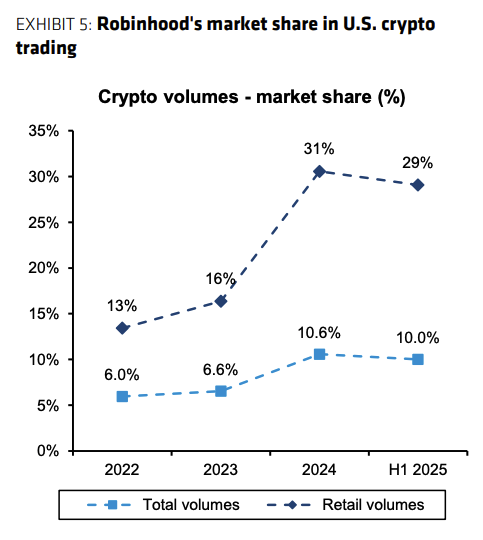
Analysts also noted that concerns over competition from legacy brokerages like Charles Schwab may be overstated. Despite expectations that traditional players would disrupt crypto trading, both Coinbase and Robinhood have maintained healthy margins with advanced traders, while Robinhood has quietly raised fees.
Tokenization and Wealth Management Opportunities
Looking ahead, Bernstein believes the next major growth area lies in blockchain tokenization — potentially enabling more liquid markets for securities in the U.S., particularly within private equity.
Outside of trading, Robinhood is pushing deeper into wealth management and broader financial services, a segment that currently represents just 2.7% of the overall U.S. broking and advisory market. Its Gold subscription program has already attracted 3.5 million members paying $5 per month. The package includes higher savings rates, access to credit cards and mortgages, and exclusive banking-like features.
The company’s recently launched Gold credit card, marketed as part of an aspirational financial membership, has issued 300,000 cards to date and continues to see strong demand with a growing waitlist.
Growth Forecasts and Risks
Bernstein projects Robinhood’s revenues will rise from $2.9 billion in 2024 to $6.8 billion in 2026, a compound annual growth rate of nearly 52%. Based on this outlook, analysts value Robinhood at $160 per share, suggesting a 36% upside from Monday’s close of $117.28. Shares jumped 15.8% that day, according to price tracker.
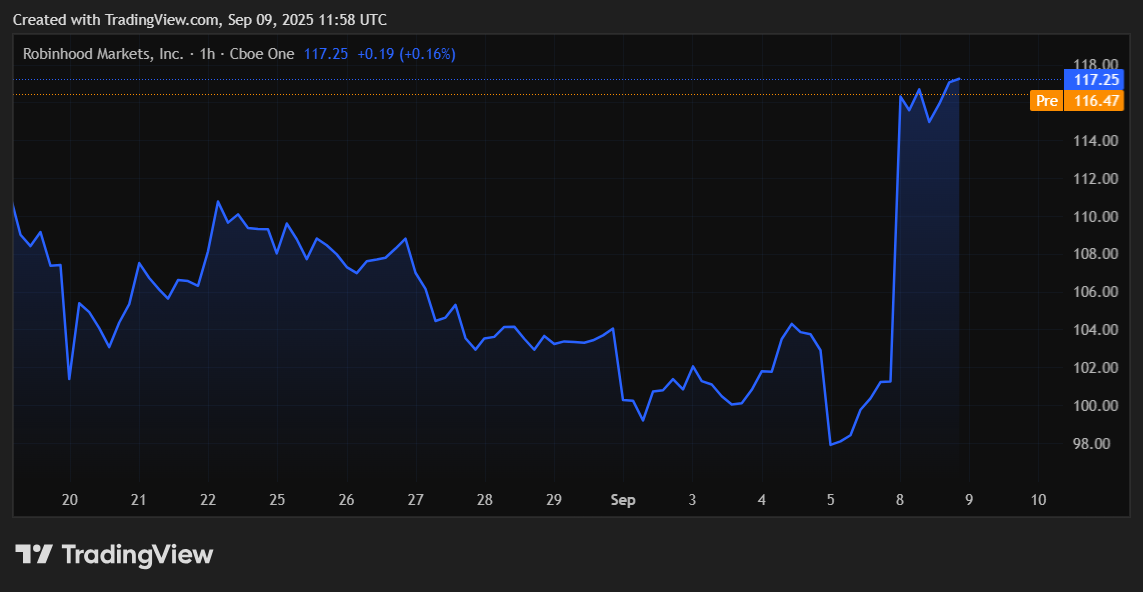
The firm praised Robinhood’s product innovation and ability to monetize new features but cautioned that regulatory uncertainty around payment for order flow and crypto trading remains a key risk factor.



