

Bermuda has announced plans to develop what it calls a “fully onchain” national economy, working with crypto firms Coinbase and Circle to expand the use of blockchain-based financial tools across the island. The initiative, revealed Monday at the World Economic Forum in Davos, reflects Bermuda’s long-term push to modernize its financial infrastructure and reduce reliance on traditional payment systems.
Under the plan, Coinbase and Circle will provide digital asset infrastructure and enterprise tools to the Bermudian government, local banks, insurers, small and medium-sized businesses, and consumers. The partnership also includes support for digital finance education and technical onboarding to help residents and organizations adopt onchain tools more easily.
According to a Coinbase spokesperson, discussions around the collaboration began last year at the Bermuda Digital Finance Forum in May. Since then, the government and its partners have been exploring how blockchain technology could be used at a national scale.
An onchain economy, as outlined by the partners, relies on digital assets for everyday financial activity, from payments to broader financial services. For Bermuda, a small and internationally connected economy, existing payment rails can be expensive and restrictive. Being grouped with other island jurisdictions often results in higher fees and limited access to onshore payment processors and fiat banking services, which can strain local businesses.
Premier E. David Burt said the initiative is focused on practical benefits.
“This initiative is about creating opportunity, lowering costs, and ensuring Bermudians benefit from the future of finance,” he said in a statement.
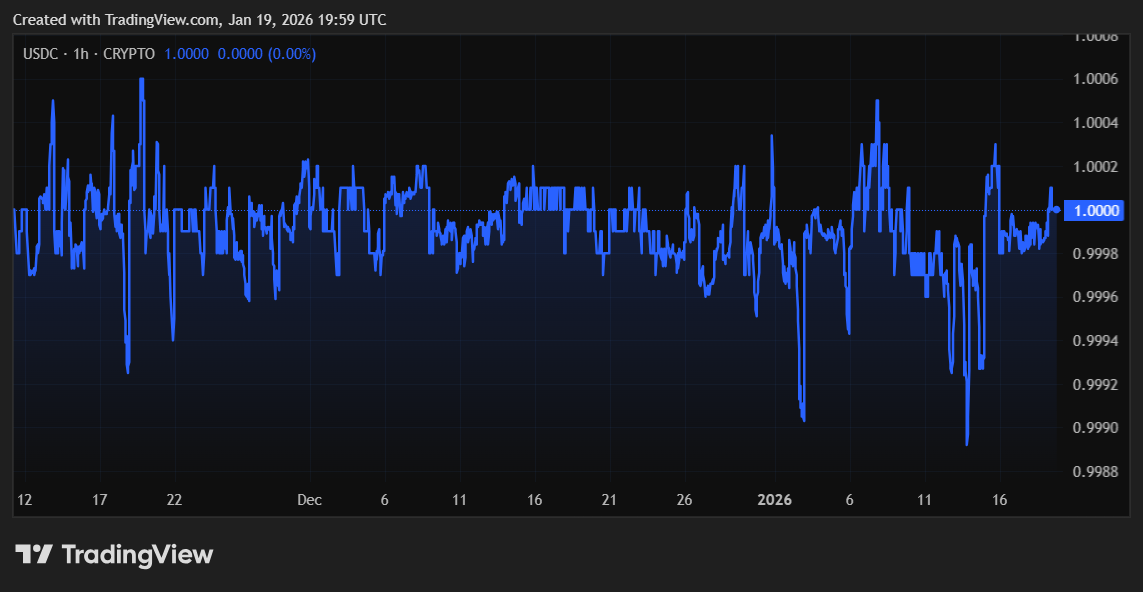
Stablecoins play a central role in the strategy. Circle’s USDC, a dollar-pegged digital currency, is expected to help merchants accept fast, low-cost, dollar-denominated payments. The government said several local businesses are already using stablecoins in live market settings.
The new effort builds on Bermuda’s early move into digital asset regulation. In 2018, the country introduced the Digital Asset Business Act, one of the first comprehensive regulatory frameworks for digital assets. Circle and Coinbase were among the first global firms licensed under the law. Coinbase currently operates a Bermuda-based platform offering derivatives outside the United States.
Momentum increased at the Bermuda Digital Finance Forum last year, where the government, Coinbase, and Circle carried out an onchain USDC airdrop. Each attendee received 100 USDC to spend with newly onboarded local merchants. Since then, more Bermudian businesses have begun accepting digital payments, and local financial institutions have expanded their use of stablecoins and tokenized finance.
The government expects these efforts to scale further at the Bermuda Digital Finance Forum 2026, scheduled for May 11–14. Officials said the event will feature broader business participation, a larger consumer stimulus, and deeper engagement across the financial services sector.
As part of the broader initiative, government agencies are expected to pilot stablecoin-based payments, financial institutions are set to integrate tokenization tools, and residents will be offered nationwide digital literacy programs. The goal is to create a more inclusive and competitive economy built on onchain infrastructure.
The government emphasized that the partnership with Coinbase and Circle is non-exclusive and that adoption of onchain tools will remain voluntary. Bermuda will continue to explore other technologies and partnerships as the initiative evolves.
Separately, Coinbase announced the launch of its Custom Stablecoins product, which allows businesses to issue branded stablecoins backed one-to-one by USDC and other U.S. dollar stablecoins. The company said stablecoins processed an estimated $9 trillion in adjusted annual transaction volume in 2025, highlighting their growing role in global finance.
As Bermuda moves forward, officials say the transition to an onchain economy is expected to deliver lower transaction costs, improved access to global financial services, and infrastructure designed to keep more economic value circulating locally. While the effort is still aspirational, it signals how smaller economies are exploring blockchain technology as a tool for financial resilience and innovation.



