
Benchmark has reiterated its Buy rating on Galaxy Digital, arguing that the market is undervaluing the company’s growing role in AI infrastructure, particularly following new expansion approvals at its Helios data center campus in Texas.
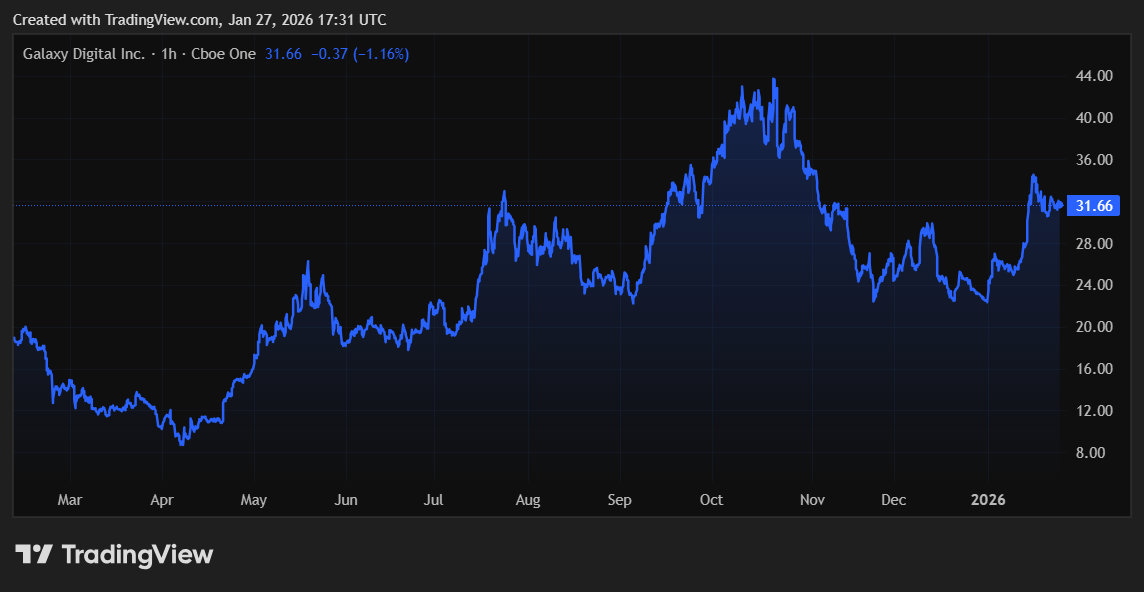
In a research note published Tuesday, Benchmark analyst Mark Palmer maintained a $57 price target on Galaxy Digital shares, pointing to recently approved power capacity at Helios as a source of long-term upside that is not yet reflected in the stock. With shares trading around $31.75, the target implies potential upside of roughly 80%.
Helios Expansion Adds Strategic Flexibility
The focus of Benchmark’s analysis is the approval of an additional 830 megawatts of power capacity at Helios by Texas grid operator ERCOT. While the announcement initially drew attention, Palmer said investors have largely moved on without fully assessing its longer-term implications.
 Galaxy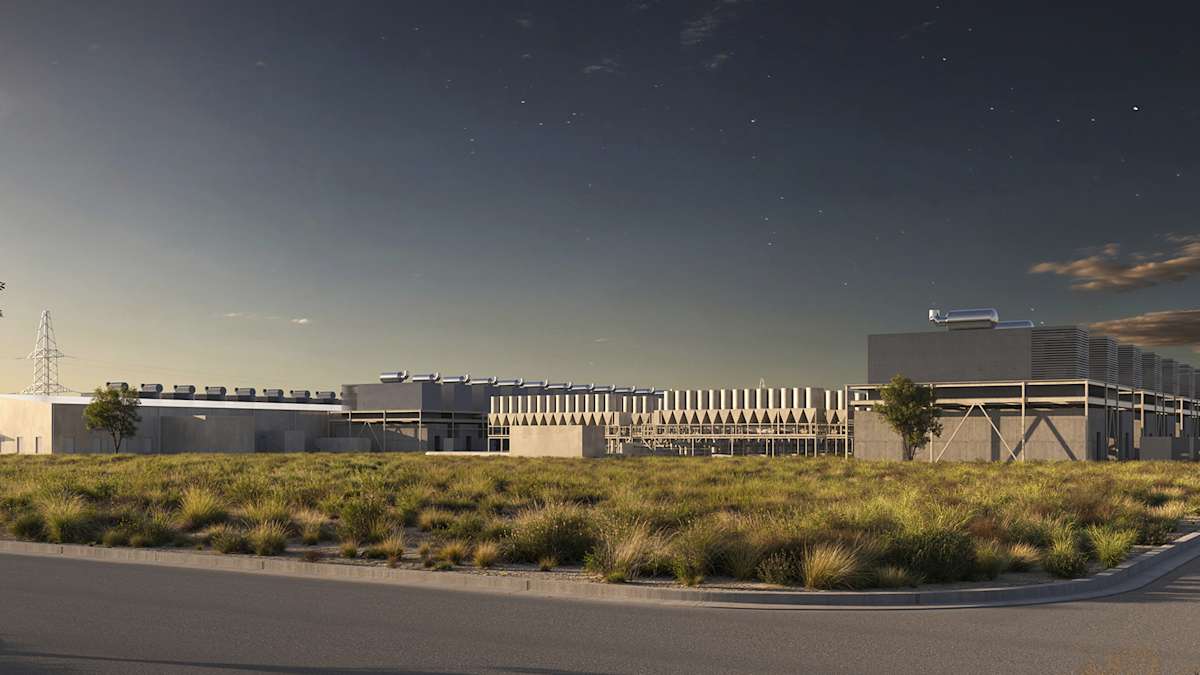
Once the new capacity is included, Helios will have approximately 1.6 gigawatts of approved power, placing it among the largest single-site AI and high-performance computing campuses in the United States. Benchmark views this scale, combined with regulatory progress, as a meaningful differentiator for Galaxy among public companies seeking exposure to AI infrastructure.
Unlike the first 800 megawatts at Helios, which are already contracted under a long-term agreement with CoreWeave, the newly approved capacity remains uncontracted. That flexibility, Benchmark argues, gives Galaxy valuable optionality as AI compute demand evolves, allowing it to adapt to future tenant requirements, pricing trends, and technology shifts rather than locking in early terms.
Long-Term AI Demand in Focus
Galaxy CEO Michael Novogratz has echoed this long-term outlook, recently noting that demand from large AI customers continues to build. Speaking on CNBC last week, Novogratz said the company is already assessing additional land opportunities in Texas, citing strong interest from hyperscalers looking beyond 2030.
Benchmark framed the Helios expansion less as an immediate revenue driver and more as strategic positioning for the next phase of AI growth, when large-scale, power-ready sites could command premium value.
Valuation Beyond Data Centers
In its sum-of-the-parts valuation, Benchmark assigns about $21 per share to the already-contracted Helios capacity alone, representing nearly 70% of Galaxy’s current share price. The remaining approved capacity is treated as upside potential rather than a core assumption.
The analysis also factors in Galaxy’s broader operations, including digital asset trading, lending, staking, asset management, and its balance sheet of crypto holdings and investments. According to Benchmark, these existing businesses are sufficient to justify upside from current levels even without assigning value to the uncontracted Helios expansion.
Regulatory developments could add another tailwind. The note suggests Galaxy is well positioned to benefit if U.S. crypto market structure legislation advances, given its institutional focus and diversified business model.
Continued Push Into Tokenized Markets
Krisztian Sandor
Alongside its infrastructure ambitions, Galaxy has continued to expand its presence in tokenized assets. This week, reports confirmed that Galaxy Ventures led a $7 million seed round for Tenbin Labs, a startup developing tokenized gold and foreign exchange products based on futures pricing. The move deepens Galaxy’s exposure to onchain real-world assets, particularly in commodities and non-dollar currency markets.



