
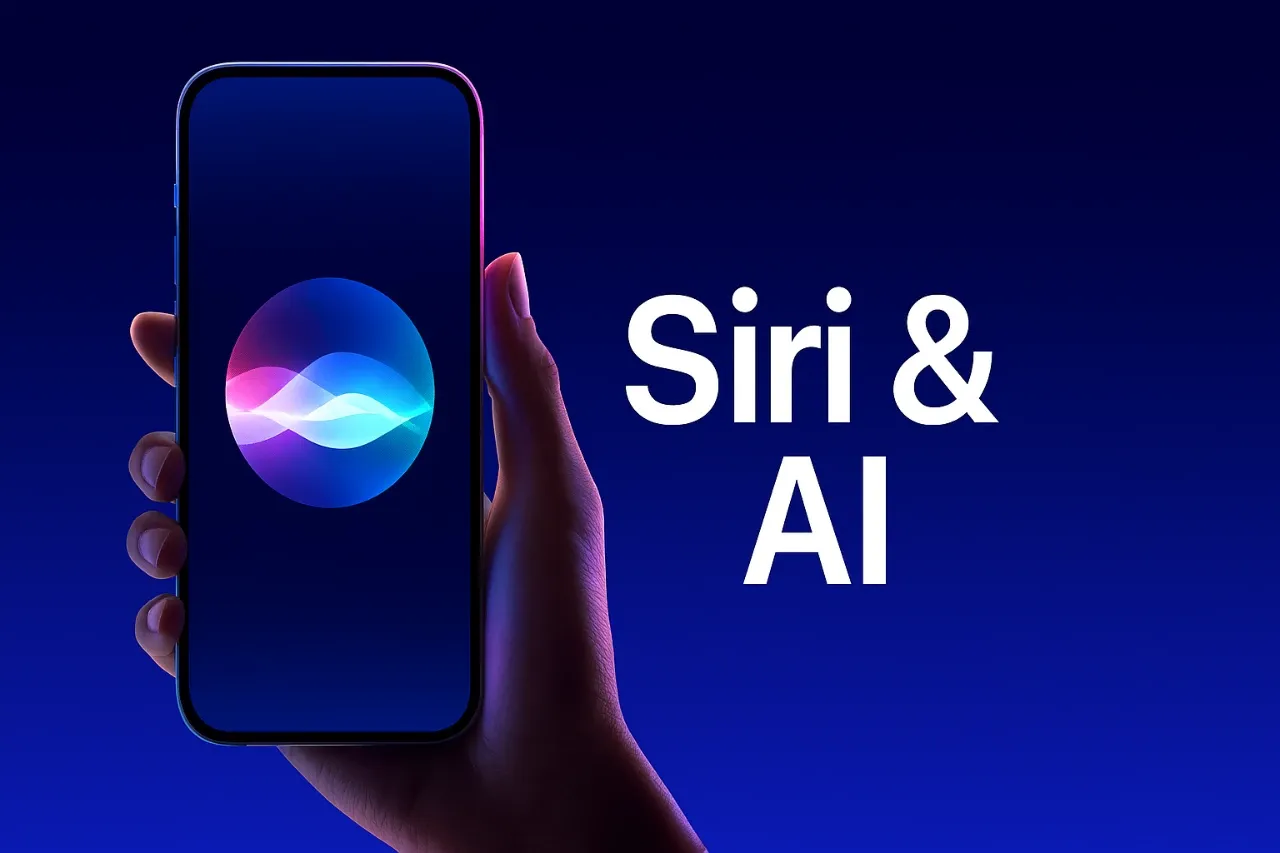
Apple is preparing a sweeping upgrade to Siri, powered by Google’s Gemini artificial intelligence model — a move that could redefine how the iPhone’s voice assistant understands and responds to users. According to a report by Bloomberg’s Mark Gurman, Apple plans to pay Google roughly $1 billion annually for access to a custom version of Gemini, a system with an impressive 1.2 trillion parameters — nearly eight times more powerful than Apple’s current cloud-based AI.
The Gemini integration will support key new Siri functions such as summarization and planning, enabling the assistant to handle complex, context-rich tasks. The update, internally known as Project Glenwood and expected to launch next spring alongside iOS 26.4, is being led by Vision Pro creator Mike Rockwell and software chief Craig Federighi. Siri’s refreshed interface and functionality are code-named Linwood.
While Apple will rely on Google’s AI to supercharge Siri’s intelligence, the system will run on Apple’s Private Cloud Compute servers, ensuring that user data remains isolated from Google’s infrastructure. This hybrid approach allows Apple to maintain its strong privacy stance while tapping into Google’s technical expertise.
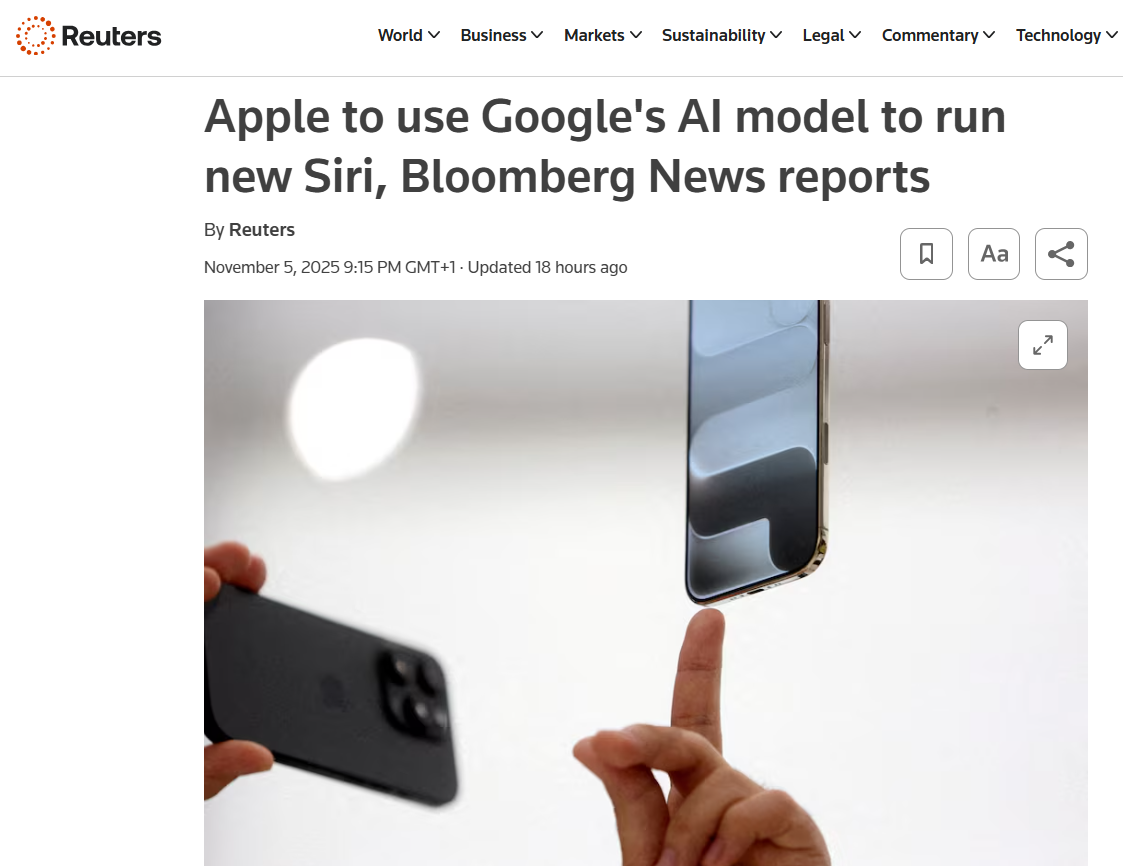
The deal comes after months of testing multiple AI models. Apple reportedly explored options from OpenAI (ChatGPT) and Anthropic (Claude) before selecting Google’s Gemini as a temporary partner. The company still intends to replace Gemini with its own large-scale model — potentially with up to 1 trillion parameters — once its internal AI technology matures.
Despite the collaboration’s scale, Apple does not plan to market Gemini’s involvement publicly. Unlike the Google Search deal embedded in Safari, Gemini will operate behind the scenes. Siri’s improvements will appear as part of Apple’s ecosystem, without Google branding or visible integration.
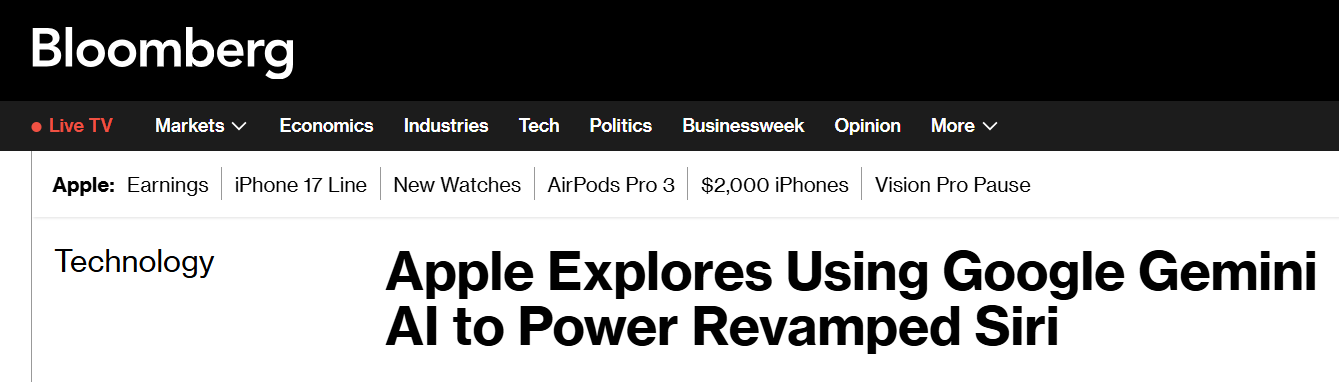
The timing of the move highlights Apple’s increasing urgency to compete in the generative AI race. While competitors such as Micros oft and Google have quickly rolled out advanced AI assistants, Apple has taken a more measured approach, emphasizing privacy and control. Still, the company’s decision to lean on Google marks a rare admission that it needs outside support to catch up.
Financial markets reacted positively to the news, with Apple’s shares rising slightly to $271.70 and Alphabet’s stock climbing over 3% to $286.42 on Wednesday following Bloomberg’s report.
Apple also faces the added challenge of tailoring Siri for international markets. In China, where Google services are banned, Apple will use its own AI systems combined with content moderation tools developed by Alibaba Group, ensuring compliance with local regulations. The company has reportedly explored additional partnerships with Baidu to support AI functionality in the region.
While the Gemini-powered Siri marks a temporary alliance, it signals a pivotal shift for Apple — one that bridges its traditional focus on hardware and privacy with a new era of AI-driven intelligence. Over time, Apple aims to bring all of Siri’s capabilities fully in-house, but for now, Google’s technology will help accelerate the transformation.



