
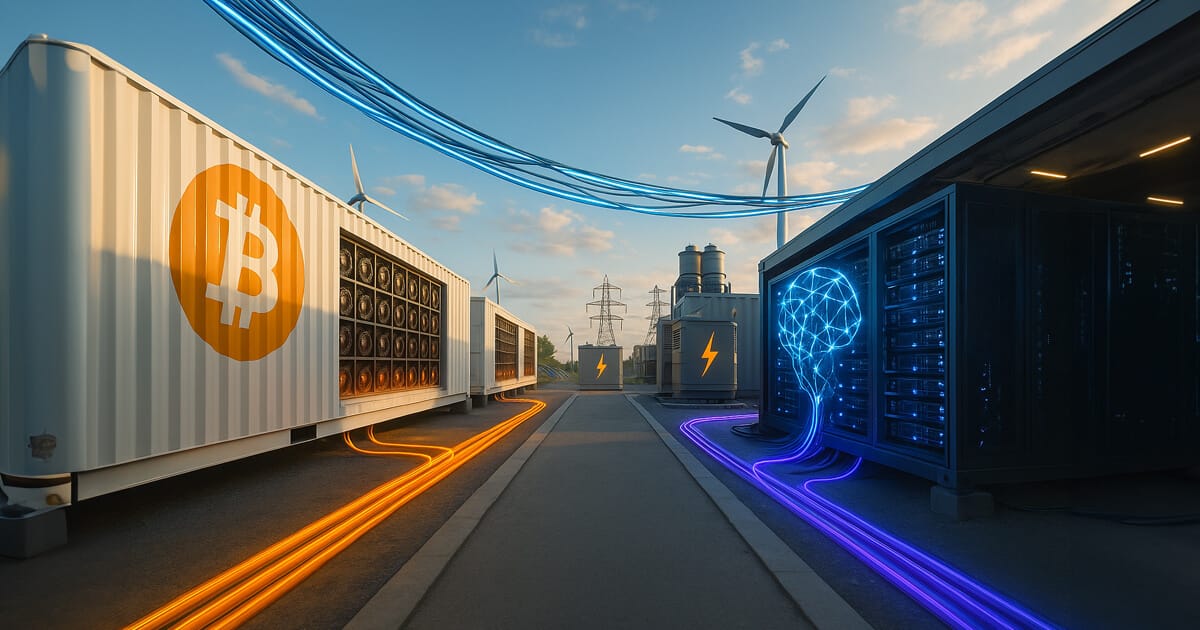
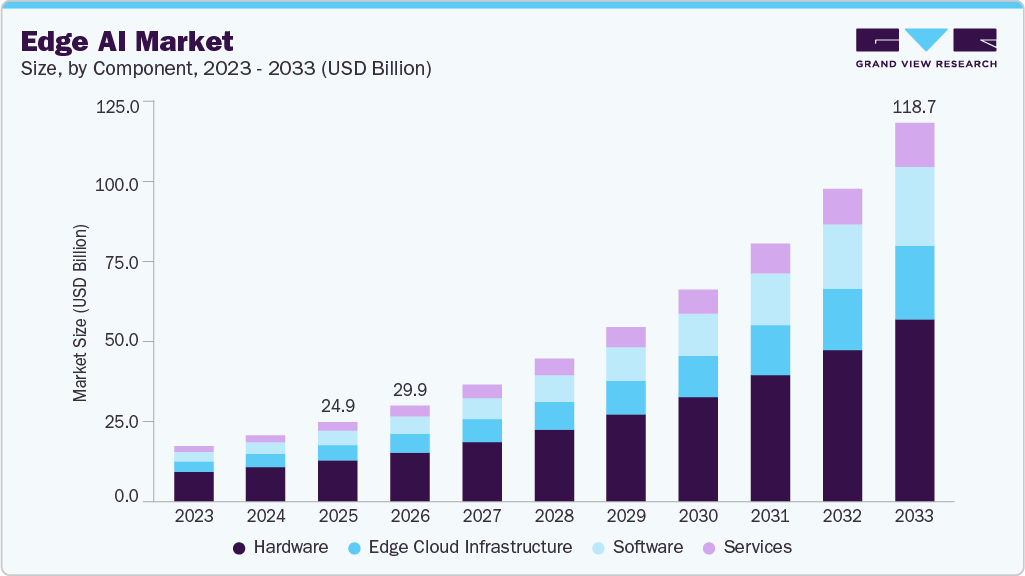
Edge AI is projected to reach $119 billion by 2033, signaling a shift toward localized computing even as bitcoin mining becomes increasingly industrialized. The divergence highlights how two foundational technologies may be moving in opposite directions on decentralization.
Galaxy Research head Alex Thorn said Sunday that bitcoin mining has evolved from home-based setups into large-scale industrial operations. Specialized hardware and rising energy costs have concentrated activity in warehouse-scale facilities. By contrast, Thorn argued that artificial intelligence could become more distributed as models shrink and run directly on personal devices.
bitcoin mining began decentralized (CPUs, GPUs) and became centralized (ASICs, industrial-scale farms)
— Alex Thorn (@intangiblecoins) April 12, 2026
AI may follow the opposite path: it started centralized in giant hosted clusters, but as frontier model gains slow (from data scarcity, context limits, and memory bottlenecks)… pic.twitter.com/J2indQsTt8
Will AI Decentralize As Mining Centralizes?
Grand View Research estimates the Edge AI market will grow from roughly $25 billion in 2025 to $119 billion by 2033, driven by demand for real-time processing and data privacy. This model allows computation to occur on-device rather than through centralized servers. The shift aligns with broader adoption of Internet of Things systems, where latency and data control are critical.

“If local models keep getting smaller, cheaper, and more efficient, AI may become increasingly personal and on-device,” Thorn said.
The trend contrasts with current AI infrastructure, which relies heavily on large data centers controlled by a limited number of operators. But does improved efficiency outweigh the scale advantages of centralized compute?
Meanwhile, bitcoin mining continues to redistribute geographically rather than structurally decentralize. A report from KuCoin shows operators are relocating to regions with lower energy costs, including Ethiopia and Paraguay, where hydroelectric power is abundant. Production costs in parts of the United States have exceeded $100,000 per bitcoin, forcing miners to seek alternative jurisdictions.
KuCoin noted that spreading mining operations across multiple regions reduces exposure to political and environmental disruptions. The network benefits from geographic diversity even as capital requirements limit individual participation. The next catalyst will be whether advances in lightweight AI models accelerate on-device adoption faster than mining can re-decentralize through energy market shifts.



