
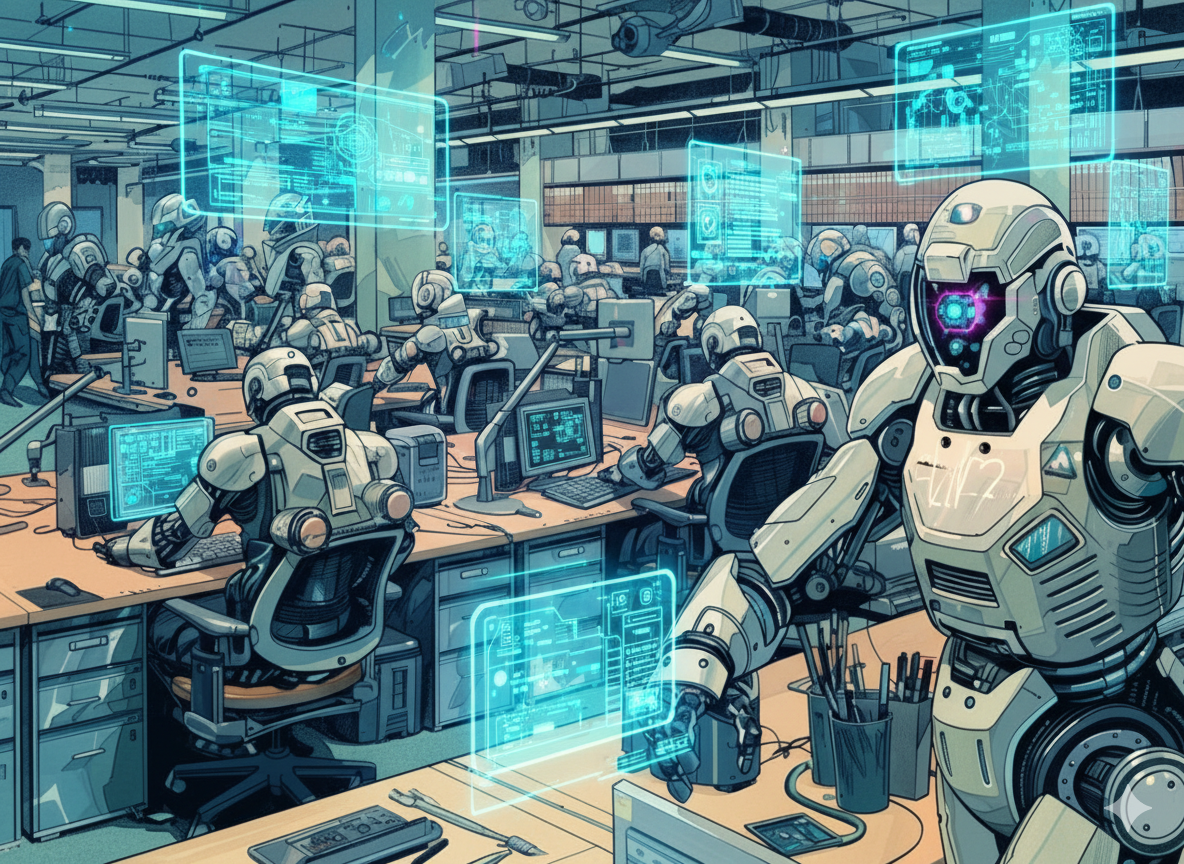
Artificial intelligence is reshaping the corporate world at a speed few anticipated, and the consequences could be profound for publicly traded companies. Virginie Maisonneuve, Chief Investment Officer for global equities at Allianz Global Investors, has cautioned that up to one in five listed firms may disappear within the next five years if they fail to embrace AI.
Speaking at the Investment Management Summit in London, Maisonneuve described this shift as a form of “digital Darwinism,” warning that the transition will be “very, very brutal” for businesses unable to adapt. She stressed that while AI represents a powerful growth engine, it also poses an existential threat to companies that resist change.
The surge of interest in AI has already transformed markets. Nvidia, a key player in the AI hardware space, has seen its stock climb more than 160% since late 2022, following the launch of OpenAI’s ChatGPT. That rally underscores both investor optimism and the belief that AI will fundamentally reshape industries ranging from finance to healthcare to manufacturing.
But alongside opportunity comes risk. Maisonneuve projected that 15% to 20% of today’s listed companies may no longer exist in five years, whether due to irrelevance, consolidation, or disruption triggered by AI. While she noted that predicting the pace of this change is difficult, the direction of travel is clear.
AI’s impact goes far beyond financial markets. Its ability to automate complex tasks at scale could redefine entire sectors, creating efficiencies in some areas while displacing jobs in others. For companies, this means a race to innovate—or risk being left behind.
The message for global business leaders is unmistakable: adapting to AI is no longer optional. The next few years will test which organizations can harness technology to thrive and which will falter. For executives, investors, and employees alike, the stakes have never been higher in the age of artificial intelligence.



